Middle East Conflict
Trump Declares Iran Peace Deal ‘Over’ as New Strikes Ignite Gulf Conflict
President Trump declares the Iran peace deal over after fresh military strikes in the Gulf, causing oil prices to surge and heightening regional tensions.


Fragile Ceasefire Collapses Amid Renewed Military Hostilities
U.S. President Donald Trump has officially declared an interim peace agreement with Iran to be “over” following a series of retaliatory strikes and counter-strikes in the Persian Gulf. Speaking to reporters at the NATO summit in Turkey, Trump signaled a return to a maximum-pressure stance, labeling the Iranian leadership as “sick people” and a “waste of time.” The collapse of the memorandum of understanding, which was aimed at ending the war that began in late February, has sent shockwaves through global energy markets and raised the specter of a broader regional conflagration.
Military Escalation in Bahrain and Kuwait
The latest flare-up began after Iran’s Revolutionary Guard launched a joint missile and drone operation targeting U.S. military sites, specifically the Fifth Naval District in Bahrain and the Ali Al Salem Air Base in Kuwait. Iranian officials claimed the strikes were in response to U.S. interference in the Strait of Hormuz. In retaliation, U.S. Central Command (CENTCOM) conducted a massive wave of strikes against more than 60 Iranian small boats and military targets in Bandar Abbas and Sirik. President Trump warned that additional strikes were imminent, stating, “We’re going to hit them hard tonight.”
Global Energy Markets and Diplomatic Fallout
The impact of the renewed fighting was felt immediately in the global economy. Brent crude oil prices surged over five percent to reach $78.48 per barrel, the highest jump in months. Ship-tracking data showed multiple oil and gas tankers diverting from the Strait of Hormuz after several vessels were damaged. While NATO Secretary General Mark Rutte defended the U.S. response as “absolutely necessary,” Iranian officials, including parliament speaker Mohammad Baqer Qalibaf, accused Washington of bullying and violating the terms of the original ceasefire.
A Dangerous New Phase
The current situation marks a sharp reversal from last month’s cautious optimism regarding Iran’s new leadership under Mojtaba Khamenei. With the peace deal discarded, the focus shifts to the strategic Strait of Hormuz, where Iran has threatened a “crushing response” to any further U.S. naval interference. As air raid sirens continue to sound in Gulf states, the international community remains on high alert for a potential escalation into full-scale war.

Middle East Conflict
Mojtaba Khamenei Vows ‘Inevitable’ Revenge Against US as Trump Threatens to Decimate Iran
Iran’s new Supreme Leader Mojtaba Khamenei vows revenge for his father’s death, prompting Donald Trump to threaten the total destruction of Iran.
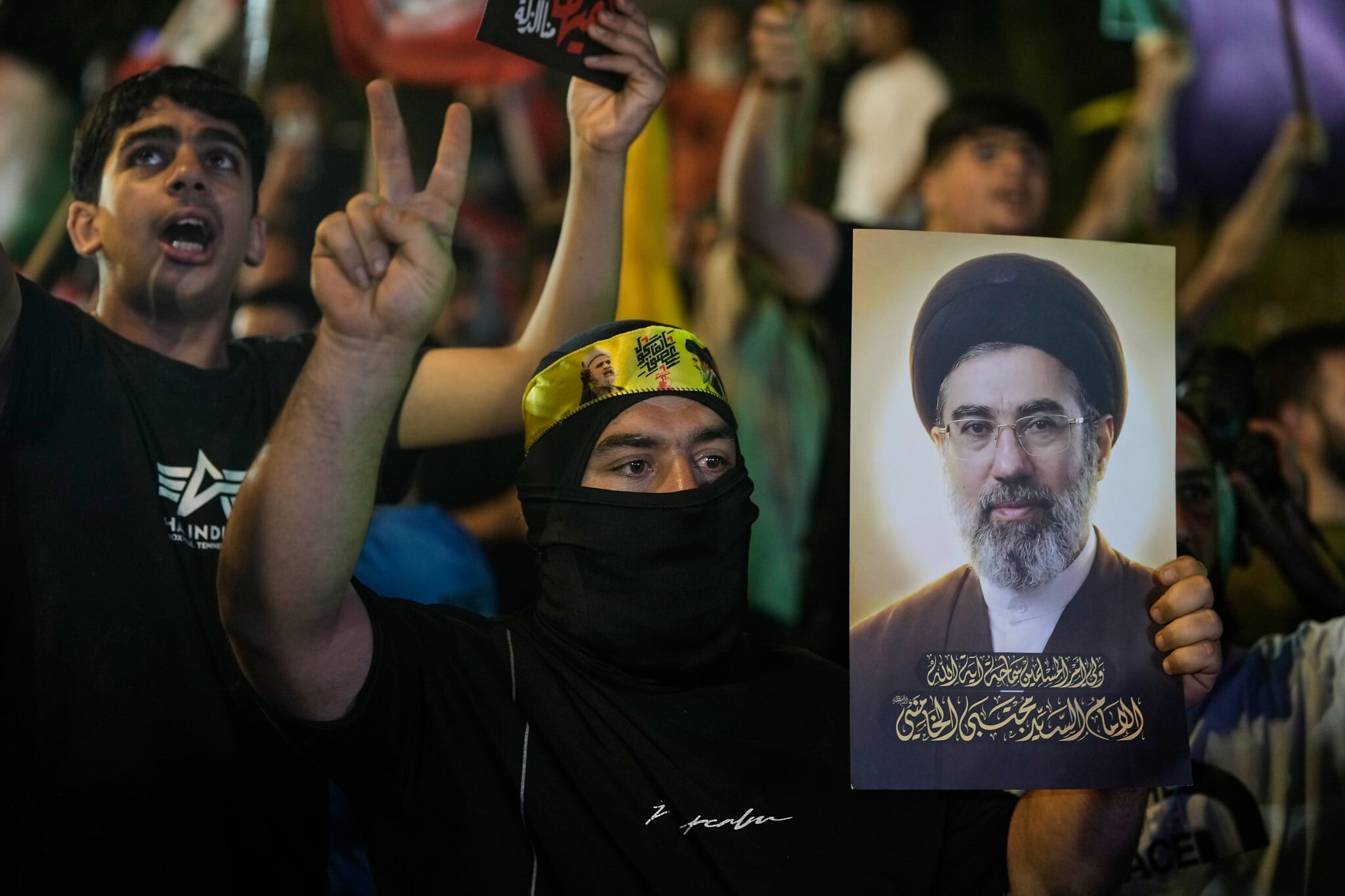
A Vow of Vengeance from the Shadows
In a rare and ominous communication, Iran’s newly proclaimed Supreme Leader, Mojtaba Khamenei, has issued a written decree vowing that the assassination of his father, Ayatollah Ali Khamenei, will be avenged “soon.” The message, released via his official Telegram channel during funeral ceremonies in Mashhad, described the retaliation as the “will of the nation” and an “inevitable” divine mission that would target a specific list of “disgraced killers.”
The Mystery of the New Leader
Mojtaba Khamenei has remained entirely out of the public eye since being appointed by a clerical assembly in early March, following the February 28 US-Israeli airstrikes that killed his predecessor. Reports suggest the new leader may have suffered disfiguring injuries and limb damage in those same strikes, leading to his recovery in a secure, undisclosed location. Despite his physical absence, his written statements have taken an increasingly aggressive tone, suggesting that the pursuit of revenge transcends the personal existence of any single official.
Trump Issues Massive Retaliation Warning
The rhetoric from Tehran has drawn a fierce response from US President Donald Trump. In a post on Truth Social, Trump claimed that 1,000 missiles are “locked and loaded” and aimed at the Islamic Republic. He warned that any attempt on his life would result in the complete decimation of Iranian territory, stating that military orders have already been issued to respond to any assassination plot. This escalation follows reports that Israeli intelligence shared information with Washington regarding Iranian discussions about targeting the American president.
A Region on the Brink
The exchange of threats comes as the four-month-old conflict between the US, Israel, and Iran-backed entities enters a volatile new phase. While some US officials suggest that the intelligence regarding a specific assassination plot may be generalized dialogue rather than an active conspiracy, the public posturing on both sides has reached a fever pitch. As thousands of mourners in Iran chant for retribution, the international community remains on high alert for a potential direct military confrontation between Washington and Tehran.
Geopolitics
Middle East Tensions Surge as Iran Launches Retaliatory Missile Strikes Following Leader Assassinations
Iran launches multiple-warhead missiles at Israel and Gulf neighbors following the assassination of key leaders, sparking fears of a global energy crisis.

Escalation in the Persian Gulf
The conflict in the Middle East reached a new, volatile peak on Wednesday as Iran launched a coordinated wave of missile strikes targeting Israel and several Persian Gulf neighbors. The barrage, which utilized advanced multiple-warhead missiles designed to evade sophisticated air defense systems, resulted in at least two fatalities in Ramat Gan, near Tel Aviv. This latest offensive marks a significant intensification of hostilities that began on February 28, following joint U.S. and Israeli operations against Iranian interests.
High-Value Targets and Assassinations
The strikes follow a series of high-profile assassinations by Israeli forces. Israel’s Defense Minister recently confirmed the killing of Iranian Intelligence Minister Esmail Khatib, warning of further “significant surprises” across all fronts. This follows Tuesday’s targeted killings of Ali Larijani, a top security official and former parliamentary speaker, and General Gholam Reza Soleimani, head of the Basij paramilitary force. Both Larijani and Soleimani were key figures in Iran’s security apparatus and had been under international sanctions for their roles in suppressing domestic dissent.
Threats to Global Energy and Infrastructure
Iran’s strategy has increasingly focused on targeting the energy infrastructure of Gulf Arab nations, including Saudi Arabia, Kuwait, Bahrain, Qatar, and the UAE. A projectile reportedly struck the Bushehr nuclear power plant complex, though the IAEA confirmed no damage occurred. Meanwhile, the ongoing blockade of the Strait of Hormuz continues to threaten global oil supplies, keeping Brent crude prices stubbornly above $100 per barrel. U.S. Central Command responded to the maritime threat by deploying deep penetrator bombs against Iranian missile sites along the coastline.
Regional Instability and Civil Unrest
Beyond the primary combat zones, the violence has spilled into Lebanon and Iraq. Israeli strikes in Beirut have reportedly killed at least 10 people, while pro-Iran militias in Iraq have targeted the U.S. Embassy in Baghdad for two consecutive days. Internally, Iran’s judiciary continues its domestic crackdown, recently executing a man accused of spying for Israel. As the war enters this new, more aggressive phase, international observers fear the potential for a wider regional conflagration that could disrupt the global economy for years to come.
Investigation Underway Following Fatality at Historic Okanagan Lake Swim Event
RCMP Investigate String of Suspicious Fires in West Kelowna Neighborhood
Strategic Pivot: Canada Joins Global Sixth-Generation Stealth Fighter Program Amid U.S. Trade Tensions
Mayor Olivia Chow Targets Big Tech Pricing Tactics at Toronto Grocery Stores
Canada Offered to Double Oil Exports to U.S. in Failed Trade Negotiations, Hoekstra Reveals
Cross-Border Smoke Crisis: Canada Issues Alerts as U.S. Wildfire Pollution Drifts North
Opinion: John Rustad Has to Go

B.C. Supreme Court Grants Cowichan Tribes Title to Historic Richmond Lands and Fishing Rights

A Taste of Autumn: Fall Okanagan Wine Festival 2025

Vancouver Canucks Gear Up for a Make-or-Break 2025–26 Season

Kamloops Blazers Announce Off-Season Changes Ahead of 2025–26 Season

BC Ferries Sparks Outcry Over Contract with Chinese Shipyard
-
Government Accountability7 days ago
Ontario Minister Stan Cho to Repay Over $16,000 in Disputed Toronto Hotel Expenses
-
Economics7 days ago
Trump Reverses Hormuz Shipping Fee as US Reinstates Iran Port Blockade
-
WORLD7 days ago
Millions Across North America Face Historic Heatwave as Record Temperatures Shift East
-
Baseball7 days ago
AL Pitching Staff Crafts Historic Shutout in Dominant MLB All-Star Performance
-
Economy7 days ago
Global Energy Markets Brace as Iran Threatens Trade Routes Amid US Military Strikes
-
Finance6 days ago
Bank of Canada Holds Rates Steady at 2.25% Amid Geopolitical Oil Volatility
-
Entertainment7 days ago
Sean ‘Diddy’ Combs Offloads Star Island Mansion for $55 Million Amid Legal Fallout
-
SPORTS7 days ago
End of the Yzerman Era: Red Wings GM Steps Down Amid Front Office Shakeup