BC STORIES
Canada’s Time Crisis: Why British Columbia is Ending the Clock Change While Others Wait for a Domino Effect
British Columbia is ending seasonal time changes permanently, but the rest of Canada remains locked in a collective action dilemma over daylight saving time.


The Last ‘Spring Forward’ for British Columbia
As Canadians across the country prepare to nudge their clocks forward one hour this Sunday, residents of British Columbia are doing so with a unique sense of finality. Premier David Eby confirmed this week that the province is moving forward with a long-awaited plan to adopt permanent, year-round daylight saving time. The move marks the end of a decades-long debate in the Pacific province, effectively terminating the biannual ritual of ‘springing forward’ and ‘falling back’ that has governed Canadian life for generations.
The decision is rooted in both public health and overwhelming popular demand. Premier Eby highlighted the practical disruptions caused by the shift, noting that children and pets do not recognize the arbitrary change in time, leading to lost sleep for parents and increased stress for families. “When we change our clocks twice a year, it creates all kinds of problems,” Eby stated during the announcement. Beyond mere inconvenience, the Premier pointed to a spike in car accidents and a general decline in public well-being as primary drivers for the policy shift.
A History of Public Mandate and Political Stalling
British Columbia’s road to permanent daylight time has been long. In 2019, the province conducted one of the most successful public consultations in its history, with a staggering 93 per cent of the 223,000 respondents indicating they wanted to scrap the time change. While former premier John Horgan attempted to implement the change several times, the province initially hesitated, hoping to maintain alignment with southern neighbors in Washington, Oregon, and California.
However, B.C. has now decided to lead the charge. This bold move highlights a growing frustration with what political scientists call a ‘collective action problem.’ Peter Graefe, a political scientist at McMaster University, suggests that many jurisdictions are waiting for a leader to prove that the transition can be seamless. “Maybe it does take one place to move and it will have some impact in having other places saying, ‘Look, the sky didn’t fall, maybe we’ll try it as well,’” Graefe noted.
The Eastern Gridlock: Ontario and Quebec
In Central Canada, the situation is more complex. The Ontario legislature passed a bill in November 2020 that would end the time change, but with a significant caveat: the law only triggers if Quebec and New York State follow suit. This interdependence is driven by the need for economic and logistical synchronization, particularly regarding the stock markets and cross-border trade. Premier Doug Ford has expressed an openness to ending the practice, stating that Ontario will “eventually” stick with daylight saving time to stay in step with the rest of North America, but for now, the province remains in a holding pattern.
Quebec has similarly signaled that while they recognize the public desire to end the time change, no immediate legislative action is planned. Government officials in Nova Scotia, New Brunswick, and Manitoba have also confirmed they are not currently pursuing a change, citing the need for regional alignment to avoid creating a patchwork of time zones that could disrupt travel and commerce.
The Prairie Divide
The debate remains particularly contentious in Alberta. In a 2021 municipal referendum, Albertans narrowly voted to keep the biannual change, with the ‘stay’ side winning by fewer than 3,000 votes. Despite this, the government led by Danielle Smith is re-examining the issue. Finance Minister Nate Horner recently suggested that the conversation is “probably coming towards us” again, as the government weighs the impact on airline schedules and professional sports against the potential health benefits.
Calgary Mayor Jyoti Gondek, however, has expressed skepticism about reopening the debate, suggesting that the narrow victory in 2021 should stand as a settled matter so that the government can focus on more pressing economic priorities.
The Biological Cost of Shifting Time
While the political debate focuses on trade and convenience, health experts are sounding the alarm on the biological toll of the time change. Rebecca Robillard, co-chair of the Canadian Sleep Research Consortium, argues that the issue is far more significant than losing a single hour of sleep. “It actually disrupts the alignment between the biological clock and the natural cycle of the sun,” she explained. This misalignment affects hormone release, insulin regulation, and metabolism.
Robillard points to a chilling list of ramifications associated with the time shift, including increased rates of stroke, heart attacks, mood swings, and even pregnancy complications. From a clinical perspective, the sudden shift forces the body into a state of ‘social jetlag’ that can take weeks to resolve.
The Counter-Argument: The Need for Morning Light
Despite the momentum for permanent daylight saving time, some experts warn of the downsides of year-round DST—specifically the loss of morning light in the winter. Patricia Lakin-Thomas, a professor at York University, notes that our circadian clocks are reset by morning light. Under permanent daylight saving time, some parts of Canada would not see the sun rise until nearly 10:00 a.m. in the middle of winter.
“Everybody loves the idea when you first announce it… but in the winter, we just hate it,” Lakin-Thomas warned. She argues that standard time is actually better for human health because it aligns more closely with the solar cycle, providing the morning light necessary to speed up our internal clocks and keep us in sync with the 24-hour day. As British Columbia embarks on this legislative experiment, the rest of the country—and the scientific community—will be watching closely to see if the benefits truly outweigh the costs.

BC STORIES
Caucus Split Grows as Three More B.C. Conservative MLAs Depart Ahead of Potential Election
Three B.C. Conservative MLAs have departed the caucus, legislative officials confirm, as internal leadership disputes surface ahead of a potential provincial election.


Legislature Office Confirms Caucus Changes
The office of the B.C. legislature clerk has verified that three additional MLAs have ended their affiliation with the B.C. Conservative Party caucus. Notification was submitted to the Office of the Speaker on Friday, Sept. 18, regarding Skeena MLA Claire Rattée, Nechako-Lakes MLA John Rustad, and Surrey-White Rock MLA Trevor Halford.
Following the legislative confirmation, B.C. Conservative Leader Kerry-Lynne Findlay released a public statement confirming the immediate removal of all three politicians from the caucus. Findlay framed the decision around preparations for a potential upcoming provincial election, stating the party must concentrate fully on challenging the ruling NDP government under Premier David Eby.
Rattée Challenges Removal and Cites Internal Scrutiny
In response to the announcement, Rattée issued a detailed statement on social media rejecting the attempt to remove her and confirming her intention to remain in her position. She argued that as an elected MLA, Findlay lacks the authority to strip caucus membership from elected team members.
Rattée pointed to a broader trend of internal caucus friction, noting that nine MLAs have departed the party since mid-August while raising concerns about leadership. Her statement highlighted accusations involving offers of paid positions in exchange for seat resignations, controversy surrounding senior staff, and reports that a senior party official engaged a private investigator to monitor current and former MLAs. Rattée confirmed she was informed by the party that she had been targeted in the investigation, calling the move a severe lapse in judgment on the eve of a potential snap election call.
Former Interim Leader and Colleagues Prepare Next Steps
Halford also shared a brief update on social media, reflecting on his previous tenure as interim leader during a period of party growth. He stated that he intends to run again in his riding of Surrey-White Rock if an election is called and indicated he would release further details shortly. Rustad noted on X that a formal press release would be issued soon.
BC STORIES
Why B.C. Centrists Are Uniting Under Peter Milobar as Election Speculation Grows
Peter Milobar assumes leadership of Centre B.C. as eight sitting MLAs unify to present a centrist alternative ahead of a potential B.C. election.
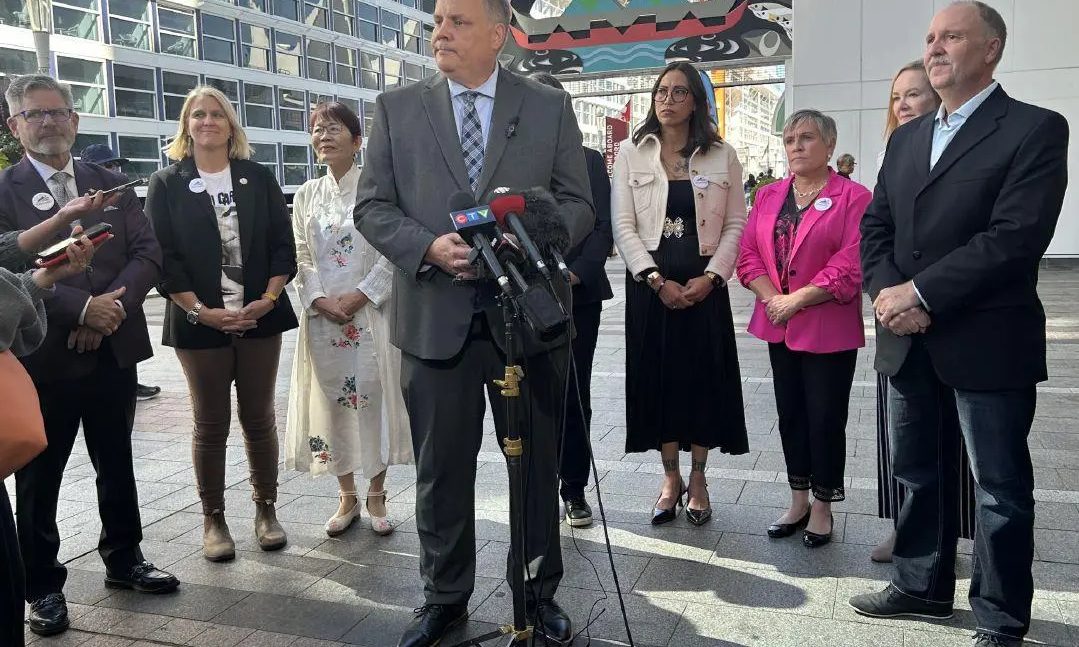
Political Consolidation Ahead of Potential Snap Election
In a move to prevent splitting votes among centrist options, eight sitting Members of the Legislative Assembly have unified under the Centre B.C. banner. Kamloops Centre MLA Peter Milobar announced Friday in Vancouver that he is assuming the leadership of the party, supported by outgoing leader Mike Bernier, a former B.C. Liberal cabinet minister who stepped down to facilitate the transition.
The caucus consolidation brings together former B.C. Conservative MLAs who left the party following disagreements with Leader Kerry-Lynne Findlay, alongside independent representatives. Milobar took the helm alongside Bernier and six other MLAs—Bruce Banman, Teresa Wat, Donegal Wilson, Á’a:líya Warbus, Rosalyn Bird, and Elenore Sturko. A eighth caucus member, Delta South MLA Ian Paton, was unable to attend the announcement due to a scheduled vacation but remains fully committed to the party, according to Milobar.
Focus Areas and Electoral Strategy
Addressing the party’s platform, Milobar stated that Centre B.C. will be “hyper-focused” on healthcare, climate action, and public safety on municipal streets. The party intends to field candidates across British Columbia if a provincial election is called. Bernier noted that discussions regarding the leadership transition and political alignment had been underway for several weeks, with public polling indicating that 51 per cent of British Columbians are seeking an alternative to the primary political parties.
Speculation Over Provincial Election Timing
The leadership shift comes amid growing speculation that Premier David Eby may trigger an early election less than two years into his current mandate. Political parties had originally envisioned an autumn launch on the steps of the legislature on Oct. 5 for the start of the fall session. However, shifting timelines have accelerated party preparations across the province.
An early provincial election call could overlap with municipal elections scheduled for Oct. 17. The potential timing has raised procedural concerns; Union of B.C. Municipalities president Cori Ramsay has requested the premier delay any provincial call, pointing out that an active provincial campaign alongside the ongoing Abbotsford-Mission byelection running until Sept. 26 would require Elections BC to halt administrative paperwork for other political entities seeking registration.
BC STORIES
Why B.C. Municipalities Are Demanding Action on Street Safety and Social Services
B.C. local leaders sign a Contract with Communities at UBCM, demanding provincial action on public safety, addiction, housing, and justice system funding.
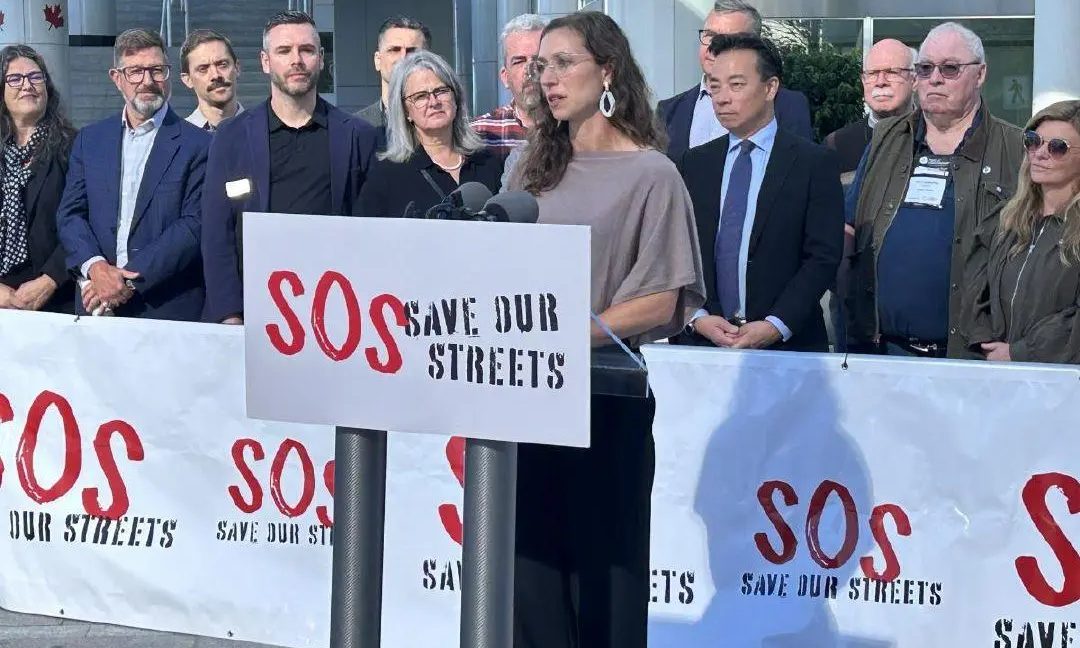
Local Leaders Urge Provincial Action
Municipal leaders across British Columbia signed a “Contract with Communities” on Sept. 17 during the Union of BC Municipalities convention in Vancouver, pressing the province for immediate solutions to crime, addiction, and public disorder.
Organized following a Save Our Streets (SOS) survey that indicated half of British Columbians fear for their safety, the document outlines five specific demands directed at senior government. SOS co-founder Jess Ketchum stated during the event that local leaders want senior governments to properly fund and manage initiatives that address street disorder.
Mayors Highlight Strain on Local Resources
Victoria Mayor Marianne Alto noted that local governments have spent millions of dollars attempting to fill systemic gaps in housing, mental health, and addiction supports, describing the current situation as unsustainable. Port Coquitlam Mayor Brad West urged the province to act swiftly, stating that municipal officials need immediate results on local streets rather than repeated annual requests.
Addressing the demands, Minister Housing and MLA Ravi Kahlon emphasized that addressing these complex issues requires cooperation from all levels of government, citing recent joint efforts to clear homeless encampments in Victoria, Nanaimo, and Prince George.
The Five Critical Demands
The contract calls on the province to execute five core actions:
1. Ensure safe public spaces: Establish provincial policies that prevent homeless encampments on public land or near businesses when shelter beds are available.
2. Move beyond harm reduction: Provide immediate detoxification beds within Health Ministry facilities across all communities.
3. Properly locate low-barrier services: Set publicly posted operational standards for provincially funded harm reduction and low-barrier housing to ensure surrounding neighborhoods are protected, closing facilities that fail to comply.
4. Prioritize addictions and mental health: Establish government-operated regional treatment services across the province this year.
5. Fully fund the justice system: Provide sufficient funding for judges, sheriffs, crown prosecutors, and correctional staff to ensure criminal accountability.
SOS co-founder Clint Mahlman stated that the province must move past decades-old strategies and work directly with local elected officials who understand their communities best.

How West Kelowna Residents Can Explore Heartfulness Meditation and Community Peace

Unveiling event offers residents a first look at Kelowna’s future waterfront swim venue
Your Current 3 Day Forecast — September 20, 2026

Dylan Cease struggles as Toronto pitching strain worsens in loss to Rangers
How Canada’s Prime Minister Is Building Stronger Trans-Atlantic Ties Close to Home
Montreal’s High-Powered Offense Holds Off Late Hamilton Comeback in East Clash
Opinion: John Rustad Has to Go
B.C. Supreme Court Grants Cowichan Tribes Title to Historic Richmond Lands and Fishing Rights

A Taste of Autumn: Fall Okanagan Wine Festival 2025

Vancouver Canucks Gear Up for a Make-or-Break 2025–26 Season

Kamloops Blazers Announce Off-Season Changes Ahead of 2025–26 Season
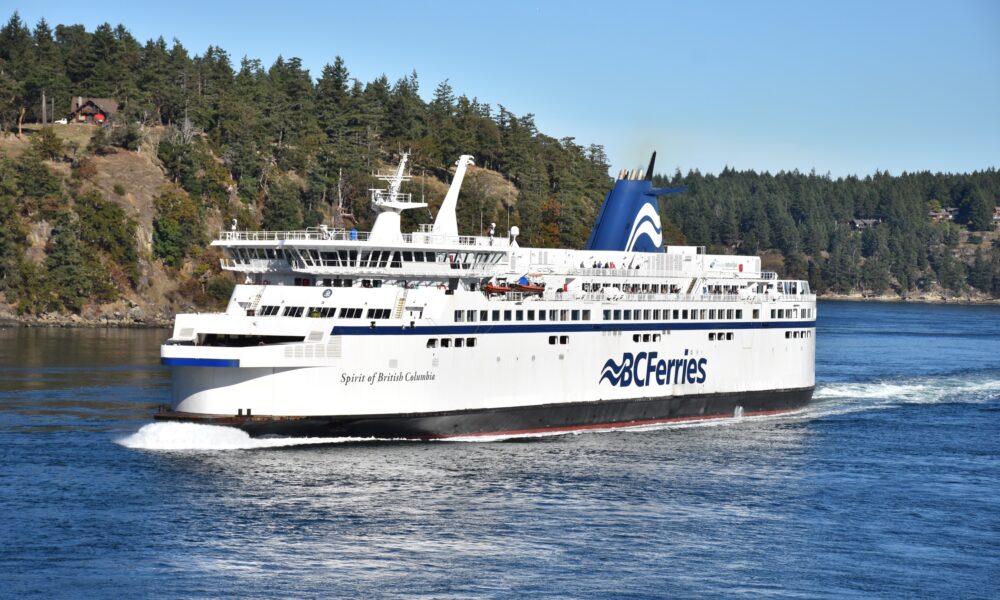
BC Ferries Sparks Outcry Over Contract with Chinese Shipyard
-
NATIONAL STORIES6 days ago
Remembering George Chuvalo: The Canadian Heavyweight Legend Who Never Got Knocked Down
-

 NATIONAL STORIES6 days ago
AI’s Biggest Warning May Be Coming From the People Building It
-

 COMMUNITY6 days ago
Navigating Blended Family Wills and Estate Options
-

 SPORTS6 days ago
How Video Adjustments Fuelled the Vancouver Canucks’ 5-2 Prospects Victory Over Seattle
-
POLITICS7 days ago
What Trump’s Remarks Linking Canada to Iran Signal About International Negotiations
-

 BC STORIES6 days ago
Uncertain Eyewitness Testimony at Center of Final Arguments in 2021 Restaurant Shooting Trial
-
WORLD7 days ago
What Trump’s Remarks Linking Canada to Iran Signal About International Negotiations
-
LOCAL7 days ago
Stephen Johnston Mayor by Acclamation