LOCAL
Who Gets to Decide Where B.C. Builds? Conservatives Move to Return Housing Power to Municipalities


Who Gets to Decide Where B.C. Builds? Conservatives Move to Return Housing Power to Municipalities
By Chad Dashly | The Current | November 5, 2026
For years, British Columbia’s housing debate has been dominated by one central question: Who should decide how our communities grow?
Under David Eby’s NDP government, municipalities were directed to increase density, approve more housing and accommodate development through sweeping provincial legislation.
Now, with Lorne Doerkson preparing to take office, that approach is facing a fundamental reversal.
The incoming Conservative government has signalled its intention to roll back two significant pieces of NDP housing legislation: Bill 43, which established provincial housing targets through the Housing Supply Act, and Bill 44, which introduced mandatory small-scale, multi-unit housing requirements.
The political message is unmistakable.
Housing decisions should be made closer to home.
But the bigger question is whether returning authority to municipalities will help solve British Columbia’s housing crisis — or simply replace one set of problems with another.
Victoria’s One-Size-Fits-All Experiment
The NDP’s housing reforms were introduced in 2023 to address a legitimate problem.
British Columbia needed more homes, and many municipalities were struggling to approve new housing quickly enough.
Bill 44 required qualifying residential properties to accommodate three or four homes, and in certain locations near frequent transit, as many as six.
The Housing Supply Act gave the province authority to establish housing targets for selected municipalities and intervene when progress fell short.
The objective was to increase housing supply by removing local zoning barriers.
On paper, the argument made sense.
More housing opportunities should eventually mean more supply, more competition and better affordability.
But British Columbia is not one giant municipality.
What works in downtown Vancouver does not necessarily work in Williams Lake, Kamloops, Kelowna or Prince George.
Communities have different infrastructure capacities, transportation systems, geography and economic realities.
A neighbourhood cannot accommodate unlimited development simply because the provincial government changes the zoning rules.
Someone still has to provide the roads, water, sewer capacity, schools and emergency services.
And those costs don’t disappear because Victoria passes legislation.
Municipalities Push Back
Local governments have raised concerns about the challenges created by provincial housing mandates.
Sarrah Storey, president of the Union of British Columbia Municipalities, has welcomed the incoming government’s commitment to renew its relationship with local governments and emphasized the importance of meaningful consultation.
Surrey Mayor Doug McCallum has also supported returning more planning authority to elected municipal councils.
Their position reflects a fundamental principle of local government.
Municipal councils are elected to make decisions about their communities.
They understand their infrastructure limitations, neighbourhood concerns and long-term development plans.
When provincial governments override those decisions, local accountability becomes blurred.
Residents complain to city hall about decisions that may have been effectively dictated by Victoria.
And municipalities are left trying to explain policies they had limited authority to change.
That is not particularly good governance.
But Local Control Comes With Responsibility
There is another side to this debate, and Conservatives would be wise not to ignore it.
Some municipalities have historically resisted new housing development, particularly in established single-family neighbourhoods.
Restrictive zoning can limit supply and protect existing homeowners at the expense of younger families, renters and first-time buyers.
University of British Columbia housing experts have warned that repealing provincial requirements could slow housing construction and worsen affordability.
They have a point.
Returning decision-making authority to municipalities cannot become an excuse for preventing reasonable development.
Local control must also mean local accountability.
If a municipality refuses to accommodate population growth, delays approvals unnecessarily or consistently rejects viable housing proposals, residents deserve an explanation.
And provincial taxpayers should not be expected to subsidize communities that refuse to plan responsibly for growth.
The challenge for Doerkson’s government is to find the right balance.
Municipalities should determine how their communities grow, but they must also demonstrate that they are prepared to accommodate growth.
The Real Problem Is Bigger Than Zoning
British Columbia’s housing crisis will not be solved simply by repealing legislation.
Nor was it ever going to be solved simply by forcing municipalities to permit more units on residential lots.
Housing affordability is influenced by construction costs, interest rates, development charges, labour availability, infrastructure investment and the cost of land.
A developer can have permission to build six homes on a property and still decide not to proceed because the economics do not work.
That distinction matters.
A zoning approval is not a completed home.
A housing target is not a construction permit.
And a construction permit is not a guarantee that a family will find an affordable place to live.
If the new Conservative government wants to make meaningful progress, it will need to address the economics of housing development alongside municipal planning reform.
That means reducing unnecessary approval delays, improving infrastructure coordination and creating conditions where private builders can deliver housing at prices people can afford.
It also means recognizing that market-driven construction alone will not meet every housing need, particularly for lower-income households.
What This Means for the Interior
For communities across the Okanagan, Thompson, Cariboo and northern British Columbia, the proposed changes could be significant.
Kelowna faces different housing pressures than Vancouver.
Kamloops has different infrastructure challenges than Surrey.
Prince George has different land-use and economic considerations than Victoria.
Giving municipal governments greater flexibility could allow housing policies that better reflect those realities.
But flexibility must be accompanied by results.
A city that wants greater authority over housing development must also accept responsibility for delivering sufficient housing opportunities.
Otherwise, the province risks trading centralized bureaucracy for local obstruction.
Neither outcome will help the young family trying to purchase its first home or the senior struggling to afford rent.
A Chance to Get Housing Policy Right
Doerkson’s proposed housing reset represents one of the clearest policy differences between the incoming Conservative government and the outgoing NDP administration.
The NDP believed stronger provincial intervention was necessary to overcome local barriers.
The Conservatives believe municipalities and residents should have greater control over how their communities develop.
Both positions have legitimate arguments behind them.
But British Columbians are less interested in which level of government wins the jurisdictional argument than whether housing becomes more affordable.
The Conservatives have an opportunity to establish a new partnership with municipalities, one that respects local decision-making while demanding measurable progress.
That will require more than repealing Bills 43 and 44.
It will require a credible replacement strategy, clear expectations and a serious commitment to reducing the cost of building homes.
As of November 5, the proposed changes remain political commitments. Existing provincial housing requirements have not yet been repealed, and the details of the replacement framework remain to be seen.
Returning housing decisions to local communities may be a sensible place to start. But local control is not a housing strategy by itself.
The real test will not be how much authority Victoria gives back.
It will be how many British Columbians can finally afford a place to call home.
Chad Dashly writes political commentary for The Current, examining British Columbia politics, economic development and the public policies shaping communities across the province.

LOCAL
What to Expect as Prescribed Burns Begin Near 100 Mile House
BC Wildfire Service plans prescribed burns near Watch Lake and Mirage Lake to lower wildfire risk near 100 Mile House starting as early as Nov. 5.
Wildfire Risk Reduction Projects Announced
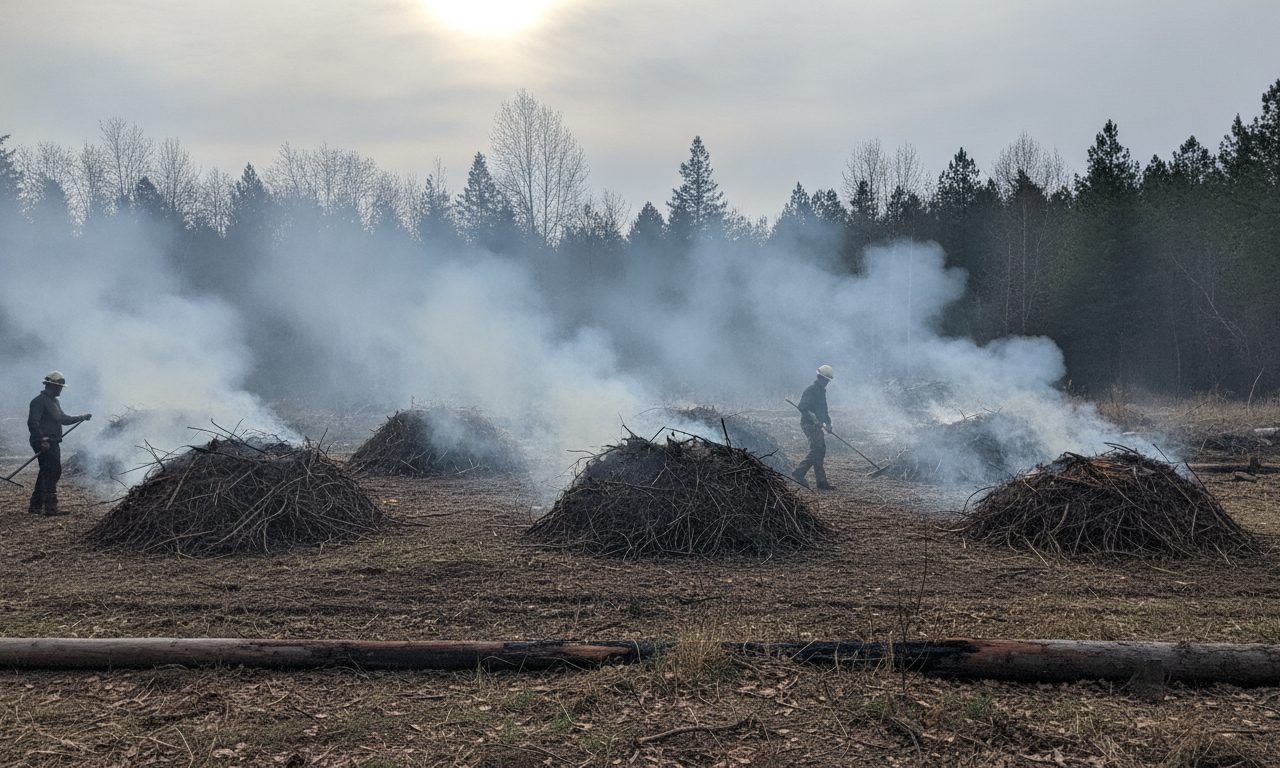
Two separate wildfire risk reduction projects will bring prescribed burns to the 100 Mile area. According to the BC Wildfire Service, the initiatives are designed to lower wildfire risk, remove forest fuels strategically, and protect wildlife habitat, environmental features, and recreational values.
Watch Lake Burn Details
South of 100 Mile House, crews plan to burn nearly three hectares of woody debris near Watch Lake. This work is part of a broader 39.4-hectare project adjacent to properties in the Watch Lake and Green Lake area.
Ignitions could start as early as Thursday, Nov. 5, subject to weather and site conditions, and may continue until March 31, 2027. The BC Wildfire Service stated in a Nov. 3 news release that crews will ignite around 100 piles measuring two metres by three metres, created through selective pruning and thinning of immature trees.
“Smoke and flames may be visible to surrounding communities. Smoke from within the perimeter of the burn may be visible up to 72 hours after ignition,” the wildfire service noted.
Mirage Lake Project
Further north, approximately 138 hectares of woody debris are slated for burning near Mirage Lake. Mechanical raking and pile preparation are scheduled to begin as early as this week, with pile ignitions starting as early as December and extending through March 31, 2027.
In a separate release on Nov. 3, the agency confirmed that burn pile ignitions will move forward only if conditions remain safe, supported by favourable weather and atmospheric venting to clear smoke quickly.
LOCAL
Why Kelowna’s New City Council Faces Questions Over Transparency and Pre-Vote Media Access
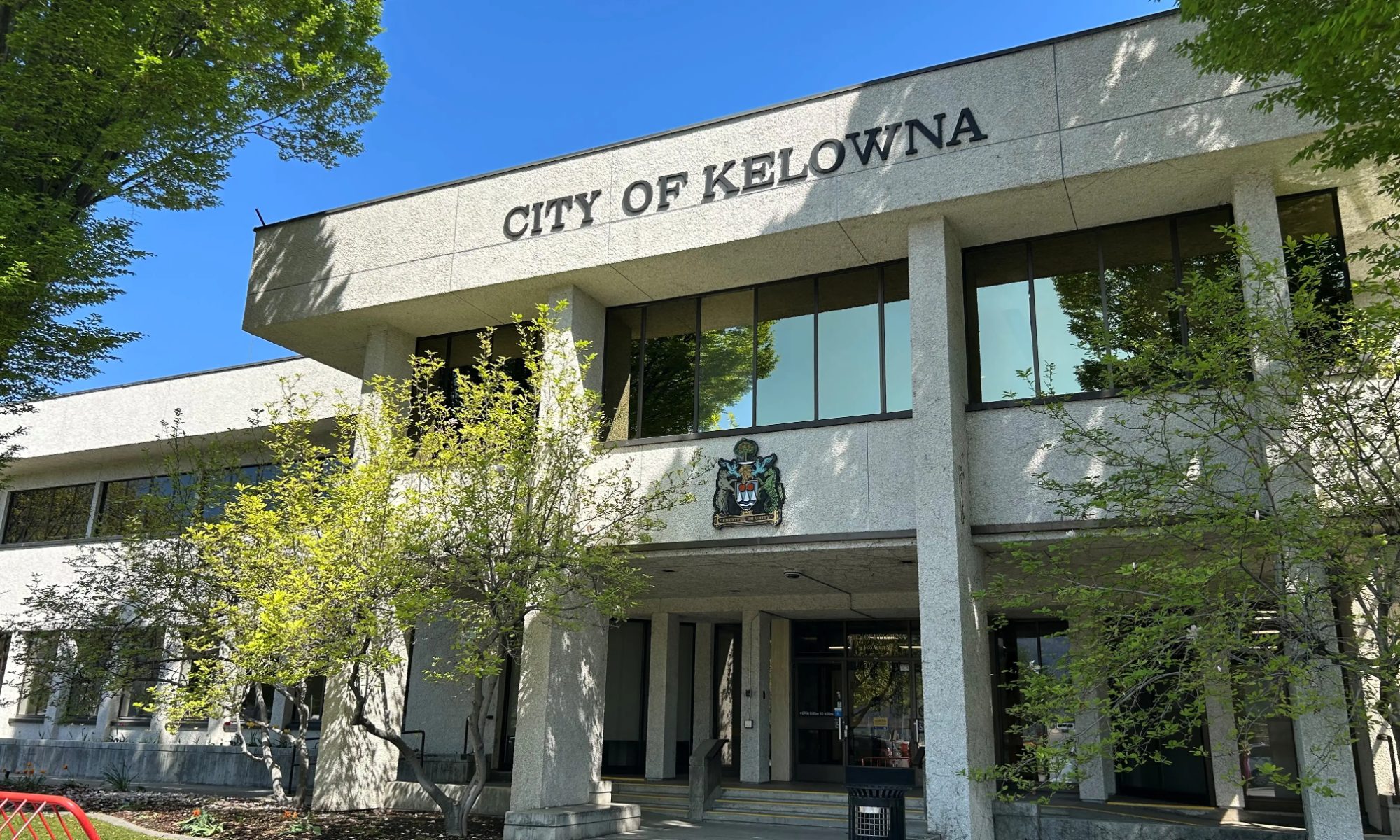
Re-elected Kelowna Mayor Tom Dyas pledges better communication, but critics and new councillors debate pre-decision transparency and public media access.
Kelowna Mayor Pledges Communication Enhancements
Re-elected Kelowna Mayor Tom Dyas marked the start of the new municipal term at Monday’s swearing-in ceremony by promising to expand ways for the city to listen and communicate. Acknowledging that room for improvement exists, Dyas noted that public feedback over recent months highlighted a need for better engagement, prompting the city to examine potential updates to its process.
However, questions remain regarding whether these adjustments will offer the public and press greater access to individual councillors prior to official votes. Dyas maintains that elected officials should refrain from publicly sharing their positions before council meetings take place, explaining that deliberations and incoming information could shift a councillor’s perspective.
Media Restrictions and Academic Criticism
Past practice during Dyas’ first term frequently saw journalists informed that the municipal code of conduct restricted councillors from commenting on agenda items before table debates. Although the code does not explicitly forbid officials from voicing personal opinions on municipal issues either before or after council consideration, Dyas argued that speaking prior to a decision is inappropriate and risks outside discussion improperly influencing deliberations.
This stance faces criticism from University of Victoria journalism professor Sean Holman, the Wayne Crooks Professor in Environmental and Climate Journalism. Holman warned that withholding public discussion until after decisions are finalized undermines transparency and accountability. Stating that Canadians seek authenticity and truth from elected officials, Holman noted that scripted communications and limited access erode public trust and the right to know why decisions are made.
New Councillors Seek Open Public Engagement
The newly sworn-in nine-member council includes five new faces, several of whom advocate for a more accessible approach. Newly-elected councillor Les Bellamy stated he does not intend to be silenced and plans to speak respectfully, arguing that the code of conduct does not restrict comments on general municipal matters. Bellamy expressed a desire to ensure all relevant facts are gathered while simultaneously creating broader opportunities for resident input, announcing plans for a motion directing staff to explore enhanced communication channels such as townhalls or dedicated public input time during meetings.
Fellow newcomer Kevin Kraft similarly confirmed his comfort with speaking to journalists prior to meetings. With five new members joining the table, whether the updated lineup leads to lasting shifts in council communication will become clear over time.
COMMUNITY
How Kelowna’s New Representation in Ottawa and Victoria Could Benefit the City
Kelowna Mayor Tom Dyas outlines priorities for the new council term, pointing to alignment with governing federal and provincial representatives.

Political Alignment Offers New Opportunities
Mayor Tom Dyas highlighted a unique political advantage during Monday’s inaugural city council meeting at the Rotary Centre for the Arts’ Mary Irwin Theatre. Addressing attendees at the largely ceremonial event following the Oct. 17 municipal vote, Dyas noted that Kelowna now has elected representatives serving within the governing parties in both Victoria and Ottawa.
Liberal MP Stephen Fuhr, who won his seat last year, represents the federal Kelowna riding. Provincially, BC Conservative candidates Gavin Dew and Pavneet Singh secured wins in Kelowna Mission and Kelowna-Lake Country-Coldstream respectively during the Oct. 24 election. A third BC Conservative candidate, Kristina Loewen, currently leads NDP candidate and former city councillor Loyal Wooldridge by 132 votes, with mail-in and absentee ballots scheduled for counting by Nov. 10. Dyas emphasized that these political connections offer a chance to advance municipal priorities and secure government investment.
Council Principles and Public Safety Focus
Re-elected for a second term with 50.5 per cent of the vote over challenger Ron Cannan’s 48 per cent, Dyas outlined five core principles for the upcoming term: maintaining focus on priorities, working as a team, ensuring accountability, improving public engagement, and prioritizing residents in every choice. He announced plans to set up a new public safety advisory committee, though details regarding its mandate, membership, and public access were not provided. In the prior term, some councillors criticized the mayor over the closed-door setup of task forces he appointed for downtown performing arts site selection and economic development.
The mayor welcomed new council members Laura Thurnheer, Les Bellamy, Davis Kyle, Brady Rogers, and Kevin Kraft, as well as re-elected councillors Rick Webber, Mohini Singh, and Gord Lovegrove. During his remarks, Dyas pointed to previous achievements, such as adding 34 RCMP officers, 18 firefighters, and 17 bylaw staff, expanding the Downtown on Call initiative to Rutland, partnering with the province on 180 tiny homes, upgrading the city shelter site, funding transit infrastructure, and hosting events that brought $150 million to the local economy.
Provincial Commitments and Healthcare
Provincial commitments made during the election campaign could also impact local infrastructure. Both the NDP and BC Conservatives pledged funding to open the sixth floor at Kelowna General Hospital and construct an involuntary care facility for severe addiction and mental health needs at the Okanagan prison located near Oliver.

Kelowna Centre may have a new MLA by Friday

Who Gets to Decide Where B.C. Builds? Conservatives Move to Return Housing Power to Municipalities

The Money Spoke Before the Voters Did: How B.C.’s Conservatives Turned Chaos Into Victory

AI Stocks Tumble as U.S. Midterm Elections Send Shockwaves Through Global Markets

Canada to Deny Visas to Russian Hockey Players for 2027 World Juniors

Quebec Suspect Arrested and Extradited in Fatal Highway 97 Hit-and-Run Investigation
Opinion: John Rustad Has to Go
B.C. Supreme Court Grants Cowichan Tribes Title to Historic Richmond Lands and Fishing Rights

A Taste of Autumn: Fall Okanagan Wine Festival 2025

Vancouver Canucks Gear Up for a Make-or-Break 2025–26 Season

Kamloops Blazers Announce Off-Season Changes Ahead of 2025–26 Season

BC Ferries Sparks Outcry Over Contract with Chinese Shipyard
-
5 days ago
Your Current 3 Day Forecast — October 31, 2026
-

 NATIONAL STORIES7 days ago
National School Food Program Faces Scrutiny After Testimony Shows Inflation Erodes Funding
-
6 days ago
Your Current 3 Day Forecast — October 30, 2026
-
3 days ago
Your Current 3 Day Forecast — November 2, 2026
-

 HEALTH6 days ago
Why B.C. Interior Residents Are Being Warned About Dangerous Unregulated Drugs
-
 LOCAL3 days ago
Why two Kamloops MLAs see value in a brief sitting before spring
-
 LOCAL7 days ago
UBC Okanagan Cancels CCS Classes and Exams Following Building Roof Fire
-

 NATIONAL STORIES7 days ago
No Danger to Nearby Residents as Base Firefighters Contain CFB Gagetown Blaze