Physics
Will Humanity Survive to See the ‘Theory of Everything’? Nobel Laureate David Gross is Skeptical
Nobel Prize winner David Gross discusses the challenges of unifying gravity with other forces and warns that humanity may not survive long enough to solve it.


The Quest to Unify the Universe
In the realm of theoretical physics, the ultimate goal is the unification of the four fundamental forces: electromagnetism, the strong nuclear force, the weak nuclear force, and gravity. While the first three were integrated into the Standard Model during the 20th century, gravity remains the final, stubborn outlier. Nobel laureate David Gross, who won the 2004 Nobel Prize for his work on the strong nuclear force, has dedicated decades to bridge this gap, yet he suggests the greatest obstacle might not be mathematical, but temporal.
From Quarks to String Theory
Gross’s journey began with a childhood fascination with mathematical puzzles, sparked by a gift from a colleague of Albert Einstein. This path led to the discovery of “asymptotic freedom,” a principle revealing that the forces between quarks—the building blocks of protons and neutrons—actually weaken as they get closer together and strengthen as they move apart. This breakthrough was foundational for quantum chromodynamics and helped complete the Standard Model. However, the subsequent shift toward string theory to incorporate gravity has proven to be an even more daunting challenge.
A Race Against Time
While the mathematics of quantum gravity are incredibly complex, Gross points to a more existential hurdle. In recent discussions regarding the future of the field, he has expressed a sobering perspective on humanity’s longevity. The level of technological and societal stability required to solve the deepest mysteries of the universe may be at odds with the current trajectory of human civilization. Gross suggests that the window for such profound discovery might be closing faster than the scientific community anticipates.
Why Unification Matters
The pursuit of a unified theory is not merely an academic exercise; it represents the total understanding of the physical laws governing existence. By merging quantum mechanics with general relativity, scientists hope to explain the origins of the universe and the behavior of black holes. Yet, if Gross’s warnings are correct, the “Theory of Everything” may remain an unfinished symphony, a testament to a species that ran out of time before it could solve the ultimate puzzle of its own environment.

LOCAL
Quantum Translation: Physicists Unveil New Mathematical Bridge to Solve Black Hole Paradox
Physicists use the ‘double copy’ framework to translate Hawking radiation into particle physics, offering a new path to solve the black hole information paradox.
The Hawking Information Crisis
For decades, the black hole information paradox has remained one of the most stubborn obstacles in theoretical physics. The problem stems from a prediction by Stephen Hawking: black holes are not truly black but emit a faint stream of particles known as Hawking radiation. As this radiation causes the black hole to evaporate and eventually vanish, the quantum information contained within it appears to be destroyed—a direct violation of the laws of quantum mechanics. Scientists have long lacked the mathematical tools to reconcile Einstein’s general relativity with the quantum world in these extreme environments.
Bridging Gravity and Particle Physics
An international team of researchers has recently published a study on the arXiv preprint server that may offer a workaround. Utilizing a mathematical framework known as the ‘double copy,’ the team successfully translated the complex equations of Hawking radiation into the language of particle physics. The double copy theory suggests that certain gravitational phenomena can be rewritten using the more manageable equations found in the Standard Model of particle physics, acting as a translation layer between two historically incompatible fields.
A New Testing Ground for Quantum Gravity
By mapping Hawking radiation onto a scenario involving charged particles interacting with collapsing electromagnetic fields, the researchers found that the underlying mathematics matched perfectly. This discovery suggests that features of black hole physics may already be hidden within ordinary particle physics equations. While the research is currently theoretical and restricted to specific models, it provides a vital new testing ground for studying the quantum nature of gravity. Physicists hope this ‘clever recycling’ of results will eventually allow them to investigate the event horizon itself, potentially resolving the mystery of where information goes when a black hole disappears.

How West Kelowna Residents Can Explore Heartfulness Meditation and Community Peace

Unveiling event offers residents a first look at Kelowna’s future waterfront swim venue
Your Current 3 Day Forecast — September 20, 2026

Dylan Cease struggles as Toronto pitching strain worsens in loss to Rangers
How Canada’s Prime Minister Is Building Stronger Trans-Atlantic Ties Close to Home
Montreal’s High-Powered Offense Holds Off Late Hamilton Comeback in East Clash
Opinion: John Rustad Has to Go
B.C. Supreme Court Grants Cowichan Tribes Title to Historic Richmond Lands and Fishing Rights

A Taste of Autumn: Fall Okanagan Wine Festival 2025

Vancouver Canucks Gear Up for a Make-or-Break 2025–26 Season

Kamloops Blazers Announce Off-Season Changes Ahead of 2025–26 Season

BC Ferries Sparks Outcry Over Contract with Chinese Shipyard
-
NATIONAL STORIES6 days ago
Remembering George Chuvalo: The Canadian Heavyweight Legend Who Never Got Knocked Down
-
 NATIONAL STORIES6 days ago
AI’s Biggest Warning May Be Coming From the People Building It
-

 COMMUNITY6 days ago
Navigating Blended Family Wills and Estate Options
-
 SPORTS6 days ago
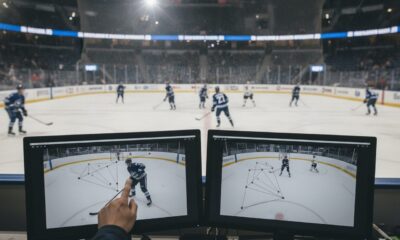
How Video Adjustments Fuelled the Vancouver Canucks’ 5-2 Prospects Victory Over Seattle
-
POLITICS7 days ago
What Trump’s Remarks Linking Canada to Iran Signal About International Negotiations
-

 BC STORIES6 days ago
Uncertain Eyewitness Testimony at Center of Final Arguments in 2021 Restaurant Shooting Trial
-
WORLD7 days ago
What Trump’s Remarks Linking Canada to Iran Signal About International Negotiations
-
LOCAL7 days ago
Stephen Johnston Mayor by Acclamation