WORLD
Trade War Casualties: Why Kentucky’s Bourbon Industry is Going Dark Amid Canadian Retaliatory Tariffs
Explore the impact of the US-Canada trade war on Kentucky’s bourbon industry as retaliatory tariffs force distilleries to go dark, featuring insights from expert Fred Minnick.


The Silent Stills of the Bluegrass State
In the rolling hills of Kentucky, the heart of American whiskey production, a disturbing silence has begun to settle over once-bustling facilities. For centuries, the rhythmic hum of copper stills and the sweet, heavy aroma of fermenting mash have been the pulse of the Commonwealth’s economy. However, as international trade tensions boil over, the industry is facing a crisis that transcends simple market fluctuations. A prominent Kentucky distillery has officially ‘gone dark,’ ceasing its operations in a move that industry insiders describe as a direct consequence of the escalating trade war between the United States and its northern neighbor, Canada. This shutdown is not merely a corporate restructuring but a symbolic and literal blow to a heritage industry that has defined Kentucky for generations.
The Catalyst: A Geopolitical Chess Match
The origins of this industrial blackout can be traced back to a series of aggressive trade maneuvers. When the United States government implemented heavy tariffs on imported steel and aluminum from key allies, citing national security concerns, the global response was swift and surgical. Canada, long considered one of America’s most stable and significant trading partners, was forced to respond with its own list of retaliatory measures. In a calculated effort to exert maximum political pressure, Canadian officials targeted high-profile, culturally significant American products. Bourbon, being the crown jewel of Kentucky and a major export to the Canadian market, was placed squarely in the crosshairs. The resulting tariffs on American whiskey have made it prohibitively expensive for Canadian consumers, leading to a precipitous drop in demand and a mounting surplus of aging liquid that has nowhere to go.
Expert Warning: ‘A Sad Day for Bourbon’
The gravity of the situation was perhaps best captured by Fred Minnick, a world-renowned whiskey expert and the leading voice in spirits journalism. Minnick, who has spent his career documenting the rise and resilience of the bourbon industry, did not mince words when discussing the distillery’s closure. ‘It’s a sad day for bourbon, to be honest with you,’ Minnick stated in a recent address. His assessment reflects a deeper concern that these trade disputes are eroding decades of brand-building and market expansion. According to Minnick, the impact of these tariffs is felt most acutely by the craft producers and independent distillers who lack the massive capital reserves of global conglomerates. For these smaller players, the loss of a major export market like Canada is not just a setback, it is an existential threat. Minnick warned that the longer these tariffs remain in place, the more permanent the damage to Kentucky’s global reputation will become.
The Economic Ripple Effect Through Kentucky
The Kentucky bourbon industry is far more than just a collection of distilleries; it is a complex ecosystem that supports thousands of families. It is an $8.6 billion industry that generates more than 20,000 jobs in the Commonwealth alone. When a distillery goes dark, the economic ripple effect is felt immediately and painfully. Farmers who grow the corn and rye used in the mash bills are seeing their contracts canceled. Coopers who craft the charred white oak barrels are experiencing a sharp decline in orders. Even the local tourism sector, which relies heavily on the ‘Bourbon Trail’ to draw visitors from around the world, is bracing for a downturn. The closure of a distillery represents a loss of tax revenue for local schools, infrastructure, and public services, turning a global trade dispute into a local catastrophe for small-town Kentucky.
The Long Road to Market Recovery
Industry analysts point out that the damage caused by these tariffs is not easily undone. Once a brand is priced out of a foreign market, competitors from other regions, such as Scotch, Irish whiskey, or even Canadian rye, are quick to fill the void on retail shelves. Reclaiming that shelf space and winning back consumer loyalty is an expensive and time-consuming process that can take years, if not decades. For Kentucky distillers, the current climate is one of deep uncertainty. Many had invested billions in expanding their warehouses and production capacity based on the projected growth of international exports. Now, those investments are sitting idle as the industry waits for a diplomatic breakthrough that seems increasingly elusive. The ‘dark’ distillery stands as a stark warning: the tools of trade policy, while designed to protect domestic interests, can often end up wounding the very industries they were meant to support.
A Call for De-escalation
As the sun sets over the silent warehouses of Kentucky, the message from the distillers, the experts, and the workers is unified: a plea for a return to stable, predictable trade relations. The bourbon industry has survived Prohibition, two World Wars, and numerous economic depressions, but the current era of protectionism presents a unique and modern challenge. Until the retaliatory tariffs are lifted, the amber liquid will remain locked in its barrels, and the stills will remain cold. The hope remains that policymakers will recognize the human and cultural cost of these economic battles before more of Kentucky’s historic distilleries are forced to turn off the lights for good. For now, the industry watches and waits, mourning a ‘sad day’ while hoping for a brighter, more open future for America’s native spirit.

WORLD
Strategic Pivot: Canada Joins Global Sixth-Generation Stealth Fighter Program Amid U.S. Trade Tensions
Canada joins the U.K., Italy, and Japan in the Global Combat Air Programme to develop 6th-gen stealth fighters, signaling a strategic shift away from U.S. reliance.

Canada Secures Observer Status in Global Combat Air Programme
In a significant shift for its long-term defense strategy, Canada has officially joined the Global Combat Air Programme (GCAP) as its first formal observer. This ambitious international initiative, led by the United Kingdom, Italy, and Japan, aims to develop and deploy a cutting-edge sixth-generation stealth fighter jet by 2035. The move allows Canadian military officials to participate in classified discussions regarding the aircraft’s development and explore potential roles for Canada’s domestic defense industry.
Diversifying Partnerships Beyond Washington
The decision to join GCAP comes at a volatile time for Canada-U.S. relations. With the United States recently imposing 50 percent tariffs on a wide range of Canadian exports, Prime Minister Mark Carney’s government is actively seeking to diversify military partnerships. Defense Minister David McGuinty emphasized that while Canada is taking a “step-by-step” approach and has not yet committed to a purchase, the program offers a way to reduce reliance on American-made platforms during a period of geopolitical uncertainty.
The Leap to Sixth-Generation Technology
As adversaries like China and Russia claim to have developed methods for detecting current fifth-generation stealth aircraft, the need for next-tier technology has become urgent. Sixth-generation fighters are designed to be vastly superior, utilizing artificial intelligence to fuse data and operating seamlessly alongside uncrewed drone swarms. Lt.-Gen. Jamie Speiser-Blanchet, commander of the Royal Canadian Air Force, noted that the GCAP fighter would provide advanced maneuverability and survivability in contested airspaces, particularly in the Arctic where Canada could play a vital role in platform testing.
Complementing the Existing Fleet
While Canada is still in the process of procuring American F-35s—with the first four jets expected this October—officials view the GCAP project as a long-term investment. Minister McGuinty likened the move to scouting young talent for a sports franchise, ensuring the nation remains technologically relevant decades into the future. Despite the potential for friction with Washington, Canadian officials maintain that the new jets will be fully interoperable with U.S. and NATO systems, ensuring that collective defense remains intact even as Canada explores new industrial horizons.
WORLD
Sean ‘Diddy’ Combs Offloads Star Island Mansion for $55 Million Amid Legal Fallout
Sean ‘Diddy’ Combs sells his 1 West Star Island estate in Miami for $55 million to a Virginia-based LLC following his recent federal conviction and sentencing.
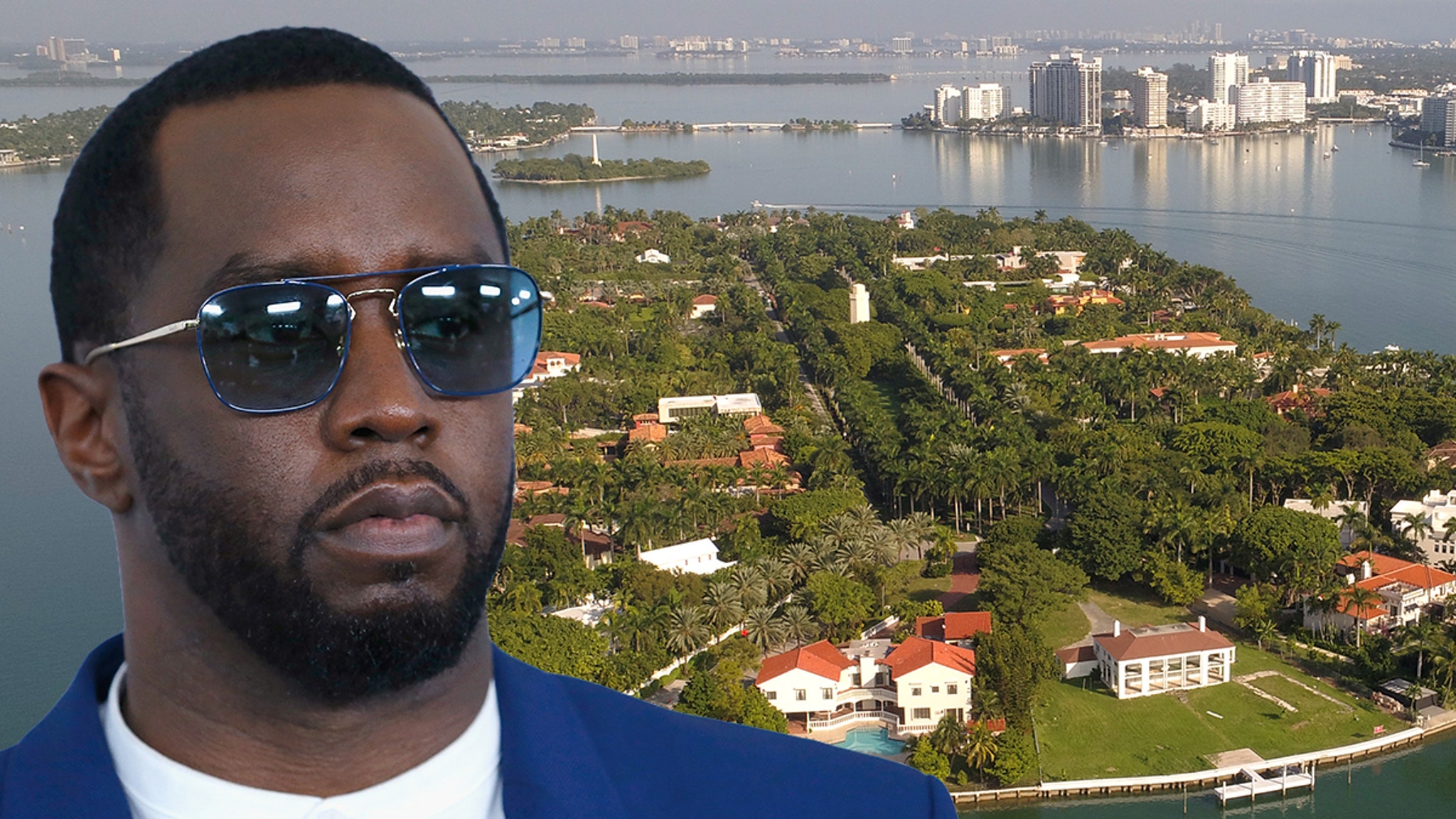
A Major Real Estate Transaction on Miami’s Exclusive Star Island
In a significant shift of his real estate portfolio, Sean “Diddy” Combs has finalized the sale of one of his premier properties located on Miami’s ultra-exclusive Star Island. The waterfront estate, situated at 1 West Star Island, was sold for a staggering $55 million. The transaction was reportedly an off-market deal, with the property being acquired by JFStar LLC, a real estate holding company based in Virginia. Records indicate that the buyer secured the purchase with an $18.5 million bank mortgage.
The History and Luxury of 1 West Star Island
Combs originally acquired the nearly 8,000-square-foot estate in 2021 from legendary musical duo Gloria and Emilio Estefan. The luxurious compound features a two-story main residence complemented by a guest house, totaling six bedrooms and eight-and-a-half bathrooms. Beyond the living quarters, the property boasts a private pool, a spa, and a dock providing direct access to the Biscayne Bay. Despite the sale of this particular parcel, property records confirm that Combs maintains ownership of the adjacent estate, 2 Star Island, which remains his primary residence in the area.
Context of the Sale and Ongoing Legal Struggles
The timing of the sale is notable as it follows a tumultuous period for the music mogul. In March 2024, federal authorities raided his neighboring property at 2 Star Island as part of a high-profile investigation into racketeering and sex trafficking. While the property at 1 West Star Island was not targeted during those raids, the legal pressure on Combs has been immense. Following a federal trial, Combs was acquitted of the most severe racketeering and sex trafficking charges but was convicted on two counts of violating the Mann Act, involving the transportation of individuals across state lines for illicit purposes.
Financial Maneuvers Amid Incarceration
Currently serving a federal prison sentence, Combs’ decision to liquidate the $55 million asset may signal a strategic financial move as he navigates his current legal reality. Star Island remains one of the most coveted zip codes in the world, and sales of this magnitude continue to set benchmarks for the South Florida luxury market. As Combs continues his sentence, the sale of this ‘crown jewel’ property marks the end of an era for his expansive presence on the Miami waterfront.
Entertainment
Sean ‘Diddy’ Combs Offloads Star Island Mansion for $55 Million Amid Legal Fallout
Sean ‘Diddy’ Combs sells his 1 West Star Island estate in Miami for $55 million to a Virginia-based LLC following his recent federal conviction and sentencing.
A Major Real Estate Transaction on Miami’s Exclusive Star Island
In a significant shift of his real estate portfolio, Sean “Diddy” Combs has finalized the sale of one of his premier properties located on Miami’s ultra-exclusive Star Island. The waterfront estate, situated at 1 West Star Island, was sold for a staggering $55 million. The transaction was reportedly an off-market deal, with the property being acquired by JFStar LLC, a real estate holding company based in Virginia. Records indicate that the buyer secured the purchase with an $18.5 million bank mortgage.
The History and Luxury of 1 West Star Island
Combs originally acquired the nearly 8,000-square-foot estate in 2021 from legendary musical duo Gloria and Emilio Estefan. The luxurious compound features a two-story main residence complemented by a guest house, totaling six bedrooms and eight-and-a-half bathrooms. Beyond the living quarters, the property boasts a private pool, a spa, and a dock providing direct access to the Biscayne Bay. Despite the sale of this particular parcel, property records confirm that Combs maintains ownership of the adjacent estate, 2 Star Island, which remains his primary residence in the area.
Context of the Sale and Ongoing Legal Struggles
The timing of the sale is notable as it follows a tumultuous period for the music mogul. In March 2024, federal authorities raided his neighboring property at 2 Star Island as part of a high-profile investigation into racketeering and sex trafficking. While the property at 1 West Star Island was not targeted during those raids, the legal pressure on Combs has been immense. Following a federal trial, Combs was acquitted of the most severe racketeering and sex trafficking charges but was convicted on two counts of violating the Mann Act, involving the transportation of individuals across state lines for illicit purposes.
Financial Maneuvers Amid Incarceration
Currently serving a federal prison sentence, Combs’ decision to liquidate the $55 million asset may signal a strategic financial move as he navigates his current legal reality. Star Island remains one of the most coveted zip codes in the world, and sales of this magnitude continue to set benchmarks for the South Florida luxury market. As Combs continues his sentence, the sale of this ‘crown jewel’ property marks the end of an era for his expansive presence on the Miami waterfront.
Investigation Underway Following Fatality at Historic Okanagan Lake Swim Event
RCMP Investigate String of Suspicious Fires in West Kelowna Neighborhood
Strategic Pivot: Canada Joins Global Sixth-Generation Stealth Fighter Program Amid U.S. Trade Tensions
Mayor Olivia Chow Targets Big Tech Pricing Tactics at Toronto Grocery Stores
Canada Offered to Double Oil Exports to U.S. in Failed Trade Negotiations, Hoekstra Reveals
Cross-Border Smoke Crisis: Canada Issues Alerts as U.S. Wildfire Pollution Drifts North

Opinion: John Rustad Has to Go

B.C. Supreme Court Grants Cowichan Tribes Title to Historic Richmond Lands and Fishing Rights

A Taste of Autumn: Fall Okanagan Wine Festival 2025

Vancouver Canucks Gear Up for a Make-or-Break 2025–26 Season

Kamloops Blazers Announce Off-Season Changes Ahead of 2025–26 Season

BC Ferries Sparks Outcry Over Contract with Chinese Shipyard
-
Economy7 days ago
Global Energy Markets Brace as Iran Threatens Trade Routes Amid US Military Strikes
-
Baseball7 days ago
AL Pitching Staff Crafts Historic Shutout in Dominant MLB All-Star Performance
-
Finance7 days ago
Bank of Canada Holds Rates Steady at 2.25% Amid Geopolitical Oil Volatility
-
Entertainment7 days ago
Sean ‘Diddy’ Combs Offloads Star Island Mansion for $55 Million Amid Legal Fallout
-
SPORTS7 days ago
End of the Yzerman Era: Red Wings GM Steps Down Amid Front Office Shakeup
-
Baseball4 days ago
AL Pitching Staff Crafts Historic Shutout in Dominant MLB All-Star Performance
-
SPORTS4 days ago
End of the Yzerman Era: Red Wings GM Steps Down Amid Front Office Shakeup
-
WORLD4 days ago
Sean ‘Diddy’ Combs Offloads Star Island Mansion for $55 Million Amid Legal Fallout