WORLD
The Sovereign’s Shadow: Navigating the Winds of Change in the British Monarchy 2025
An in-depth analysis of the British monarchy’s challenges and shifts throughout 2025, exploring the transition of power, financial transparency, and public perception.


A Year of Unprecedented Trial
As the calendar turned to 2025, the House of Windsor found itself at a crossroads that few constitutional scholars could have predicted during the late Queen Elizabeth II’s long and stable reign. The transition from the Elizabethan era to the Caroline age has been marked by a series of systemic shocks that have tested the very foundations of the British monarchy. While the institution remains constitutionally secure, the social and political fabric surrounding it has begun to fray under the pressures of modern transparency and shifting global loyalties. King Charles III, entering his third year on the throne, has faced a dual challenge: maintaining the dignity of an ancient office while acknowledging the urgent need for structural evolution. The year has been defined by a public that is increasingly vocal about its expectations, demanding a monarchy that is not only ceremonial but also accountable and relevant to the economic realities of a post-pandemic, high-inflation world.
The Weight of the Crown
Health concerns have dominated the royal narrative throughout the first half of 2025. Following the medical disclosures of previous years, the palace has adopted a policy of controlled transparency, a delicate balancing act intended to quell public anxiety without compromising the sovereign’s privacy. This strategy has seen Prince William, the Prince of Wales, taking on an increasingly significant share of public duties. The shifting workload has not only accelerated the transition period but has also placed the future of the monarchy firmly in the hands of the younger generation. Observers note that the King’s focus on environmental stewardship and social cohesion remains steadfast, yet the logistical realities of his reign have forced a prioritization of duty over public visibility. The internal dynamics of the family have also been tested, as the ‘slimmed-down’ monarchy model means that fewer individuals are carrying a greater burden of the thousands of annual engagements traditionally expected of the royals.
The Prince of Wales and Modernization
Prince William’s emergence as the primary face of the monarchy in 2025 has brought with it a distinct shift in tone. His approach is characterized by a more informal, direct engagement with the public, focusing on tangible social issues such as homelessness and mental health. This ‘Williamite’ approach seeks to move the monarchy away from mere pageantry and toward a model of active social impact. However, this modernization has not been without its critics. Traditionalists argue that by stripping away the mystique of the crown, the institution risks becoming just another high-profile NGO, losing the symbolic power that differentiates it from political leadership. The balance between being relatable and remaining exceptional is the central struggle of William’s current tenure. Furthermore, the role of Catherine, Princess of Wales, has been pivotal; her focus on early childhood development has provided a soft-power anchor for the family’s public image, even as the institution navigates more turbulent political waters.
The Financial Lens and Public Scrutiny
Perhaps the most significant hurdle in 2025 has been the escalating demand for financial transparency. Amidst a fluctuating UK economy, the cost of the monarchy has come under intense scrutiny from both parliamentary committees and the public. The debate over the Sovereign Grant and the private revenues of the Duchies of Lancaster and Cornwall has reached a fever pitch. In response, the Palace has signaled a willingness to review certain financial structures, including a more comprehensive disclosure of the royal family’s private wealth. This move toward ‘financial perestroika’ is seen as a necessary survival mechanism in an era where public funding is under constant review. The narrative of a ‘slimmed-down’ monarchy is no longer just a logistical preference but an economic imperative. Questions regarding the maintenance of vast estates and the inheritance tax exemptions enjoyed by the crown have become central themes in the national conversation about fairness and institutional privilege.
The Commonwealth and Global Standing
Internationally, the year 2025 has seen a continued re-evaluation of the monarchy’s role within the Commonwealth. Several nations have intensified discussions regarding their transition to republics, viewing the coronation and subsequent years as a natural point of departure from the colonial past. King Charles III has addressed these movements with a stance of diplomatic neutrality, stating that the future of each nation lies within the hands of its people. Nevertheless, the loss of these constitutional ties represents a narrowing of the British monarchy’s global reach. To counter this, the royal family has intensified its ‘soft power’ diplomacy, focusing on international cooperation on climate change and humanitarian aid, attempting to redefine their relevance on the world stage beyond the borders of the Commonwealth realms. These state visits are now less about imperial legacy and more about strategic partnership and cultural exchange.
The Public Perception Gap
Polling data in 2025 reveals a generational divide that poses the greatest long-term threat to the institution. While older demographics remain steadfastly loyal to the crown, younger citizens express a mix of indifference and skepticism. The challenge for the Windsors is to demonstrate that a hereditary monarchy can coexist with the democratic values of the 21st century. The digital strategy of the palace has become more aggressive, utilizing social media platforms to narrate their work in real-time, yet the core question of relevance remains. Can an institution based on birthright truly represent a diverse and meritocratic society? This is the question that haunts the hallowed halls of Buckingham Palace as the year progresses. The ‘Spare’ narrative and the ongoing distance from the Duke and Duchess of Sussex also continue to provide a complicating counter-narrative that the palace has struggled to fully neutralize.
Conclusion: A Resilient Institution
Despite these myriad challenges, the British monarchy in 2025 continues to exhibit a remarkable capacity for adaptation. It has survived centuries of political upheaval, and its current state is less a decline and more a profound transformation. As King Charles III continues to navigate his reign and Prince William prepares for his inevitable succession, the House of Windsor is proving that it can bend without breaking. The turmoil of 2025 has not signaled the end of the monarchy, but rather the beginning of its most significant evolution since the early 20th century. Whether this evolution will be enough to secure its place for the next hundred years remains to be seen, but for now, the crown remains a central, if contested, pillar of British identity. The survival of the monarchy will ultimately depend on its ability to prove that it can serve as a unifying symbol in a world that feels increasingly divided.

WORLD
Strategic Pivot: Canada Joins Global Sixth-Generation Stealth Fighter Program Amid U.S. Trade Tensions
Canada joins the U.K., Italy, and Japan in the Global Combat Air Programme to develop 6th-gen stealth fighters, signaling a strategic shift away from U.S. reliance.

Canada Secures Observer Status in Global Combat Air Programme
In a significant shift for its long-term defense strategy, Canada has officially joined the Global Combat Air Programme (GCAP) as its first formal observer. This ambitious international initiative, led by the United Kingdom, Italy, and Japan, aims to develop and deploy a cutting-edge sixth-generation stealth fighter jet by 2035. The move allows Canadian military officials to participate in classified discussions regarding the aircraft’s development and explore potential roles for Canada’s domestic defense industry.
Diversifying Partnerships Beyond Washington
The decision to join GCAP comes at a volatile time for Canada-U.S. relations. With the United States recently imposing 50 percent tariffs on a wide range of Canadian exports, Prime Minister Mark Carney’s government is actively seeking to diversify military partnerships. Defense Minister David McGuinty emphasized that while Canada is taking a “step-by-step” approach and has not yet committed to a purchase, the program offers a way to reduce reliance on American-made platforms during a period of geopolitical uncertainty.
The Leap to Sixth-Generation Technology
As adversaries like China and Russia claim to have developed methods for detecting current fifth-generation stealth aircraft, the need for next-tier technology has become urgent. Sixth-generation fighters are designed to be vastly superior, utilizing artificial intelligence to fuse data and operating seamlessly alongside uncrewed drone swarms. Lt.-Gen. Jamie Speiser-Blanchet, commander of the Royal Canadian Air Force, noted that the GCAP fighter would provide advanced maneuverability and survivability in contested airspaces, particularly in the Arctic where Canada could play a vital role in platform testing.
Complementing the Existing Fleet
While Canada is still in the process of procuring American F-35s—with the first four jets expected this October—officials view the GCAP project as a long-term investment. Minister McGuinty likened the move to scouting young talent for a sports franchise, ensuring the nation remains technologically relevant decades into the future. Despite the potential for friction with Washington, Canadian officials maintain that the new jets will be fully interoperable with U.S. and NATO systems, ensuring that collective defense remains intact even as Canada explores new industrial horizons.
WORLD
Sean ‘Diddy’ Combs Offloads Star Island Mansion for $55 Million Amid Legal Fallout
Sean ‘Diddy’ Combs sells his 1 West Star Island estate in Miami for $55 million to a Virginia-based LLC following his recent federal conviction and sentencing.
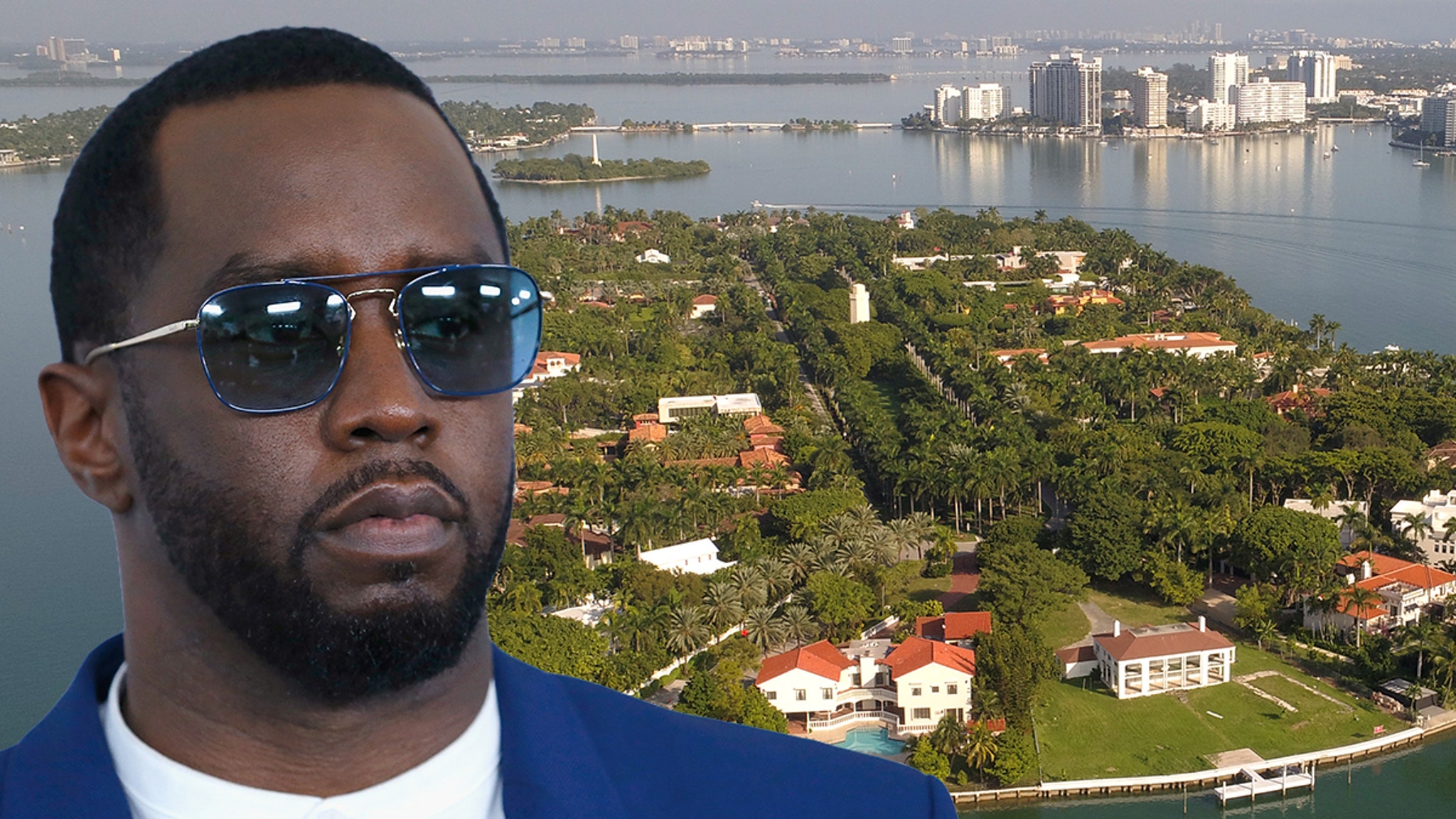
A Major Real Estate Transaction on Miami’s Exclusive Star Island
In a significant shift of his real estate portfolio, Sean “Diddy” Combs has finalized the sale of one of his premier properties located on Miami’s ultra-exclusive Star Island. The waterfront estate, situated at 1 West Star Island, was sold for a staggering $55 million. The transaction was reportedly an off-market deal, with the property being acquired by JFStar LLC, a real estate holding company based in Virginia. Records indicate that the buyer secured the purchase with an $18.5 million bank mortgage.
The History and Luxury of 1 West Star Island
Combs originally acquired the nearly 8,000-square-foot estate in 2021 from legendary musical duo Gloria and Emilio Estefan. The luxurious compound features a two-story main residence complemented by a guest house, totaling six bedrooms and eight-and-a-half bathrooms. Beyond the living quarters, the property boasts a private pool, a spa, and a dock providing direct access to the Biscayne Bay. Despite the sale of this particular parcel, property records confirm that Combs maintains ownership of the adjacent estate, 2 Star Island, which remains his primary residence in the area.
Context of the Sale and Ongoing Legal Struggles
The timing of the sale is notable as it follows a tumultuous period for the music mogul. In March 2024, federal authorities raided his neighboring property at 2 Star Island as part of a high-profile investigation into racketeering and sex trafficking. While the property at 1 West Star Island was not targeted during those raids, the legal pressure on Combs has been immense. Following a federal trial, Combs was acquitted of the most severe racketeering and sex trafficking charges but was convicted on two counts of violating the Mann Act, involving the transportation of individuals across state lines for illicit purposes.
Financial Maneuvers Amid Incarceration
Currently serving a federal prison sentence, Combs’ decision to liquidate the $55 million asset may signal a strategic financial move as he navigates his current legal reality. Star Island remains one of the most coveted zip codes in the world, and sales of this magnitude continue to set benchmarks for the South Florida luxury market. As Combs continues his sentence, the sale of this ‘crown jewel’ property marks the end of an era for his expansive presence on the Miami waterfront.
Entertainment
Sean ‘Diddy’ Combs Offloads Star Island Mansion for $55 Million Amid Legal Fallout
Sean ‘Diddy’ Combs sells his 1 West Star Island estate in Miami for $55 million to a Virginia-based LLC following his recent federal conviction and sentencing.
A Major Real Estate Transaction on Miami’s Exclusive Star Island
In a significant shift of his real estate portfolio, Sean “Diddy” Combs has finalized the sale of one of his premier properties located on Miami’s ultra-exclusive Star Island. The waterfront estate, situated at 1 West Star Island, was sold for a staggering $55 million. The transaction was reportedly an off-market deal, with the property being acquired by JFStar LLC, a real estate holding company based in Virginia. Records indicate that the buyer secured the purchase with an $18.5 million bank mortgage.
The History and Luxury of 1 West Star Island
Combs originally acquired the nearly 8,000-square-foot estate in 2021 from legendary musical duo Gloria and Emilio Estefan. The luxurious compound features a two-story main residence complemented by a guest house, totaling six bedrooms and eight-and-a-half bathrooms. Beyond the living quarters, the property boasts a private pool, a spa, and a dock providing direct access to the Biscayne Bay. Despite the sale of this particular parcel, property records confirm that Combs maintains ownership of the adjacent estate, 2 Star Island, which remains his primary residence in the area.
Context of the Sale and Ongoing Legal Struggles
The timing of the sale is notable as it follows a tumultuous period for the music mogul. In March 2024, federal authorities raided his neighboring property at 2 Star Island as part of a high-profile investigation into racketeering and sex trafficking. While the property at 1 West Star Island was not targeted during those raids, the legal pressure on Combs has been immense. Following a federal trial, Combs was acquitted of the most severe racketeering and sex trafficking charges but was convicted on two counts of violating the Mann Act, involving the transportation of individuals across state lines for illicit purposes.
Financial Maneuvers Amid Incarceration
Currently serving a federal prison sentence, Combs’ decision to liquidate the $55 million asset may signal a strategic financial move as he navigates his current legal reality. Star Island remains one of the most coveted zip codes in the world, and sales of this magnitude continue to set benchmarks for the South Florida luxury market. As Combs continues his sentence, the sale of this ‘crown jewel’ property marks the end of an era for his expansive presence on the Miami waterfront.
Investigation Underway Following Fatality at Historic Okanagan Lake Swim Event
RCMP Investigate String of Suspicious Fires in West Kelowna Neighborhood
Strategic Pivot: Canada Joins Global Sixth-Generation Stealth Fighter Program Amid U.S. Trade Tensions
Mayor Olivia Chow Targets Big Tech Pricing Tactics at Toronto Grocery Stores
Canada Offered to Double Oil Exports to U.S. in Failed Trade Negotiations, Hoekstra Reveals
Cross-Border Smoke Crisis: Canada Issues Alerts as U.S. Wildfire Pollution Drifts North

Opinion: John Rustad Has to Go

B.C. Supreme Court Grants Cowichan Tribes Title to Historic Richmond Lands and Fishing Rights

A Taste of Autumn: Fall Okanagan Wine Festival 2025

Vancouver Canucks Gear Up for a Make-or-Break 2025–26 Season

Kamloops Blazers Announce Off-Season Changes Ahead of 2025–26 Season

BC Ferries Sparks Outcry Over Contract with Chinese Shipyard
-
Economy7 days ago
Global Energy Markets Brace as Iran Threatens Trade Routes Amid US Military Strikes
-
Baseball7 days ago
AL Pitching Staff Crafts Historic Shutout in Dominant MLB All-Star Performance
-
Finance7 days ago
Bank of Canada Holds Rates Steady at 2.25% Amid Geopolitical Oil Volatility
-
Entertainment7 days ago
Sean ‘Diddy’ Combs Offloads Star Island Mansion for $55 Million Amid Legal Fallout
-
SPORTS7 days ago
End of the Yzerman Era: Red Wings GM Steps Down Amid Front Office Shakeup
-
Baseball4 days ago
AL Pitching Staff Crafts Historic Shutout in Dominant MLB All-Star Performance
-
SPORTS4 days ago
End of the Yzerman Era: Red Wings GM Steps Down Amid Front Office Shakeup
-
WORLD4 days ago
Sean ‘Diddy’ Combs Offloads Star Island Mansion for $55 Million Amid Legal Fallout