WORLD
The Sovereign’s Shadow: Navigating the Winds of Change in the British Monarchy 2025
An in-depth analysis of the British monarchy’s challenges and shifts throughout 2025, exploring the transition of power, financial transparency, and public perception.


A Year of Unprecedented Trial
As the calendar turned to 2025, the House of Windsor found itself at a crossroads that few constitutional scholars could have predicted during the late Queen Elizabeth II’s long and stable reign. The transition from the Elizabethan era to the Caroline age has been marked by a series of systemic shocks that have tested the very foundations of the British monarchy. While the institution remains constitutionally secure, the social and political fabric surrounding it has begun to fray under the pressures of modern transparency and shifting global loyalties. King Charles III, entering his third year on the throne, has faced a dual challenge: maintaining the dignity of an ancient office while acknowledging the urgent need for structural evolution. The year has been defined by a public that is increasingly vocal about its expectations, demanding a monarchy that is not only ceremonial but also accountable and relevant to the economic realities of a post-pandemic, high-inflation world.
The Weight of the Crown
Health concerns have dominated the royal narrative throughout the first half of 2025. Following the medical disclosures of previous years, the palace has adopted a policy of controlled transparency, a delicate balancing act intended to quell public anxiety without compromising the sovereign’s privacy. This strategy has seen Prince William, the Prince of Wales, taking on an increasingly significant share of public duties. The shifting workload has not only accelerated the transition period but has also placed the future of the monarchy firmly in the hands of the younger generation. Observers note that the King’s focus on environmental stewardship and social cohesion remains steadfast, yet the logistical realities of his reign have forced a prioritization of duty over public visibility. The internal dynamics of the family have also been tested, as the ‘slimmed-down’ monarchy model means that fewer individuals are carrying a greater burden of the thousands of annual engagements traditionally expected of the royals.
The Prince of Wales and Modernization
Prince William’s emergence as the primary face of the monarchy in 2025 has brought with it a distinct shift in tone. His approach is characterized by a more informal, direct engagement with the public, focusing on tangible social issues such as homelessness and mental health. This ‘Williamite’ approach seeks to move the monarchy away from mere pageantry and toward a model of active social impact. However, this modernization has not been without its critics. Traditionalists argue that by stripping away the mystique of the crown, the institution risks becoming just another high-profile NGO, losing the symbolic power that differentiates it from political leadership. The balance between being relatable and remaining exceptional is the central struggle of William’s current tenure. Furthermore, the role of Catherine, Princess of Wales, has been pivotal; her focus on early childhood development has provided a soft-power anchor for the family’s public image, even as the institution navigates more turbulent political waters.
The Financial Lens and Public Scrutiny
Perhaps the most significant hurdle in 2025 has been the escalating demand for financial transparency. Amidst a fluctuating UK economy, the cost of the monarchy has come under intense scrutiny from both parliamentary committees and the public. The debate over the Sovereign Grant and the private revenues of the Duchies of Lancaster and Cornwall has reached a fever pitch. In response, the Palace has signaled a willingness to review certain financial structures, including a more comprehensive disclosure of the royal family’s private wealth. This move toward ‘financial perestroika’ is seen as a necessary survival mechanism in an era where public funding is under constant review. The narrative of a ‘slimmed-down’ monarchy is no longer just a logistical preference but an economic imperative. Questions regarding the maintenance of vast estates and the inheritance tax exemptions enjoyed by the crown have become central themes in the national conversation about fairness and institutional privilege.
The Commonwealth and Global Standing
Internationally, the year 2025 has seen a continued re-evaluation of the monarchy’s role within the Commonwealth. Several nations have intensified discussions regarding their transition to republics, viewing the coronation and subsequent years as a natural point of departure from the colonial past. King Charles III has addressed these movements with a stance of diplomatic neutrality, stating that the future of each nation lies within the hands of its people. Nevertheless, the loss of these constitutional ties represents a narrowing of the British monarchy’s global reach. To counter this, the royal family has intensified its ‘soft power’ diplomacy, focusing on international cooperation on climate change and humanitarian aid, attempting to redefine their relevance on the world stage beyond the borders of the Commonwealth realms. These state visits are now less about imperial legacy and more about strategic partnership and cultural exchange.
The Public Perception Gap
Polling data in 2025 reveals a generational divide that poses the greatest long-term threat to the institution. While older demographics remain steadfastly loyal to the crown, younger citizens express a mix of indifference and skepticism. The challenge for the Windsors is to demonstrate that a hereditary monarchy can coexist with the democratic values of the 21st century. The digital strategy of the palace has become more aggressive, utilizing social media platforms to narrate their work in real-time, yet the core question of relevance remains. Can an institution based on birthright truly represent a diverse and meritocratic society? This is the question that haunts the hallowed halls of Buckingham Palace as the year progresses. The ‘Spare’ narrative and the ongoing distance from the Duke and Duchess of Sussex also continue to provide a complicating counter-narrative that the palace has struggled to fully neutralize.
Conclusion: A Resilient Institution
Despite these myriad challenges, the British monarchy in 2025 continues to exhibit a remarkable capacity for adaptation. It has survived centuries of political upheaval, and its current state is less a decline and more a profound transformation. As King Charles III continues to navigate his reign and Prince William prepares for his inevitable succession, the House of Windsor is proving that it can bend without breaking. The turmoil of 2025 has not signaled the end of the monarchy, but rather the beginning of its most significant evolution since the early 20th century. Whether this evolution will be enough to secure its place for the next hundred years remains to be seen, but for now, the crown remains a central, if contested, pillar of British identity. The survival of the monarchy will ultimately depend on its ability to prove that it can serve as a unifying symbol in a world that feels increasingly divided.

WORLD
What to Know About Macklemore’s $1 Million Aid Donation and Tour Exit
Macklemore donates $1 million in tour earnings to six Palestinian aid groups after being dropped from Ed Sheeran’s tour following a MetLife Stadium speech.


$1 Million Directed to Relief Efforts
Rapper Macklemore has pledged his entire $1 million in net earnings from Ed Sheeran’s Loop Tour to Palestinian aid organizations. The funds will benefit six groups, including the Palestine Children’s Relief Fund, Gaza Soup Kitchen, and UNRWA USA. Addressing the decision, Macklemore stated, “Palestinian lives are worth protecting,” adding that “A Palestinian life is no less valuable than any other life on this earth.”
Stadium Speech and Tour Departure
The donation follows Macklemore’s removal from the Loop Tour after he gave a pro-Palestinian speech at MetLife Stadium in New Jersey. New England Patriots owner Robert Kraft acknowledged pressuring stadium operators to ban the artist from performing. While Macklemore publicly invited Kraft to match his $1 million contribution, representatives for Kraft declined to comment on the request.
Broader Tour Repercussions
The controversy prompted further changes to the concert series. In solidarity, all other supporting acts on the Loop Tour—including Finneas, Aaron Rowe, Lukas Graham, and Beoga—subsequently withdrew from performing.
WORLD
A Look at How Tensions in Western Saudi Arabia Led to Recent Casualties and Damage
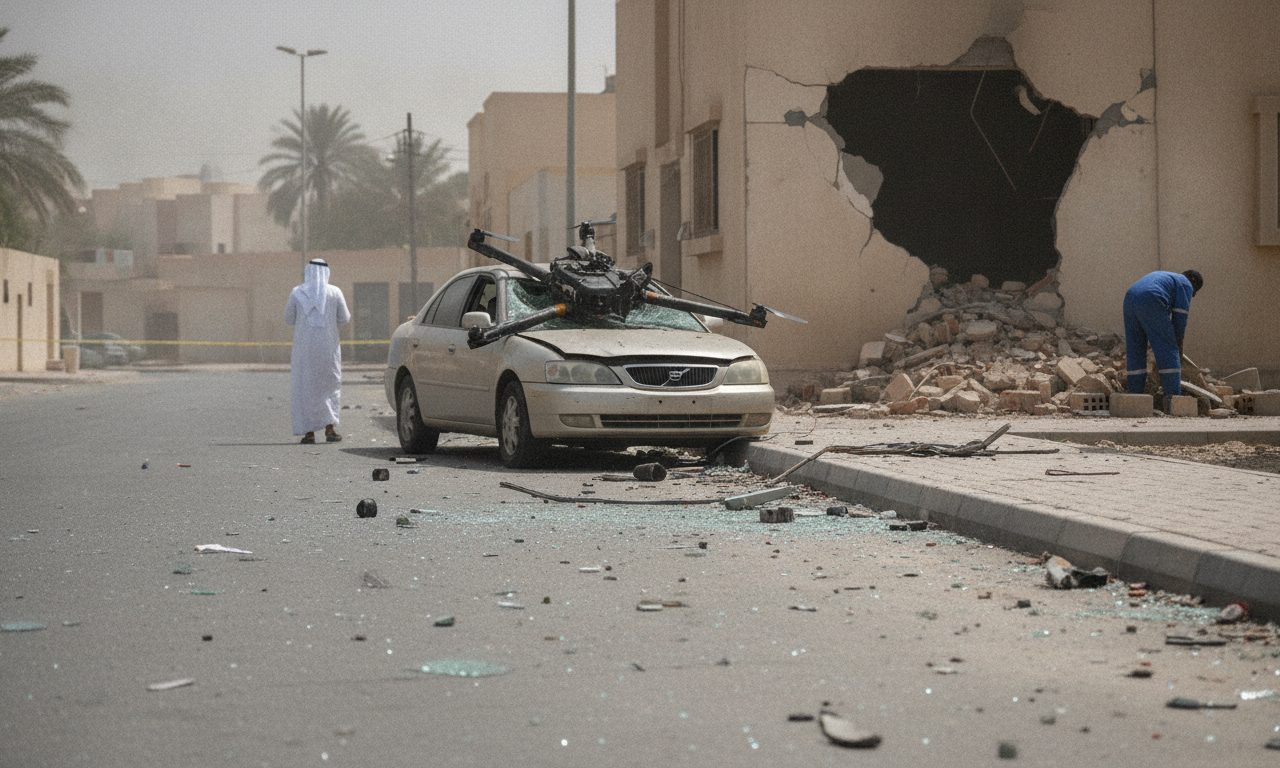
One person was killed and two injured in Saudi Arabia’s Taif province when debris fell from an intercepted Houthi drone, amid rising regional tensions.
Casualties and Property Damage Reported in Taif
One person has died and two others were hurt in western Saudi Arabia after debris fell from a Houthi drone that was shot down, according to the Saudi civil defense. The fallen fragments killed a Yemeni citizen and injured a Saudi citizen alongside a Pakistani national in Taif province, while also damaging nearby structures and vehicles. Officials did not state the precise time of the event.
Escalating Hostilities along the Red Sea
This incident occurred during an increase in fighting between Iran-aligned Houthi insurgents and Yemeni government forces backed by Saudi Arabia. As government units launched offensives along the Red Sea, Houthi fighters launched strikes across the border into Saudi territory. Saudi officials stated Wednesday that Houthis attempted a drone attack targeting the holy city of Mecca. The Houthis denied the claim, and Iranian Foreign Ministry spokesperson Esmail Baghaei posted on social media Thursday that drone interception claims should not serve to accuse specific groups or heighten conflict, while also speaking against attacks on Islamic holy sites.
Broader Regional Impacts
The friction comes as Houthi forces took control of the port city of Mokha as well as an island in the Bab el-Mandeb Strait, an important maritime route alternative to the Strait of Hormuz. These developments continue to influence the wider Iran war environment.
NATIONAL STORIES
Soaring Fuel Prices Hit Home as Trump Urges End to Strikes on Russian Energy
Trump urges Ukraine to halt strikes on Russian diesel as U.S. prices top $6 a gallon, amidst heavy drone exchanges and potential autumn peace talks.

Rising Fuel Costs Prompt Call for Halt to Russian Oil Strikes
With American drivers facing unprecedented costs at the pump, U.S. President Donald Trump has requested that Ukrainian President Volodymyr Zelenskyy stop military strikes against Russian diesel facilities. The request follows a historic spike in domestic energy costs, with U.S. diesel averages surging beyond $6 per gallon on Friday.
Speaking from his Doonbeg golf club on the sidelines of the Irish Open, Trump noted that he discussed the matter with Zelenskyy after conversing with Russian President Vladimir Putin. While acknowledging that Ukraine has numerous alternative targets, Trump stated that targeting Russian fuel infrastructure is harming global energy availability.
Global Energy Strain and Midterm Pressure
The global diesel supply has tightened considerably over recent months. Kyiv’s ongoing long-range campaign against Moscow’s energy sector forced Russia to enact a diesel export ban in July while implementing internal fuel rationing. Supply pressures were further compounded by disruptions to shipments through the Strait of Hormuz during the war on Iran. These escalating energy expenses arrive as a primary concern for American voters heading into the November midterm elections.
Kyiv maintains that hitting Russian refineries is essential to cutting off the financial and fuel resources driving Moscow’s ongoing invasion, which has lasted more than four years.
Escalating Military Exchanges Across the Region
The call for a ceasefire on energy infrastructure comes during an intense escalation in aerial warfare between both nations. Overnight into Sunday, Russia launched 453 drones across Ukraine, including faster, jet-powered models. Ukrainian air defense forces reported intercepting or suppressing 409 of the incoming aircraft.
Russian strikes inflicted casualties and damage across several Ukrainian hubs. A drone attack on Odesa injured at least nine people in the major Black Sea port, coming just a day after a residential high-rise strike in the city killed two people and injured 26 others. Further west, a Russian drone caused a fire at a gas station near the Yahodyn-Dorohusk crossing on the Polish border. Ukrainian Foreign Minister Andrii Sybiha characterized the strike near the NATO and EU border as an act of terror, though local customs officials confirmed the crossing point itself remained undamaged.
Concurrently, Ukraine conducted extensive drone operations over Russian territory. Russian defense officials claimed to have downed 389 Ukrainian drones overnight. Strikes hit an oil processing facility and tank farm in Slavyansk-on-Kuban in the Krasnodar region, injuring three people and damaging a pipeline. In Nizhnekamsk, a key refining hub in Tatarstan, a drone impact near a parked car resulted in two civilian deaths and 14 injuries, alongside a fire at a local enterprise.
Diplomatic Initiatives Remain Unresolved
Amid the ongoing combat, potential avenues for negotiation are emerging. Kremlin spokesman Dmitry Peskov indicated on Sunday that Moscow remains open to resuming three-way peace talks involving Russia, Ukraine, and the U.S., suggesting October as a possible timeline.
The announcement follows recent visits to Moscow and Kyiv by U.S. envoys Jared Kushner and Steve Witkoff. Despite these initial diplomatic contacts, both warring nations maintain fundamentally opposing demands, particularly regarding territorial concessions.
Your Current 3 Day Forecast — September 20, 2026

Dylan Cease struggles as Toronto pitching strain worsens in loss to Rangers
How Canada’s Prime Minister Is Building Stronger Trans-Atlantic Ties Close to Home
Montreal’s High-Powered Offense Holds Off Late Hamilton Comeback in East Clash
What to Know Ahead of Alberta’s Oct. 19 Vote on a Separation Referendum
What to Know About the Alasko Frozen Raspberry Recall Following Illness Reports
Opinion: John Rustad Has to Go

B.C. Supreme Court Grants Cowichan Tribes Title to Historic Richmond Lands and Fishing Rights

A Taste of Autumn: Fall Okanagan Wine Festival 2025

Vancouver Canucks Gear Up for a Make-or-Break 2025–26 Season

Kamloops Blazers Announce Off-Season Changes Ahead of 2025–26 Season

BC Ferries Sparks Outcry Over Contract with Chinese Shipyard
-
NATIONAL STORIES6 days ago
Remembering George Chuvalo: The Canadian Heavyweight Legend Who Never Got Knocked Down
-

 COMMUNITY6 days ago
Navigating Blended Family Wills and Estate Options
-

 SPORTS6 days ago
How Video Adjustments Fuelled the Vancouver Canucks’ 5-2 Prospects Victory Over Seattle
-

 NATIONAL STORIES6 days ago
AI’s Biggest Warning May Be Coming From the People Building It
-
POLITICS7 days ago
What Trump’s Remarks Linking Canada to Iran Signal About International Negotiations
-

 BC STORIES6 days ago
Uncertain Eyewitness Testimony at Center of Final Arguments in 2021 Restaurant Shooting Trial
-
WORLD7 days ago
What Trump’s Remarks Linking Canada to Iran Signal About International Negotiations
-
LOCAL7 days ago
Stephen Johnston Mayor by Acclamation