Tech Stories
The $1,000 Console Era: Analysts React to Valve’s Steep Steam Machine Pricing
Valve’s Steam Machine breaks the $1,000 barrier. Industry analysts discuss how the AI boom and component costs are turning PC gaming into a luxury market.

.png?width=1200&height=630&fit=crop&enable=upscale&auto=webp)
A New Price Ceiling for Home Consoles
Valve has officially pulled back the curtain on its long-awaited Steam Machine pricing, and the figures are sending shockwaves through the gaming industry. With a starting price of $1,049 for a 512GB model—reaching up to $1,428 for the 2TB version with a controller—the device has shattered the psychological $1,000 barrier. This move marks a significant departure from the competitive pricing of the Steam Deck and signals a shift in the hardware landscape influenced by global economic pressures.
The AI Boom and Component Scarcity
According to Valve and industry analysts, these high prices are not a strategic choice but a necessity born of the current market. The explosion of generative AI has led to a massive spike in demand for high-end components, specifically DRAM and NAND flash memory. Joost van Dreunen, CEO of Aldora, noted that while the pricing is disappointing, it reflects the “runaway cost of memory and storage” that affects every hardware manufacturer. Unlike the traditional console model used by Sony or Microsoft, Valve appears unwilling or unable to heavily subsidize this hardware, opting instead for minimal-margin pricing that tracks current component costs.
A Niche Proposition in a Luxury Market
The reception among analysts suggests that the Steam Machine will occupy a specific, enthusiast-driven corner of the market. Mat Piscatella of Circana expects the device to sell out immediately due to extremely limited initial quantities, but questions whether it can maintain long-term momentum. Meanwhile, Piers Harding-Rolls of Ampere Analysis argues that without the clear portable utility of the Steam Deck, the Steam Machine remains a “niche proposition” for a subsegment of gamers looking for a console-like PC experience.
Broad Implications for the Gaming Industry
The broader takeaway from the Steam Machine reveal is a sobering one for the average consumer. Emmanuel Rosier of Newzoo suggests that the $1,049 entry price reflects a market where the original $700–$800 targets are no longer viable. As components continue to be diverted toward AI data centers, the industry may be entering an era where specialist gaming hardware is increasingly treated as a luxury category. If even a titan like Valve cannot maintain accessibility, the future of the sub-$500 gaming PC remains in serious jeopardy.

Audio
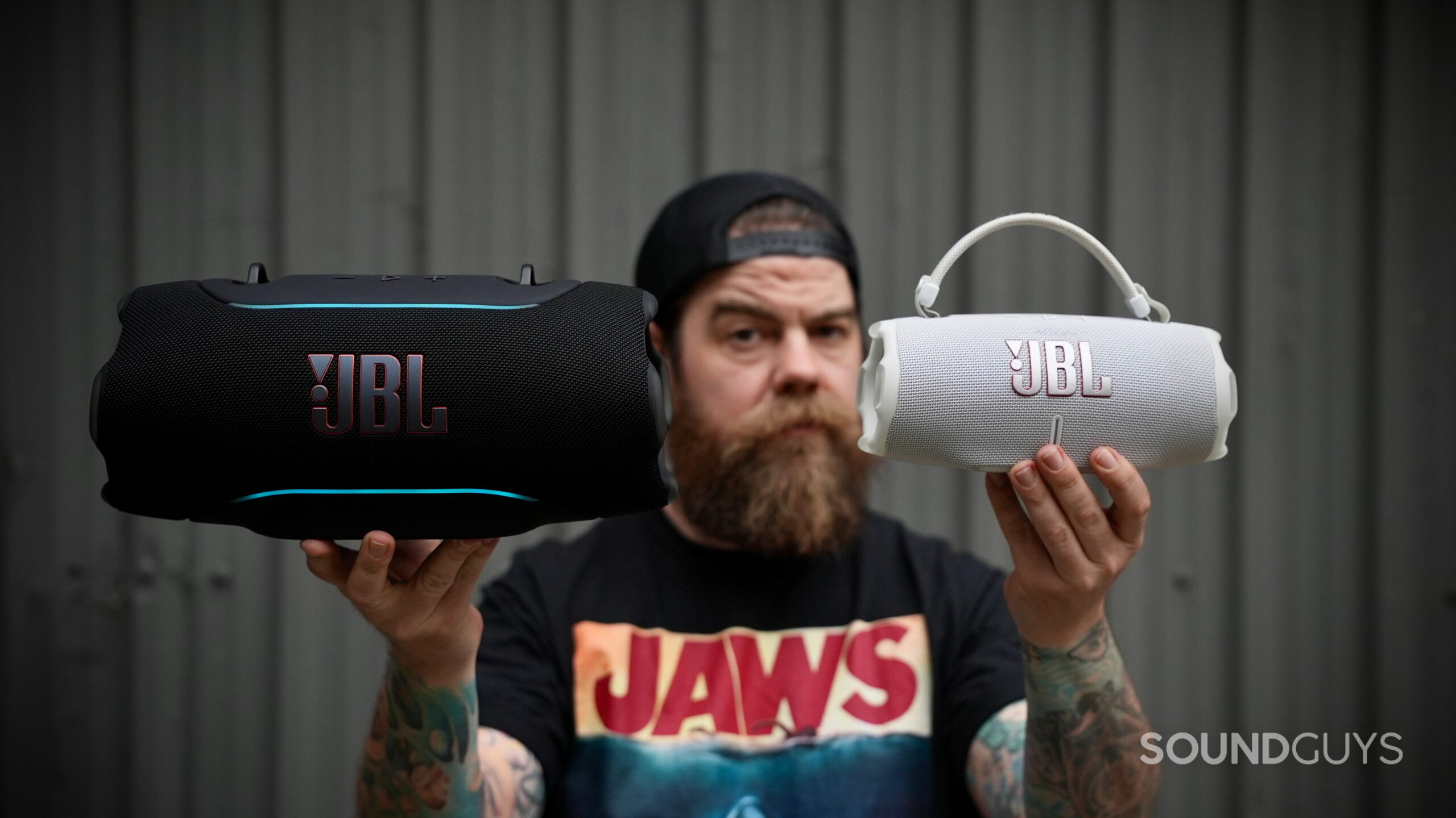
JBL Xtreme 5 vs. Charge 6: Which Rugged Speaker Should Power Your Next Adventure?
Compare the JBL Xtreme 5 and Charge 6 to find the best outdoor speaker. We look at battery life, sound quality, and portability in this detailed 2026 review.
The Battle of Portability and Power
In the evolving landscape of outdoor audio, JBL remains a dominant force with its latest iterations: the JBL Xtreme 5 and the JBL Charge 6. While both speakers share a rugged aesthetic and a commitment to durability, they serve distinct roles for different types of listeners. Choosing between them isn’t just about price; it’s about deciding whether you prioritize raw output for large gatherings or a compact design for daily mobility.
Design and Ruggedness
Both models boast an IP68 rating, ensuring they are fully protected against dust and water. This makes either choice suitable for beach trips or poolside parties. However, the physical footprint marks the first major divergence. The Xtreme 5 is a heavy-duty unit featuring a dedicated shoulder strap to manage its bulk, whereas the Charge 6 is designed to be tossed into a backpack effortlessly. For those who need sound on the move, the Charge 6 is the clear winner, but for those anchoring a backyard BBQ, the Xtreme 5’s size facilitates a much broader soundstage.
Performance and Audio Architecture
The internal engineering reveals why the Xtreme 5 carries more weight. It utilizes a multi-driver setup capable of playing stereo signals, providing better instrument separation and clarity at high volumes. Conversely, the Charge 6 downmixes audio to a mono output. While the Charge 6 sounds impressive for its size, it begins to struggle with compression when pushed to its limits. The Xtreme 5 maintains its composure at higher decibels, offering the deep, punchy bass required to fill large outdoor spaces.
Battery Longevity and Connectivity
Connectivity is a strong suit for both, with the Xtreme 5 utilizing Bluetooth 6.0 and the Charge 6 using Bluetooth 5.4. Both support Auracast for multi-speaker pairing. A significant differentiator is battery life: the Xtreme 5 outperformed expectations in testing, lasting over 30 hours at 80dB. The Charge 6, while rated similarly, managed roughly 13 hours at the same volume level. Furthermore, the Xtreme 5 features a swappable battery pack, a feature that significantly extends the product’s lifespan and utility for long-term users.
Your Current 3 Day Forecast — September 20, 2026

Dylan Cease struggles as Toronto pitching strain worsens in loss to Rangers
How Canada’s Prime Minister Is Building Stronger Trans-Atlantic Ties Close to Home
Montreal’s High-Powered Offense Holds Off Late Hamilton Comeback in East Clash
What to Know Ahead of Alberta’s Oct. 19 Vote on a Separation Referendum
What to Know About the Alasko Frozen Raspberry Recall Following Illness Reports

Opinion: John Rustad Has to Go

B.C. Supreme Court Grants Cowichan Tribes Title to Historic Richmond Lands and Fishing Rights

A Taste of Autumn: Fall Okanagan Wine Festival 2025

Vancouver Canucks Gear Up for a Make-or-Break 2025–26 Season

Kamloops Blazers Announce Off-Season Changes Ahead of 2025–26 Season

BC Ferries Sparks Outcry Over Contract with Chinese Shipyard
-
NATIONAL STORIES6 days ago
Remembering George Chuvalo: The Canadian Heavyweight Legend Who Never Got Knocked Down
-

 COMMUNITY6 days ago
Navigating Blended Family Wills and Estate Options
-

 NATIONAL STORIES6 days ago
AI’s Biggest Warning May Be Coming From the People Building It
-
 SPORTS6 days ago
How Video Adjustments Fuelled the Vancouver Canucks’ 5-2 Prospects Victory Over Seattle
-
POLITICS7 days ago
What Trump’s Remarks Linking Canada to Iran Signal About International Negotiations
-
WORLD7 days ago
What Trump’s Remarks Linking Canada to Iran Signal About International Negotiations
-
LOCAL7 days ago
Stephen Johnston Mayor by Acclamation
-

 BC STORIES6 days ago
Uncertain Eyewitness Testimony at Center of Final Arguments in 2021 Restaurant Shooting Trial