NATIONAL STORIES
Remembering Gloria Steinem: The Story and Legacy of a Second-Wave Feminist Icon
Feminist leader and Ms. Magazine co-founder Gloria Steinem has died at age 92. A look back at her five decades of activism, writing, and leadership.


A Life Dedicated to Social Change
Gloria Steinem, a central voice and prominent symbol of the women’s movement during the 1960s and 1970s, has passed away at the age of 92. Her foundation announced her death in an Instagram post on Thursday, stating she died on Wednesday. Known as an author, organizer, and speaker, Steinem committed more than five decades to championing gender equality, reproductive rights, and civil liberties.
Early Beginnings and Groundbreaking Journalism
Born in Toledo, Ohio, on March 25, 1934, Steinem experienced an unconventional childhood as her family moved frequently due to her father’s work as a traveling antique dealer. After her parents separated when she was 11, she spent years caring for her mother, who suffered from depression and a mental breakdown. She later graduated from Smith College and entered journalism.
In 1963, Steinem spent 11 days working undercover as a Playboy bunny for Show magazine. Her two-part expose, “A Bunny’s Tale,” revealed low pay and sexist conditions, later inspiring a 1985 television movie starring Kirstie Alley. She went on to help found New York magazine in 1968, where her essay “After Black Power, Women’s Liberation” established her prominence in the movement. Steinem noted that her life as an activist truly launched in 1969 after attending an abortion speak-out at a New York church, drawing on her own experience of having had an illegal abortion in London at age 22.
Building Organizations and National Impact
Steinem co-founded Ms. Magazine in 1971 to address topics overlooked by traditional women’s publications, including domestic violence, equal pay, and abortion access. An early edition listed 52 women who had undergone abortions, advocating for legalization prior to the 1973 Roe v. Wade decision. She also co-founded the National Women’s Political Caucus in 1971 alongside Betty Friedan, Shirley Chisholm, and Bella Abzug. Her additional organizational work included founding the Ms. Foundation for Women, Voters for Choice, the Women’s Media Center, and the Coalition of Labor Union Women.
Steinem repeatedly credited Black women with laying the groundwork for the movement. “If you’ve suffered discrimination, you’re sensitive to it on every level. I learned feminism largely from Black women. Women of colour basically invented feminism,” she told the New Yorker magazine in 2015.
Honors, Media, and Personal Milestones
In 2013, President Barack Obama presented Steinem with the Presidential Medal of Freedom, the highest civilian award in the United States. Her life was captured across various media, including the 2011 HBO documentary “Gloria: In Her Own Words,” the 2018 play “Gloria: A Life,” and director Julie Taymor’s 2020 feature film “The Glorias,” which adapted Steinem’s 2015 memoir “My Life on the Road.”
Though frequently critical of how traditional marriage restricted women, Steinem married environmentalist David Bale at age 66. She noted at the time that the union demonstrated the freedom of choice core to feminist values. Bale passed away in 2003. Steinem stayed active well into her 80s, producing television projects, publishing books—such as her 1986 biography of Marilyn Monroe—and hosting the Viceland documentary series “Woman.”


NATIONAL STORIES
How Canada’s Prime Minister Is Building Stronger Trans-Atlantic Ties Close to Home
PM Mark Carney meets French President Emmanuel Macron and Norwegian PM Jonas Gahr Store as Canada pursues closer ties with European partners.
Diplomatic Summits Near Newfoundland and Ottawa
Following a trip to Europe, Prime Minister Mark Carney is hosting bilateral discussions with key trans-Atlantic partners over a 48-hour span starting Sunday. Mr. Carney will travel to the French territory of Saint-Pierre and Miquelon, located off Newfoundland’s coast, to meet French President Emmanuel Macron on Sunday. Later that evening, Norwegian Prime Minister Jonas Gahr Store arrives in Ottawa for discussions.
Aligning Foreign Policy and Strategic Goals
The diplomatic visits follow Mr. Carney’s participation in European Commission President Ursula von der Leyen’s State of the Union address in Strasbourg, where Canada was invited to become the European Union’s first associate member. The following day, Mr. Carney presented a vision for a broader geopolitical alliance in an address to the European Parliament. Both France and Norway share a foreign policy focus on strategic autonomy. Mr. Store’s February address to the Oslo Security Conference echoed themes from Mr. Carney’s January speech in Davos regarding a rupture in the global order and the economic leverage exerted by major powers.
Broader Geopolitical Context and Challenges
While European leaders typically pass through Canada ahead of the annual United Nations General Assembly in New York, these talks highlight the central role Europe plays in Mr. Carney’s agenda. German Social Democrat MEP Tobias Cremer noted growing interest in partnering with Canada amid geopolitical pressures involving Russia, China, and the United States. However, domestic political shifts pose potential risks to the alliance strategy. Mr. Macron faces political pressure at home from far-right candidate Marine Le Pen ahead of the 2027 presidential election, reflecting broader gains by anti-EU forces across parts of Europe.
NATIONAL STORIES
What to Know Ahead of Alberta’s Oct. 19 Vote on a Separation Referendum
Albertans will vote Oct. 19 on whether to hold a future binding referendum on separating from Canada. Read the timeline of events leading to the ballot.
Upcoming Vote Targets Future Referendum
Voters across Alberta will cast ballots on Oct. 19 to determine if the province should conduct a future binding vote on leaving Canada. The scheduled ballot question follows decades of friction between federal authorities and the western province.
Decades of Tension with Ottawa
The history of western discontent includes the 1980 introduction of the federal National Energy Program, which capped domestic oil prices and faced strong opposition in Alberta. Political movements promoting separation saw brief momentum in 1982 when Western Canada Concept candidate Gordon Kesler captured a provincial byelection, though he lost his seat later that year. Unrest surfaced again in 2019 under Premier Jason Kenney, who campaigned against federal policies while opposing separation, and continued under Premier Danielle Smith, who won the provincial leadership in 2023 on a platform asserting Alberta’s independence while acknowledging separatist concerns.
Legal Battles and Recent Developments
Following Mark Carney’s federal Liberal election victory in April 2025, Premier Smith outlined plans to address citizen petitions regarding the province’s place in Confederation. Former deputy premier Thomas Lukaszuk gathered over 400,000 signatures on a pro-Canada petition in June 2025, which faced legislative delays, while a petition seeking independence organized by Mitch Sylvestre of the Alberta Prosperity Project garnered roughly 223,000 signatures by early 2026. In May 2026, an Alberta Court of King’s Bench judge struck down the separatist petition for failing to consult First Nations as constitutionally required. Citing that decision and the public interest shown in both petition campaigns, Premier Smith announced a 10th referendum question regarding a potential binding separation vote, adding to nine previously announced questions on immigration and constitutional matters.
Campaign Efforts and Fiscal Estimates
In September 2026, the provincial government initiated a $4-million ad campaign encouraging Albertans to vote to remain part of Canada, amid polling suggesting broad support for staying in Confederation. The ruling United Conservative Party subsequently lost a conservative stronghold byelection in Calgary-Shaw to the NDP, a defeat critics attributed to public dissatisfaction over the referendum issue, though Premier Smith’s office pointed to right-centre vote splitting. That same month, a government-commissioned report from the University of Calgary estimated the initial five-year cost of independence could range between $50 billion and $170 billion, depending on external economic conditions.
NATIONAL STORIES
Why Gun-Control Advocates Are Demanding Transparency Over the Tumbler Ridge Firearm Details
Gun-control groups call on the RCMP to release firearm details from the Tumbler Ridge shooting, as police and Premier Eby stress investigation integrity.

Advocates Push for Full Firearm Disclosure
Seven months after the fatal mass shooting in Tumbler Ridge, gun-control advocacy groups are urging police leadership to share specific details regarding the weapons involved. PolySeSouvient, an organization created after the 1989 massacre at École Polytechnique in Montreal, sent a co-signed letter on Sept. 14 to RCMP Commissioner Michael Duheme requesting maximum transparency around the Feb. 10 incident.
Co-signed by groups including Canadian Doctors for Protection Against Guns, Quebec Mosque, Angie’s Angels, and Danforth Families for Safe Communities, the letter requests details on the make, model, classification, legal status, and acquisition methods of all firearms linked to the killings. The coalition also asks if any weapons were previously reported stolen, seized by authorities, or modified, as well as the reasons and legal grounds behind any prior police seizures from suspect Jesse Van Rootselaar’s home.
Police and Premier Respond to Calls for Updates
According to B.C. RCMP Staff Sgt. Kris Clark, predicting exact timelines during active criminal investigations is virtually impossible due to multiple factors, though police remain dedicated to sharing verified details when feasible. B.C. Premier David Eby noted that while he initially anticipated a shorter probe since the shooter is dead, police must be permitted to complete a thorough investigation without political interference before releasing operational information.
Court documents unsealed following a media application revealed that Van Rootselaar suffered from mental health issues and possessed a fascination with firearms. Heidi Rathjen of PolySeSouvient stressed that releasing basic facts about the weapons allows Canadians to evaluate potential failures in firearms legislation without risking operational secrecy or compromising court proceedings.
Your Current 3 Day Forecast — September 20, 2026

Dylan Cease struggles as Toronto pitching strain worsens in loss to Rangers
How Canada’s Prime Minister Is Building Stronger Trans-Atlantic Ties Close to Home
Montreal’s High-Powered Offense Holds Off Late Hamilton Comeback in East Clash
What to Know Ahead of Alberta’s Oct. 19 Vote on a Separation Referendum
What to Know About the Alasko Frozen Raspberry Recall Following Illness Reports
Opinion: John Rustad Has to Go
B.C. Supreme Court Grants Cowichan Tribes Title to Historic Richmond Lands and Fishing Rights

A Taste of Autumn: Fall Okanagan Wine Festival 2025

Vancouver Canucks Gear Up for a Make-or-Break 2025–26 Season

Kamloops Blazers Announce Off-Season Changes Ahead of 2025–26 Season
BC Ferries Sparks Outcry Over Contract with Chinese Shipyard
-
NATIONAL STORIES6 days ago
Remembering George Chuvalo: The Canadian Heavyweight Legend Who Never Got Knocked Down
-
 COMMUNITY6 days ago
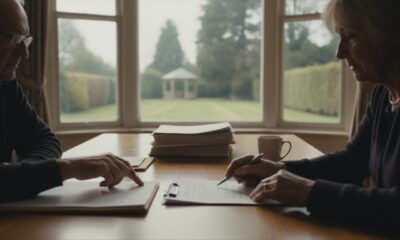
Navigating Blended Family Wills and Estate Options
-

 NATIONAL STORIES6 days ago
AI’s Biggest Warning May Be Coming From the People Building It
-

 SPORTS6 days ago
How Video Adjustments Fuelled the Vancouver Canucks’ 5-2 Prospects Victory Over Seattle
-
POLITICS7 days ago
What Trump’s Remarks Linking Canada to Iran Signal About International Negotiations
-
WORLD7 days ago
What Trump’s Remarks Linking Canada to Iran Signal About International Negotiations
-
LOCAL7 days ago
Stephen Johnston Mayor by Acclamation
-

 BC STORIES6 days ago
Uncertain Eyewitness Testimony at Center of Final Arguments in 2021 Restaurant Shooting Trial