WORLD
NATO Secretary General Mark Rutte Affirms Unwavering US Commitment Amidst Strategic Autonomy Debate
NATO Secretary General Mark Rutte reaffirms the United States’ commitment to the alliance, countering calls for European military autonomy and emphasizing unity.


The Transatlantic Bond Remains Indissoluble
In a significant diplomatic maneuver aimed at stabilizing the internal tremors within the North Atlantic Treaty Organization (NATO), Secretary General Mark Rutte has issued a staunch defense of the United States’ continued involvement in European security. Speaking on Saturday, Rutte addressed the growing apprehension across European capitals regarding the future of the transatlantic alliance, particularly in light of shifting political winds in Washington. His message was unequivocal: the United States remains firmly devoted to the alliance, not merely out of historical sentiment, but as a matter of strategic necessity and mutual benefit. Rutte, who recently transitioned from his long-standing role as the Prime Minister of the Netherlands to the helm of the world’s most powerful military alliance, emphasized that the bond between North America and Europe is the bedrock of global stability. This sentiment pointedly counters recent calls from some European quarters to seek military autonomy separate from American leadership, a concept that Rutte views as both impractical and potentially dangerous for the cohesion of the West.
Countering the Narrative of European Strategic Autonomy
The concept of ‘strategic autonomy’ has gained considerable traction in recent years, spearheaded primarily by French President Emmanuel Macron and supported by various institutional voices in Brussels. These advocates argue that Europe must develop the independent military capacity to protect its interests and project power, fearing that a potential shift in American foreign policy, characterized by isolationism or a pivot toward the Indo-Pacific, could leave the continent vulnerable. However, Secretary General Rutte offered a firm rebuttal to this line of thinking during his Saturday address. While he acknowledged the absolute necessity for European nations to increase their defense spending and modernize their armed forces, he cautioned against any move that would create a functional or psychological disconnect from the United States. According to Rutte, the security of Europe is inextricably linked to the American nuclear umbrella and the vast intelligence, satellite, and logistical capabilities that only the U.S. military can provide at scale. He argued that pursuing autonomy in a way that excludes or diminishes the U.S. role would be a strategic error, potentially fracturing the unity that has deterred major conflict on the continent for over seven decades. For Rutte, the goal should not be autonomy from the U.S., but a more robust European pillar within the NATO framework.
The Burden-Sharing Debate and Domestic Politics
A central theme of Rutte’s address was the perennial issue of burden-sharing, a topic that has often caused friction between Washington and its European allies. For years, American leaders across the political spectrum have called for European allies to meet the agreed-upon target of spending 2% of their GDP on defense. Rutte addressed this directly, noting that while significant progress has been made, with a record number of allies now meeting or exceeding the target, there is still substantial work to be done. He framed the U.S. demand for greater European investment not as a sign of withdrawal or lack of commitment, but as a legitimate call for a more balanced and sustainable partnership. By taking on a greater share of the financial and operational burden, Rutte suggested that European nations actually solidify the American commitment by proving that the alliance is a shared enterprise rather than a one-sided security guarantee. Rutte’s rhetoric appears carefully calibrated to resonate with the American public and policymakers, emphasizing that a stronger, more invested Europe makes for a stronger NATO, which in turn serves American national interests by maintaining a stable international order that benefits global trade and democratic values.
Geopolitical Realities: Ukraine and the Global Stage
The ongoing war in Ukraine served as the somber backdrop to Rutte’s remarks, providing a real-world validation of his thesis. The conflict has acted as a catalyst for NATO’s revitalization, forcing member states to confront the reality of high-intensity industrial warfare in the 21st century. Rutte highlighted that the U.S. leadership in coordinating aid, providing advanced weaponry, and sharing critical intelligence with Kyiv has been the linchpin of the Ukrainian defense. Without the American logistical engine and its sophisticated hardware, the defense of Ukraine would have faced nearly insurmountable odds. This reality, he suggested, proves that European security cannot be managed in a vacuum or through fragmented local initiatives. Furthermore, Rutte touched upon the broader geopolitical landscape, including the rising challenges posed by an increasingly assertive China and the complexities of the Indo-Pacific. He argued that NATO remains the primary forum where the U.S. and its allies can coordinate responses to global threats, whether they originate from traditional state actors or unconventional challenges like cyberwarfare, disinformation, and the weaponization of energy. The Secretary General’s vision is one of an integrated, globalized NATO where the U.S. remains the ‘first among equals,’ providing the necessary gravity to keep the diverse interests of the 32 member states aligned toward a common purpose.
A Call for Unity in Uncertain Times
As the international community looks toward the upcoming NATO summits and the challenges of the next decade, Rutte’s Saturday address serves as a foundational text for his tenure. He is positioning himself as a pragmatist and a bridge-builder, someone capable of navigating the complex domestic politics of member states while maintaining a laser focus on the alliance’s core mission of collective defense under Article 5. By reaffirming the U.S. dedication to NATO, Rutte is attempting to lower the temperature of the ‘strategic autonomy’ debate and refocus energy on practical integration, military readiness, and the expansion of the defense industrial base across the alliance. His conclusion was a call for steadfastness; he urged allies to look past the transient headlines of political campaigns and recognize the enduring, non-partisan value of the transatlantic pact. In an era defined by rapid technological change and escalating geopolitical tensions, Rutte’s NATO is one that seeks strength through cohesion, firmly anchored by the military might and political will of the United States, complemented by a revitalized and increasingly capable Europe. The path forward, according to the Secretary General, is not one of separation or isolation, but of a more profound and equitable partnership that can withstand the tests of the coming decades.

WORLD
Strategic Pivot: Canada Joins Global Sixth-Generation Stealth Fighter Program Amid U.S. Trade Tensions
Canada joins the U.K., Italy, and Japan in the Global Combat Air Programme to develop 6th-gen stealth fighters, signaling a strategic shift away from U.S. reliance.

Canada Secures Observer Status in Global Combat Air Programme
In a significant shift for its long-term defense strategy, Canada has officially joined the Global Combat Air Programme (GCAP) as its first formal observer. This ambitious international initiative, led by the United Kingdom, Italy, and Japan, aims to develop and deploy a cutting-edge sixth-generation stealth fighter jet by 2035. The move allows Canadian military officials to participate in classified discussions regarding the aircraft’s development and explore potential roles for Canada’s domestic defense industry.
Diversifying Partnerships Beyond Washington
The decision to join GCAP comes at a volatile time for Canada-U.S. relations. With the United States recently imposing 50 percent tariffs on a wide range of Canadian exports, Prime Minister Mark Carney’s government is actively seeking to diversify military partnerships. Defense Minister David McGuinty emphasized that while Canada is taking a “step-by-step” approach and has not yet committed to a purchase, the program offers a way to reduce reliance on American-made platforms during a period of geopolitical uncertainty.
The Leap to Sixth-Generation Technology
As adversaries like China and Russia claim to have developed methods for detecting current fifth-generation stealth aircraft, the need for next-tier technology has become urgent. Sixth-generation fighters are designed to be vastly superior, utilizing artificial intelligence to fuse data and operating seamlessly alongside uncrewed drone swarms. Lt.-Gen. Jamie Speiser-Blanchet, commander of the Royal Canadian Air Force, noted that the GCAP fighter would provide advanced maneuverability and survivability in contested airspaces, particularly in the Arctic where Canada could play a vital role in platform testing.
Complementing the Existing Fleet
While Canada is still in the process of procuring American F-35s—with the first four jets expected this October—officials view the GCAP project as a long-term investment. Minister McGuinty likened the move to scouting young talent for a sports franchise, ensuring the nation remains technologically relevant decades into the future. Despite the potential for friction with Washington, Canadian officials maintain that the new jets will be fully interoperable with U.S. and NATO systems, ensuring that collective defense remains intact even as Canada explores new industrial horizons.
WORLD
Sean ‘Diddy’ Combs Offloads Star Island Mansion for $55 Million Amid Legal Fallout
Sean ‘Diddy’ Combs sells his 1 West Star Island estate in Miami for $55 million to a Virginia-based LLC following his recent federal conviction and sentencing.
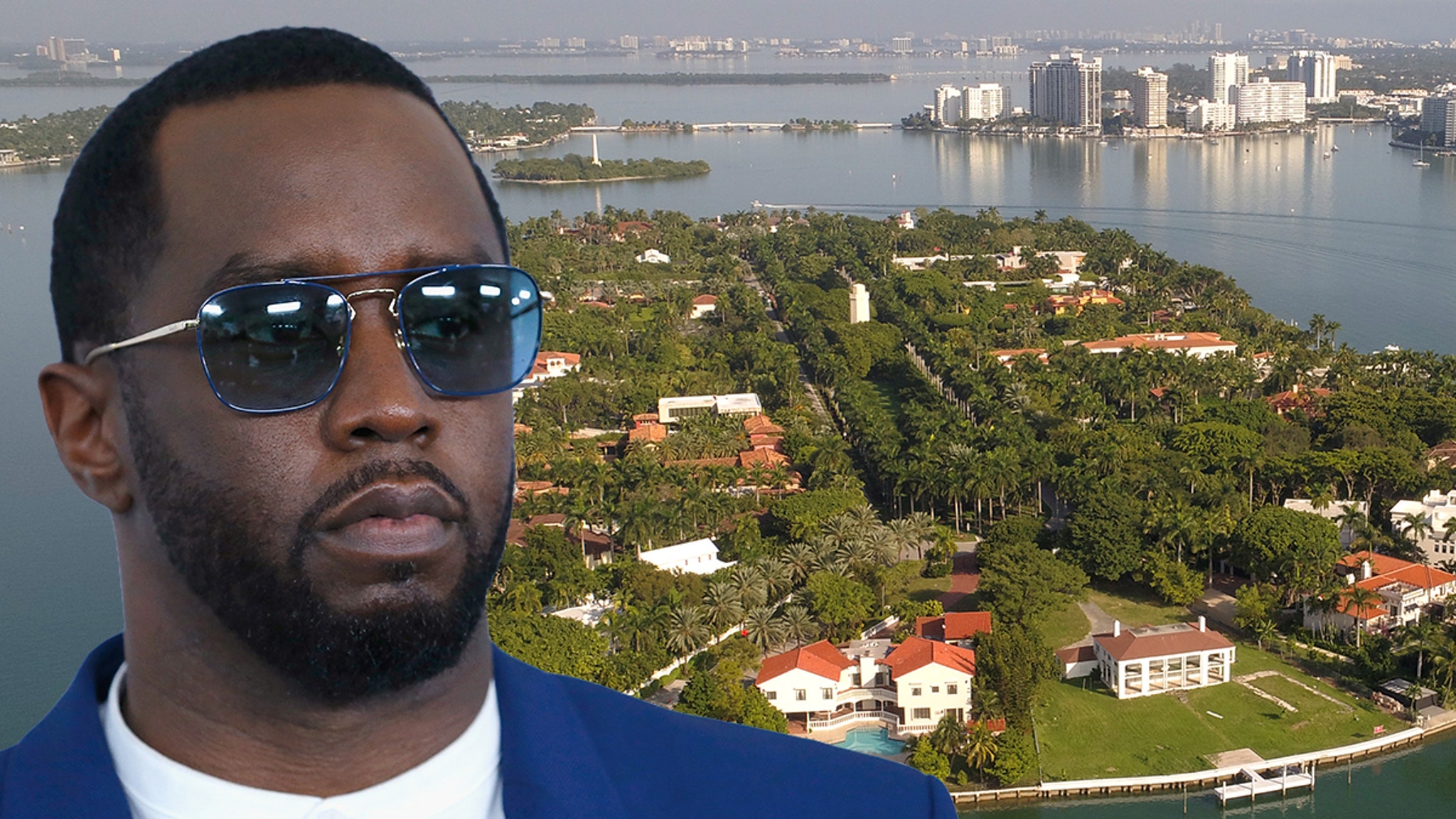
A Major Real Estate Transaction on Miami’s Exclusive Star Island
In a significant shift of his real estate portfolio, Sean “Diddy” Combs has finalized the sale of one of his premier properties located on Miami’s ultra-exclusive Star Island. The waterfront estate, situated at 1 West Star Island, was sold for a staggering $55 million. The transaction was reportedly an off-market deal, with the property being acquired by JFStar LLC, a real estate holding company based in Virginia. Records indicate that the buyer secured the purchase with an $18.5 million bank mortgage.
The History and Luxury of 1 West Star Island
Combs originally acquired the nearly 8,000-square-foot estate in 2021 from legendary musical duo Gloria and Emilio Estefan. The luxurious compound features a two-story main residence complemented by a guest house, totaling six bedrooms and eight-and-a-half bathrooms. Beyond the living quarters, the property boasts a private pool, a spa, and a dock providing direct access to the Biscayne Bay. Despite the sale of this particular parcel, property records confirm that Combs maintains ownership of the adjacent estate, 2 Star Island, which remains his primary residence in the area.
Context of the Sale and Ongoing Legal Struggles
The timing of the sale is notable as it follows a tumultuous period for the music mogul. In March 2024, federal authorities raided his neighboring property at 2 Star Island as part of a high-profile investigation into racketeering and sex trafficking. While the property at 1 West Star Island was not targeted during those raids, the legal pressure on Combs has been immense. Following a federal trial, Combs was acquitted of the most severe racketeering and sex trafficking charges but was convicted on two counts of violating the Mann Act, involving the transportation of individuals across state lines for illicit purposes.
Financial Maneuvers Amid Incarceration
Currently serving a federal prison sentence, Combs’ decision to liquidate the $55 million asset may signal a strategic financial move as he navigates his current legal reality. Star Island remains one of the most coveted zip codes in the world, and sales of this magnitude continue to set benchmarks for the South Florida luxury market. As Combs continues his sentence, the sale of this ‘crown jewel’ property marks the end of an era for his expansive presence on the Miami waterfront.
Entertainment
Sean ‘Diddy’ Combs Offloads Star Island Mansion for $55 Million Amid Legal Fallout
Sean ‘Diddy’ Combs sells his 1 West Star Island estate in Miami for $55 million to a Virginia-based LLC following his recent federal conviction and sentencing.
A Major Real Estate Transaction on Miami’s Exclusive Star Island
In a significant shift of his real estate portfolio, Sean “Diddy” Combs has finalized the sale of one of his premier properties located on Miami’s ultra-exclusive Star Island. The waterfront estate, situated at 1 West Star Island, was sold for a staggering $55 million. The transaction was reportedly an off-market deal, with the property being acquired by JFStar LLC, a real estate holding company based in Virginia. Records indicate that the buyer secured the purchase with an $18.5 million bank mortgage.
The History and Luxury of 1 West Star Island
Combs originally acquired the nearly 8,000-square-foot estate in 2021 from legendary musical duo Gloria and Emilio Estefan. The luxurious compound features a two-story main residence complemented by a guest house, totaling six bedrooms and eight-and-a-half bathrooms. Beyond the living quarters, the property boasts a private pool, a spa, and a dock providing direct access to the Biscayne Bay. Despite the sale of this particular parcel, property records confirm that Combs maintains ownership of the adjacent estate, 2 Star Island, which remains his primary residence in the area.
Context of the Sale and Ongoing Legal Struggles
The timing of the sale is notable as it follows a tumultuous period for the music mogul. In March 2024, federal authorities raided his neighboring property at 2 Star Island as part of a high-profile investigation into racketeering and sex trafficking. While the property at 1 West Star Island was not targeted during those raids, the legal pressure on Combs has been immense. Following a federal trial, Combs was acquitted of the most severe racketeering and sex trafficking charges but was convicted on two counts of violating the Mann Act, involving the transportation of individuals across state lines for illicit purposes.
Financial Maneuvers Amid Incarceration
Currently serving a federal prison sentence, Combs’ decision to liquidate the $55 million asset may signal a strategic financial move as he navigates his current legal reality. Star Island remains one of the most coveted zip codes in the world, and sales of this magnitude continue to set benchmarks for the South Florida luxury market. As Combs continues his sentence, the sale of this ‘crown jewel’ property marks the end of an era for his expansive presence on the Miami waterfront.
Investigation Underway Following Fatality at Historic Okanagan Lake Swim Event
RCMP Investigate String of Suspicious Fires in West Kelowna Neighborhood
Strategic Pivot: Canada Joins Global Sixth-Generation Stealth Fighter Program Amid U.S. Trade Tensions
Mayor Olivia Chow Targets Big Tech Pricing Tactics at Toronto Grocery Stores
Canada Offered to Double Oil Exports to U.S. in Failed Trade Negotiations, Hoekstra Reveals
Cross-Border Smoke Crisis: Canada Issues Alerts as U.S. Wildfire Pollution Drifts North

Opinion: John Rustad Has to Go

B.C. Supreme Court Grants Cowichan Tribes Title to Historic Richmond Lands and Fishing Rights

A Taste of Autumn: Fall Okanagan Wine Festival 2025

Vancouver Canucks Gear Up for a Make-or-Break 2025–26 Season

Kamloops Blazers Announce Off-Season Changes Ahead of 2025–26 Season

BC Ferries Sparks Outcry Over Contract with Chinese Shipyard
-
Economy7 days ago
Global Energy Markets Brace as Iran Threatens Trade Routes Amid US Military Strikes
-
Baseball7 days ago
AL Pitching Staff Crafts Historic Shutout in Dominant MLB All-Star Performance
-
Finance7 days ago
Bank of Canada Holds Rates Steady at 2.25% Amid Geopolitical Oil Volatility
-
Entertainment7 days ago
Sean ‘Diddy’ Combs Offloads Star Island Mansion for $55 Million Amid Legal Fallout
-
SPORTS7 days ago
End of the Yzerman Era: Red Wings GM Steps Down Amid Front Office Shakeup
-
Baseball4 days ago
AL Pitching Staff Crafts Historic Shutout in Dominant MLB All-Star Performance
-
SPORTS4 days ago
End of the Yzerman Era: Red Wings GM Steps Down Amid Front Office Shakeup
-
WORLD4 days ago
Sean ‘Diddy’ Combs Offloads Star Island Mansion for $55 Million Amid Legal Fallout