Geopolitics
Middle East Tensions Surge as Iran Launches Retaliatory Missile Strikes Following Leader Assassinations
Iran launches multiple-warhead missiles at Israel and Gulf neighbors following the assassination of key leaders, sparking fears of a global energy crisis.


Escalation in the Persian Gulf
The conflict in the Middle East reached a new, volatile peak on Wednesday as Iran launched a coordinated wave of missile strikes targeting Israel and several Persian Gulf neighbors. The barrage, which utilized advanced multiple-warhead missiles designed to evade sophisticated air defense systems, resulted in at least two fatalities in Ramat Gan, near Tel Aviv. This latest offensive marks a significant intensification of hostilities that began on February 28, following joint U.S. and Israeli operations against Iranian interests.
High-Value Targets and Assassinations
The strikes follow a series of high-profile assassinations by Israeli forces. Israel’s Defense Minister recently confirmed the killing of Iranian Intelligence Minister Esmail Khatib, warning of further “significant surprises” across all fronts. This follows Tuesday’s targeted killings of Ali Larijani, a top security official and former parliamentary speaker, and General Gholam Reza Soleimani, head of the Basij paramilitary force. Both Larijani and Soleimani were key figures in Iran’s security apparatus and had been under international sanctions for their roles in suppressing domestic dissent.
Threats to Global Energy and Infrastructure
Iran’s strategy has increasingly focused on targeting the energy infrastructure of Gulf Arab nations, including Saudi Arabia, Kuwait, Bahrain, Qatar, and the UAE. A projectile reportedly struck the Bushehr nuclear power plant complex, though the IAEA confirmed no damage occurred. Meanwhile, the ongoing blockade of the Strait of Hormuz continues to threaten global oil supplies, keeping Brent crude prices stubbornly above $100 per barrel. U.S. Central Command responded to the maritime threat by deploying deep penetrator bombs against Iranian missile sites along the coastline.
Regional Instability and Civil Unrest
Beyond the primary combat zones, the violence has spilled into Lebanon and Iraq. Israeli strikes in Beirut have reportedly killed at least 10 people, while pro-Iran militias in Iraq have targeted the U.S. Embassy in Baghdad for two consecutive days. Internally, Iran’s judiciary continues its domestic crackdown, recently executing a man accused of spying for Israel. As the war enters this new, more aggressive phase, international observers fear the potential for a wider regional conflagration that could disrupt the global economy for years to come.

Economics
Trump Reverses Hormuz Shipping Fee as US Reinstates Iran Port Blockade
President Trump replaces the 20% Hormuz cargo fee with Gulf investment deals as the U.S. prepares a naval blockade of Iran amidst rising oil prices and military strikes.
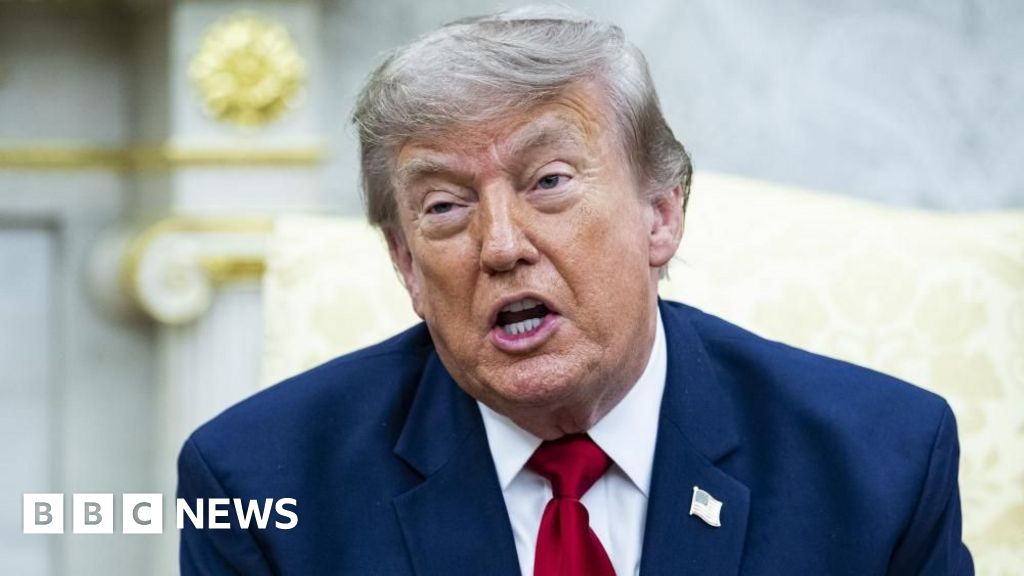
A Shift in Middle Eastern Maritime Strategy
In a rapid reversal of maritime policy, President Donald Trump has scrapped his controversial proposal for a 20% reimbursement fee on all cargo passing through the Strait of Hormuz. The initial threat, intended to offset the costs of U.S. naval protection in the region, has been replaced by a strategy focused on bilateral trade and investment deals with Gulf nations. This pivot comes just hours before the United States is set to resume a full-scale naval blockade of Iranian ports, a move aimed at crippling Tehran’s economic leverage over the global energy supply.
Economic Deals Replace Protection Tolls
Writing on Truth Social, President Trump clarified that the proposed 20% fee would be supplanted by \”massive\” investments from various Gulf States into the U.S. economy. While specific details of these deals remain undisclosed, the President emphasized that the new arrangement would be mutually beneficial. During a meeting with Iraqi Prime Minister Ali al-Zaidi, Trump reiterated his stance that while he disliked the concept of a direct fee, the United States could no longer bear the sole financial burden of securing a waterway that serves the entire world.
Escalating Military Tensions and Oil Market Volatility
The policy shift arrives amidst a period of intense military activity. U.S. Central Command (Centcom) confirmed that a naval blockade of Iranian ports would go into effect as of Tuesday evening. This follows several nights of U.S. strikes intended to degrade Iran’s capability to harass commercial shipping. In response, Iranian state media reported explosions in several cities, including the nuclear hub of Bushehr, while Tehran claimed to have targeted U.S. military facilities in Bahrain and Jordan.
Global Energy Security at Stake
The Strait of Hormuz remains the world’s most vital energy chokepoint, historically accounting for 25% of global oil and 20% of liquefied natural gas transit. Recent shipping data indicates that traffic has plummeted to a two-month low as tankers stall amidst the crossfire. With Brent Crude prices rising sharply, the international community remains on edge. Prime Minister Benjamin Netanyahu has further heightened the stakes, warning that any further Iranian aggression would meet a significantly more powerful Israeli retaliation.
Conflict & Security
Deadly Missile Barrage Overwhelms Kyiv’s Air Defenses Amid Critical Interceptor Shortage
Russia’s latest missile strike on Kyiv kills 18, exposing a critical shortage of Patriot interceptors as Ukraine calls for urgent NATO air defense support.

Russian Strikes Devastate Residential Districts in Kyiv
Russia launched a massive wave of missiles and drones across Ukraine early Monday, resulting in the deaths of at least 18 people and leaving 60 others injured. The bombardment primarily targeted the capital, Kyiv, where 12 deaths were reported, while another six fatalities occurred in the surrounding region. Emergency responders spent the morning combing through the smoking ruins of high-rise residential buildings in the Podilskyi and Darnytsia districts, where direct hits caused partial structural collapses and trapped residents under rubble.
Witnesses described scenes of absolute chaos as explosions blew out windows and severed power lines. Survivors recounted fleeing through smoke-filled stairwells only to find bodies on the street and vehicles exploding from secondary fires. While the Kremlin claimed the strikes were aimed at military production facilities and energy infrastructure, local authorities emphasized that the damage was overwhelmingly concentrated in densely populated civilian areas where people were sleeping.
A Growing Deficit in Air Defense Capabilities
The scale of the devastation has exposed a widening gap in Ukraine’s ability to protect its skies. According to the Ukrainian Air Force, while drones and cruise missiles were largely intercepted, 29 ballistic missiles successfully struck their targets. Military officials noted that Russia is intentionally exploiting a critical shortage of Patriot interceptor missiles—the only systems capable of reliably downing ballistic projectiles.
Air force spokesperson Yurii Ihnat highlighted that the global supply of these interceptors is currently strained, partly due to ongoing conflicts in the Middle East. Ukrainian Defense Minister Mykhailo Fedorov added that Russia is now firing ballistic missiles at a rate that exceeds the global monthly production of interceptor munitions, creating a mathematical deficit that leaves major cities vulnerable.
Diplomatic Pressure Mounts Ahead of NATO Summit
The timing of the attack, coming just days after a strike killed 31 people in Kyiv, appears calculated to pressure Western leaders ahead of a major NATO summit in Ankara. President Volodymyr Zelenskyy has used the tragedy to issue an urgent appeal to U.S. and European partners, arguing that the continued presence of Patriot systems in Allied stockpiles serves as an invitation for further Russian aggression.
As Ukraine prepares for the summit, the primary focus remains securing concrete commitments for expanded air defense batteries. Without a significant influx of hardware and munitions, Kyiv remains at the mercy of Russia’s shifting tactics, which increasingly favor the high-speed ballistic strikes that current defensive grids are struggling to contain.
Energy Markets
Middle East Tensions Surge as Tanker Struck in Strait of Hormuz Escalation
A tanker attack in the Strait of Hormuz ignites a fresh escalation between the US and Iran, threatening the recent interim peace deal and global energy stability.

Conflict Reignites in Vital Energy Gateway
The fragile peace between the United States and Iran faced a severe setback on Saturday after a projectile struck a commercial tanker in the Strait of Hormuz. The incident, reported by Britain’s United Kingdom Maritime Trade Operations (UKMTO), marks the second maritime attack in 48 hours and represents the most significant escalation since the two nations signed an interim peace deal just ten days ago. According to security reports, the tanker sustained damage to its bridge, though the crew remains safe.
A Breakdown of the Interim Peace Deal
The escalation follows a series of reciprocal strikes that have threatened to derail the four-month-old conflict’s resolution. Washington confirmed it targeted Iranian positions overnight, while Tehran claimed it struck assets linked to U.S. forces on Saturday. The Joint Maritime Information Center has since raised its security threat level, warning that the world’s most critical energy shipping route is once again a high-risk zone. Iran’s Revolutionary Guard Corps reportedly fired “warning shots” at vessels attempting to bypass Tehran-approved channels, signaling a renewed bid to assert control over the waterway.
Regional Proxies and the Lebanon Connection
The friction stems from accusations of non-compliance regarding the broader ceasefire. Tehran has accused the U.S. of failing to enforce a promised ceasefire in Lebanon, where Israeli forces have been engaged in an offensive against Hezbollah since March. While U.S.-brokered deals were announced as recently as Friday, ongoing Israeli drone strikes in southern Lebanon and Hezbollah’s refusal to disarm have kept the region on edge. In response to U.S. strikes on a communications tower in Sirik, Iran has directed attacks toward Gulf states like Bahrain, which hosts the U.S. Navy’s 5th Fleet.
Market Stability and Diplomatic Fallout
U.S. Vice-President JD Vance, a key negotiator in the conflict, issued a stern warning on social media, stating that “violence will be met with violence.” Despite the exchange of fire, the timing of the escalation—occurring while global markets are closed—may mitigate immediate spikes in oil prices. However, the long-term resolution of the global energy crisis hinges on whether shippers feel safe navigating the strait. While Washington promotes a southern route along Oman, Tehran continues to push for a northern route under its direct jurisdiction and fee structure.
Investigation Underway Following Fatality at Historic Okanagan Lake Swim Event
RCMP Investigate String of Suspicious Fires in West Kelowna Neighborhood
Strategic Pivot: Canada Joins Global Sixth-Generation Stealth Fighter Program Amid U.S. Trade Tensions
Mayor Olivia Chow Targets Big Tech Pricing Tactics at Toronto Grocery Stores
Canada Offered to Double Oil Exports to U.S. in Failed Trade Negotiations, Hoekstra Reveals
Cross-Border Smoke Crisis: Canada Issues Alerts as U.S. Wildfire Pollution Drifts North

Opinion: John Rustad Has to Go

B.C. Supreme Court Grants Cowichan Tribes Title to Historic Richmond Lands and Fishing Rights

A Taste of Autumn: Fall Okanagan Wine Festival 2025

Vancouver Canucks Gear Up for a Make-or-Break 2025–26 Season

Kamloops Blazers Announce Off-Season Changes Ahead of 2025–26 Season

BC Ferries Sparks Outcry Over Contract with Chinese Shipyard
-
Economy7 days ago
Global Energy Markets Brace as Iran Threatens Trade Routes Amid US Military Strikes
-
Baseball7 days ago
AL Pitching Staff Crafts Historic Shutout in Dominant MLB All-Star Performance
-
Finance6 days ago
Bank of Canada Holds Rates Steady at 2.25% Amid Geopolitical Oil Volatility
-
Entertainment7 days ago
Sean ‘Diddy’ Combs Offloads Star Island Mansion for $55 Million Amid Legal Fallout
-
SPORTS7 days ago
End of the Yzerman Era: Red Wings GM Steps Down Amid Front Office Shakeup
-
Baseball4 days ago
AL Pitching Staff Crafts Historic Shutout in Dominant MLB All-Star Performance
-
SPORTS4 days ago
End of the Yzerman Era: Red Wings GM Steps Down Amid Front Office Shakeup
-
WORLD4 days ago
Sean ‘Diddy’ Combs Offloads Star Island Mansion for $55 Million Amid Legal Fallout