General
Eby Abandons Controversial DRIPA Suspension Following First Nations Pushback
B.C. Premier David Eby scraps plans to suspend parts of the DRIPA legislation following intense opposition from First Nations leaders and internal party dissent.


A Major Policy Retreat
In a significant reversal of legislative strategy, British Columbia Premier David Eby has announced that his government will no longer proceed with plans to suspend key provisions of the Declaration on the Rights of Indigenous Peoples Act (DRIPA). The decision follows an intense week of political pressure and a stern warning from Indigenous leaders across the province, who characterized the proposed suspension as a threat to reconciliation and the separation of powers.
The Catalyst for Conflict
The controversy began when the NDP government signaled its intent to pause certain sections of DRIPA to mitigate what Premier Eby described as “significant legal peril.” This legal concern stemmed from a recent B.C. Court of Appeal ruling regarding mineral rights, which suggested that DRIPA should be incorporated into provincial law with immediate legal effect. The government had expressed fears that such an interpretation could create immediate and widespread legal uncertainty regarding existing provincial statutes.
Indigenous Leaders Demand Accountability
The First Nations Leadership Council, alongside the Union of BC Indian Chiefs and the BC Assembly of First Nations, issued a joint letter to MLAs declaring that any attempt to interfere with access to justice would be met with “collective resistance.” Leaders argued that the government’s attempt to suspend DRIPA was not only misleading but an egregious attempt to limit the judicial rights of First Nations. They warned that weakening the co-developed framework for reconciliation would actually increase provincial legal risks rather than diminish them.
Political Realities and the Path Forward
The NDP’s thin one-seat majority in the legislature also played a crucial role in the retreat. NDP MLA Joan Phillip, who is Indigenous, indicated she would not support the bill, leaving the government without a guaranteed path to passage. While House Leader Mike Farnworth dismissed claims that the government had lost control of the house, the abandonment of the bill highlights the delicate balance the Premier must maintain. Premier Eby is scheduled to hold a press conference on Monday to outline the province’s next steps in navigating the legal implementation of UNDRIP principles.

Finance
Bank of Canada Holds Rates Steady at 2.25% Amid Geopolitical Oil Volatility
The Bank of Canada holds its key interest rate at 2.25%, balancing economic recovery confidence against inflation risks from global energy market volatility.

Central Bank Maintains Status Quo Amid Economic Recovery
The Bank of Canada announced on Wednesday that it will maintain its benchmark interest rate at 2.25 per cent for the sixth consecutive time. The decision, which aligns with broad economist expectations, reflects a growing confidence within the central bank that the domestic economy is successfully navigating a series of recent headwinds, including a surprising contraction at the beginning of the year.
Navigating the Impact of Global Conflict
Bank of Canada Governor Tiff Macklem addressed the ongoing uncertainty stemming from the conflict in Iran, which has sent global energy prices soaring. While inflation reached 3.2 per cent in May primarily due to gasoline costs, the bank remains optimistic that these spikes have not yet broadly permeated the consumer basket. However, Macklem warned that the governing council remains vigilant. Should supply chain bottlenecks in the Strait of Hormuz persist or energy prices remain elevated, the bank is prepared to implement further rate hikes to prevent inflation from becoming entrenched.
Forecast for Growth and Resilience
Despite a sluggish start to 2026 marked by slowing population growth and trade tariffs, the bank’s updated monetary policy report projects a second-quarter growth rebound of 2.5 per cent. This recovery is expected to be driven by a stabilization in the housing market, consumer resilience, and a notable momentum in exports to the United States. Macklem noted that Canadian businesses are proving adaptable, reconfiguring supply chains to maintain operations despite global instability.
The Long Road to Two Per Cent Inflation
The central bank anticipates that the knock-on effects of Middle Eastern hostilities will continue to influence grocery and fuel prices through early 2027. While a weak Canadian dollar may drive up the cost of imported goods, economists from CIBC suggest that there is still significant slack in the economy. This output gap supports the current projection that rates will likely remain on hold for the remainder of 2026 as the bank strikes a delicate balance between supporting recovery and curbing persistent price pressures.
Astronomy
Celestial Spectacle: Rare ‘Blaze Star’ Explosion Predicted to Appear in the Night Sky
T Coronae Borealis is set for a rare nova explosion. Learn how to spot this ‘Blaze Star’ as it brightens to rival the North Star in a once-in-a-lifetime event.
A Once-in-a-Lifetime Cosmic Event
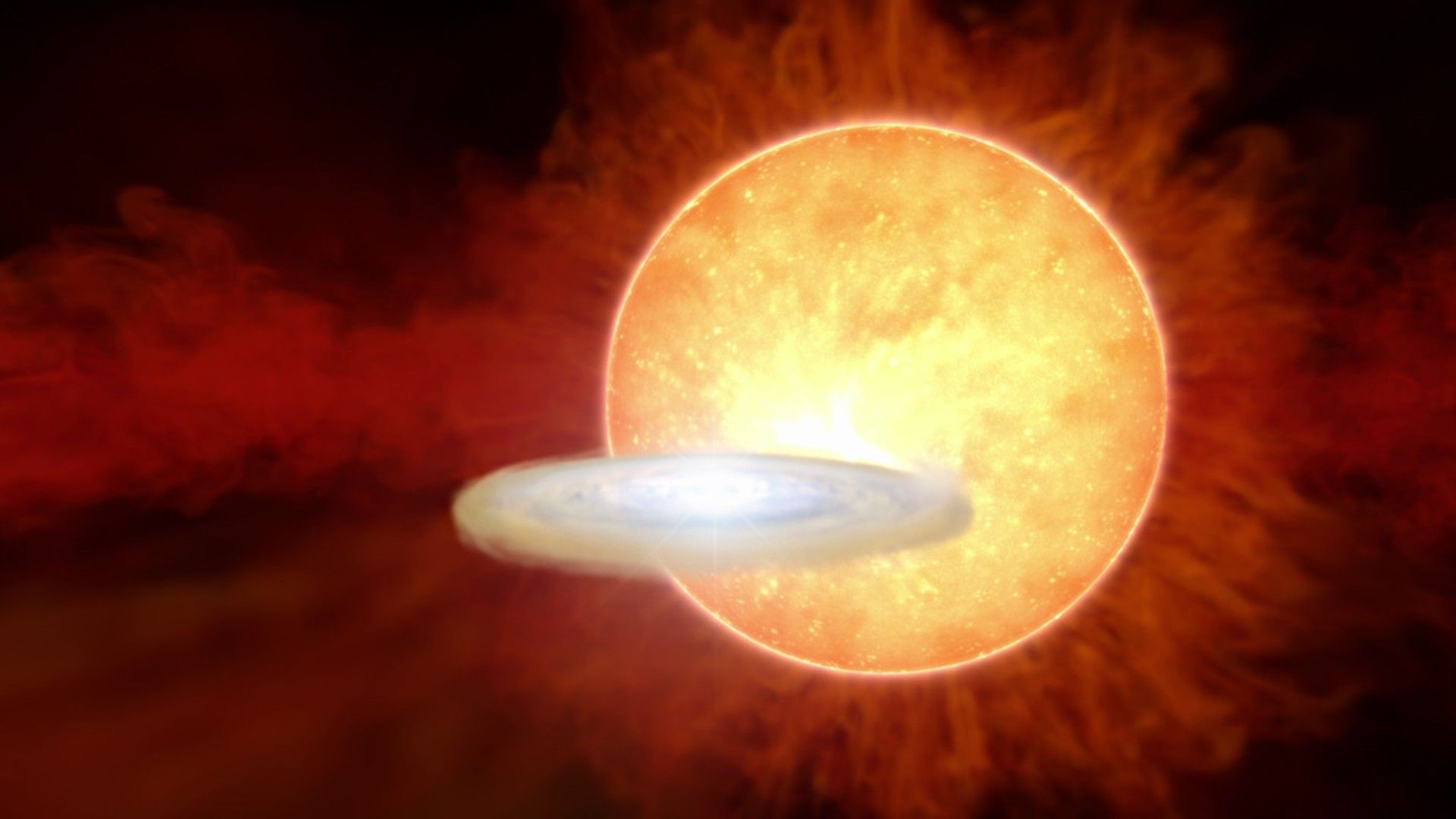
Astronomers and stargazers alike are on high alert for a rare celestial phenomenon: the sudden appearance of a ‘new’ star in the night sky. The star system T Coronae Borealis, commonly known as the ‘Blaze Star,’ is expected to undergo a cataclysmic thermonuclear eruption at any moment. This event, known as a recurring nova, occurs approximately once every 80 years, making it a once-in-a-lifetime viewing opportunity for most people on Earth.
The Science Behind the Blast
T Coronae Borealis (T CrB) is a binary system located 3,000 light-years away, consisting of a white dwarf and a red giant. In a ‘vampiric’ relationship, the white dwarf continuously strips hydrogen-rich material from its larger companion. Once this material reaches a critical mass on the white dwarf’s surface, it triggers a massive thermonuclear explosion. Unlike a supernova, which marks the death of a star, this nova leaves the white dwarf intact to begin the cycle of feeding and erupting all over again.
When and How to Watch
While the exact timing remains elusive, NASA scientists and astrophysicists believe the eruption is imminent. Historically, the system follows an 80-year cycle, with the last major event occurring in 1946. When the nova finally ignites, T CrB will jump from its usual invisible magnitude of +10 to a magnitude of +2. This surge will make it as bright as Polaris, the North Star, and easily visible to the naked eye even in areas with moderate light pollution.
Finding the Northern Crown
To witness this fleeting event, observers should look toward the constellation Corona Borealis, or the ‘Northern Crown.’ This small, semicircular cluster of stars sits between the constellations Hercules and Bootes. Once the eruption begins, the ‘Blaze Star’ will remain visible to the naked eye for less than a week before fading back into obscurity for another eight decades. Astronomers recommend using binoculars or a small telescope now to familiarize yourself with the region of the sky just one degree to the lower right of the star Epsilon Coronae Borealis.
General
Alberta Premier’s Top Aide Sparks Firestorm Over First Nations Criticism
Alberta Premier Danielle Smith’s top aide faces backlash after telling First Nations chiefs to fix their own communities instead of accusing Smith of treason.

Escalating Tensions in Alberta’s Separation Debate
The political landscape in Alberta has reached a fever pitch as Bruce McAllister, the executive director of Premier Danielle Smith’s office, issued a scathing social media post targeting First Nations leadership. McAllister’s comments come in response to an Assembly of Treaty Chiefs vote requesting an RCMP investigation into whether the province’s upcoming October 19 separation referendum constitutes criminal treason.
McAllister dismissed the chiefs’ legal concerns as “childish nonsense” and suggested that indigenous leaders should focus on internal community issues rather than criticizing the provincial government. He specifically cited high rates of poverty, drug addiction, and domestic violence within First Nations communities, questioning why these “heartbreaking” failures have not been prioritized over political opposition to the referendum.
The Treason Accusation and Legal Context
The friction stems from a motion by the Assembly of Treaty Chiefs, who argue that organizing a vote on Alberta’s place in Confederation is an intentional violation of treaty rights and a risk to Canadian sovereignty. Premier Danielle Smith previously echoed her aide’s sentiment, telling the chiefs to “check themselves” regarding the inflammatory nature of the treason accusation. Under the Canadian Criminal Code, treason is a narrowly defined offense typically involving the sharing of sensitive information with foreign states or the use of force to overthrow the government.
This is not the first time the term has surfaced in the separatist debate. Earlier this year, British Columbia Premier David Eby accused Alberta separatist groups of treasonous behavior after they sought support from United States officials. The current dispute highlights the deepening rift between the United Conservative Party (UCP) government and indigenous groups, who recently won a court case to quash a separatist petition on the grounds that the province failed its duty to consult them.
A High-Stakes Referendum
The October 19 vote will ask Albertans whether they wish to remain in Canada or trigger a secondary referendum on secession. While Premier Smith has officially campaigned for the pro-Canada side, critics argue the referendum is a strategic move to appease hardline separatists within her party while maintaining broader public support. As the vote nears, the exchange between the Premier’s office and First Nations leaders underscores the significant social and constitutional stakes involved in Alberta’s potential path toward sovereignty.
Investigation Underway Following Fatality at Historic Okanagan Lake Swim Event
RCMP Investigate String of Suspicious Fires in West Kelowna Neighborhood
Strategic Pivot: Canada Joins Global Sixth-Generation Stealth Fighter Program Amid U.S. Trade Tensions
Mayor Olivia Chow Targets Big Tech Pricing Tactics at Toronto Grocery Stores
Canada Offered to Double Oil Exports to U.S. in Failed Trade Negotiations, Hoekstra Reveals
Cross-Border Smoke Crisis: Canada Issues Alerts as U.S. Wildfire Pollution Drifts North
Opinion: John Rustad Has to Go
B.C. Supreme Court Grants Cowichan Tribes Title to Historic Richmond Lands and Fishing Rights

A Taste of Autumn: Fall Okanagan Wine Festival 2025

Vancouver Canucks Gear Up for a Make-or-Break 2025–26 Season

Kamloops Blazers Announce Off-Season Changes Ahead of 2025–26 Season
BC Ferries Sparks Outcry Over Contract with Chinese Shipyard
-
Economy7 days ago
Global Energy Markets Brace as Iran Threatens Trade Routes Amid US Military Strikes
-
Baseball7 days ago
AL Pitching Staff Crafts Historic Shutout in Dominant MLB All-Star Performance
-
Finance6 days ago
Bank of Canada Holds Rates Steady at 2.25% Amid Geopolitical Oil Volatility
-
Entertainment7 days ago
Sean ‘Diddy’ Combs Offloads Star Island Mansion for $55 Million Amid Legal Fallout
-
SPORTS7 days ago
End of the Yzerman Era: Red Wings GM Steps Down Amid Front Office Shakeup
-
Baseball4 days ago
AL Pitching Staff Crafts Historic Shutout in Dominant MLB All-Star Performance
-
SPORTS4 days ago
End of the Yzerman Era: Red Wings GM Steps Down Amid Front Office Shakeup
-
WORLD4 days ago
Sean ‘Diddy’ Combs Offloads Star Island Mansion for $55 Million Amid Legal Fallout