Defense
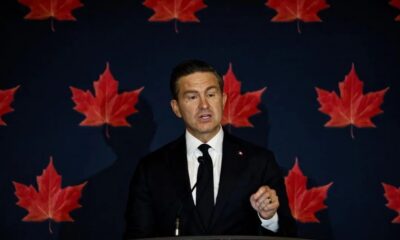
Carney Heads to Ankara for High-Stakes NATO Summit Focused on ‘Managing’ Trump
Prime Minister Mark Carney travels to Turkey for a scaled-back NATO summit aimed at managing relations with Donald Trump and deepening Middle East trade ties.


A Strategic Sojourn to the Middle East
Prime Minister Mark Carney is set to arrive in Ankara this Monday, marking the first visit by a Canadian leader to Turkey since 2015. The visit serves as the opening leg of a week-long diplomatic mission to the Middle East, which will later see the Prime Minister travel to Saudi Arabia to bolster trade and investment ties. However, the immediate focus remains on the July 7-8 NATO summit—a gathering that experts describe as a carefully curated effort to maintain alliance stability amid unpredictable geopolitical shifts.
The ‘Short and Sweet’ Strategy
This year’s summit has been notably scaled back, reduced from the traditional multi-day affair to a single dinner and a concentrated working session. Former Canadian ambassador to NATO, Kerry Buck, suggests the abbreviated format is a deliberate attempt to avoid the “drama” often associated with U.S. President Donald Trump. “This year’s meeting is primarily about managing the U.S. and keeping President Trump committed to the alliance,” Buck noted. Paradoxically, hosting the event in Turkey may provide a stabilizing effect, as the U.S. President has historically shown more affinity for strongman-style leaders like Recep Tayyip Erdogan than for traditional Western allies.
Defense Spending and Industrial Cooperation
A central theme of the summit will be the “credible” defense spending plans demanded by NATO Secretary-General Mark Rutte. Allies are under pressure to reach a five per cent of national GDP target by 2035. Canadian officials indicated that Carney will use the summit to highlight Canada’s progress in defense financing. Beyond the alliance-wide talks, the bilateral relationship between Ottawa and Ankara is under the spotlight. Despite a history of friction over the Armenian genocide recognition and past arms embargoes, there are signs of a thaw. Turkey has expressed significant interest in Canadian nuclear technology to reduce its reliance on Russian energy, while Canada views Turkey as an emerging market for agriculture, mining, and infrastructure.
Navigating a Flawed Democracy
The warming ties come despite Turkey’s domestic challenges, including high inflation and crackdowns on journalists and LGBTQ+ activists. Former military attaché Chris Kilford notes that while Canada continues to grant asylum to Turkish dissidents—a point of contention for Ankara—Turkey remains a vital regional actor. Its unique ability to maintain relative stability amid conflicts in Ukraine, Syria, and Iran makes it an indispensable, if complicated, partner for the Carney government’s four-pillar strategy of energy, trade, security, and people-to-people ties.


Defense
Canada’s Silent Service: Prime Minister Mark Carney Set to Reveal Multibillion-Dollar Submarine Winner
Prime Minister Mark Carney to announce the winner of Canada’s $100B submarine contract between Germany and South Korea ahead of the NATO summit in Turkey.

A Pivotal Moment for Canadian Sovereignty
Prime Minister Mark Carney is expected to end years of speculation this Monday by announcing the winning bidder for Canada’s next-generation submarine fleet. The announcement, shrouded in secrecy, will take place in Halifax as the Prime Minister prepares for a high-stakes journey to the NATO summit in Ankara, Turkey. With the aging Victoria-class fleet currently struggling to maintain operational readiness, the decision marks a critical turning point for the Royal Canadian Navy’s presence across three oceans.
The Contenders: Germany vs. South Korea
The competition has narrowed to two global industrial titans: Germany’s ThyssenKrupp Marine Systems (TKMS) and South Korea’s Hanwha Ocean. At stake is a contract for 12 submarines with an initial acquisition cost of $24 billion, though long-term maintenance and lifecycle support could push the total investment beyond $100 billion over three decades. Both nations have spent the last year refining their bids, offering massive economic offset packages designed to integrate deeply with the Canadian economy.
Economic Offsets and Strategic Alliances
The German-Norwegian bid, centered on the Type 212CD, emphasizes NATO interoperability. Their proposal includes revitalizing the Port of Churchill in Manitoba and establishing domestic advanced weapons manufacturing, projecting an $86-billion impact on Canada’s GDP. Conversely, South Korea’s KSS-III proposal promises a $94-billion economic boost, focusing on green infrastructure, hydrogen-powered vehicle manufacturing, and the production of armored vehicles using Canadian steel. While Germany highlights a unified 24-ship NATO fleet, South Korea frames the deal as a debt of gratitude for Canada’s service during the Korean War and a bridge to the Indo-Pacific region.
Urgency in the Arctic
The pressure to finalize a deal is intensified by the deteriorating state of the current fleet; currently, only one of Canada’s four Victoria-class boats is operationally capable. With NATO Secretary General Mark Rutte demanding that allies provide concrete military capabilities, the timeline is critical. South Korea has promised the delivery of the first four boats by 2035, while Germany estimates a 2036 delivery. As global tensions rise and the U.S. shifts its strategic focus, Canada’s choice will define its maritime defense posture for the next half-century.
Defense
Diplomatic Tensions Escalate as Moscow Labels Canada a ‘Warmonger’ Over New Drone Deal
Russia labels Canada a ‘warmonger’ and threatens to publish the address of an Ontario drone maker following a new military production deal with Ukraine.
Russia Threatens Canadian Firm Following Military Agreement
Relations between Ottawa and Moscow have reached a new low after the Russian Foreign Ministry officially labeled Canada a “warmonger.” The sharp rhetoric follows the announcement of a strategic drone production partnership between Canadian firm Sentinel R&D and Ukrainian manufacturer Airlogix. During a press briefing on Wednesday, Russian foreign ministry spokeswoman Maria Zakharova escalated the dispute by vowing to publicize the exact physical address of the Hamilton, Ontario-based company, suggesting that Canadian infrastructure is now being factored into Russia’s military and political planning.
Ottawa Refuses to Back Down
In response to the threats, Defence Minister David McGuinty stated that Canada will not be intimidated by Moscow’s tactics. The deal, which aims to produce advanced drones in Canada for deployment on Ukraine’s front lines, is seen by the federal government as a necessary step in supporting a sovereign ally. “We would expect to see the Russians to be critical, because they don’t appreciate the fact that NATO is coming together to assist a country that’s in need,” McGuinty told reporters on Parliament Hill. He emphasized that Canadian military officials are monitoring the situation and remain steadfast in their support for Kyiv.
The Strategic Impact of Drone Technology
The controversy underscores the evolving nature of the conflict, which began with the 2014 invasion and escalated to a full-scale war in 2022. Drone technology has become the primary driver of casualties and tactical shifts on the battlefield, making the Sentinel R&D partnership a high-stakes development for both sides. While Russia’s ambassador in Ottawa accused Canada of seeking to profit from the conflict, Canadian officials maintain the partnership is about defense and innovation in the face of ongoing aggression. As the geopolitical landscape shifts, the safety of Canadian defense contractors has become a new point of concern for domestic security agencies.
Defense
Canada Pledges $270M to Ukraine as Carney Urges Leaders to Reject ‘Geopolitical Nostalgia’
PM Mark Carney announces $270M in military aid for Ukraine at the EPC summit, emphasizing Canada’s commitment to a new global order and European security.

A Significant Military Commitment
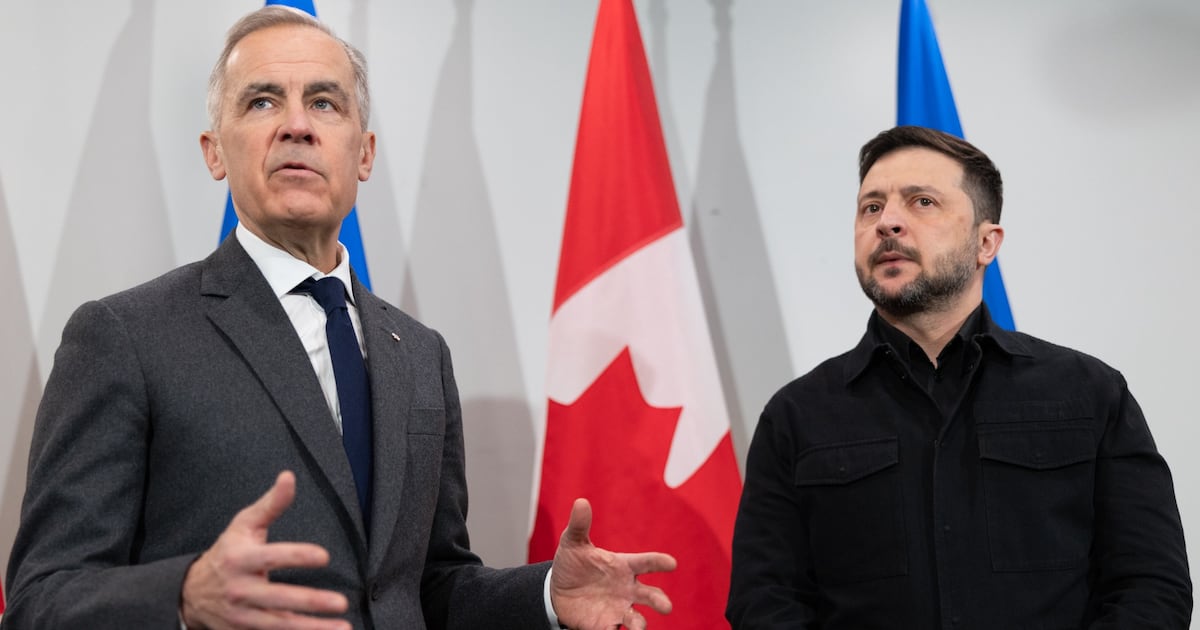
Prime Minister Mark Carney has announced that the Canadian government will contribute an additional $270 million to bolster Ukraine’s military capabilities. Speaking from the European Political Community (EPC) summit in Armenia, Carney detailed that the funds are specifically designated for the acquisition of equipment from a NATO-vetted list. This latest injection of capital brings Canada’s total financial support for Ukraine to a staggering $25.8 billion since the start of Russia’s full-scale invasion in 2022.
The Prime Minister framed the aid as a critical component of a shifting tide in the conflict. “It’s part of a bigger puzzle in a conflict where Ukraine is gaining some advantage,” Carney told reporters. During a high-profile meeting with Ukrainian President Volodymyr Zelenskyy, Carney emphasized that “all of Canada” remains steadfast in its support, expressing confidence that the contribution would help secure a future of peace and prosperity for the region.
A Historic Diplomatic Milestone
Canada’s presence at the EPC summit in Armenia is historically significant, as it marks the first time a non-European nation has attended the gathering. The summit, which occurs twice annually, was established as a forum for strategic cooperation on security, infrastructure, and energy following the 2022 invasion. Carney’s invitation is seen as a recognition of Canada’s integral role in the broader transatlantic security architecture.
Addressing the assembled European leaders, Carney delivered a pointed message regarding the current state of global affairs. He argued that the world is currently undergoing a “rupture” across technology, energy, and commerce. He warned against the dangers of looking backward, stating that “nostalgia is not a strategy” and that democratic nations must not submit to a world that is increasingly transactional, insular, and brutal.
Forging a New International Order
Beyond the immediate focus on Ukraine, the summit served as a platform for deepening economic and industrial ties. Carney held bilateral meetings with European Commission President Ursula von der Leyen and European Council President Antonio Costa. According to the Prime Minister’s Office, these discussions focused on securing supply chains for critical minerals and advancing collaborative energy technologies. Carney also met with the leaders of Italy, Spain, and Armenia, reinforcing the idea that a new international order will be rebuilt through strong, integrated partnerships centered in Europe.
President Zelenskyy expressed profound gratitude for the continued assistance, noting that the moral and financial backing from Canadian friends remains vital to their defense. As the summit concludes, Canada’s leadership is signaling a long-term commitment to European stability and a rejection of the isolationist trends affecting other parts of the globe.
Your Current 3 Day Forecast — September 20, 2026

Dylan Cease struggles as Toronto pitching strain worsens in loss to Rangers
How Canada’s Prime Minister Is Building Stronger Trans-Atlantic Ties Close to Home
Montreal’s High-Powered Offense Holds Off Late Hamilton Comeback in East Clash
What to Know Ahead of Alberta’s Oct. 19 Vote on a Separation Referendum
What to Know About the Alasko Frozen Raspberry Recall Following Illness Reports
Opinion: John Rustad Has to Go
B.C. Supreme Court Grants Cowichan Tribes Title to Historic Richmond Lands and Fishing Rights

A Taste of Autumn: Fall Okanagan Wine Festival 2025

Vancouver Canucks Gear Up for a Make-or-Break 2025–26 Season

Kamloops Blazers Announce Off-Season Changes Ahead of 2025–26 Season
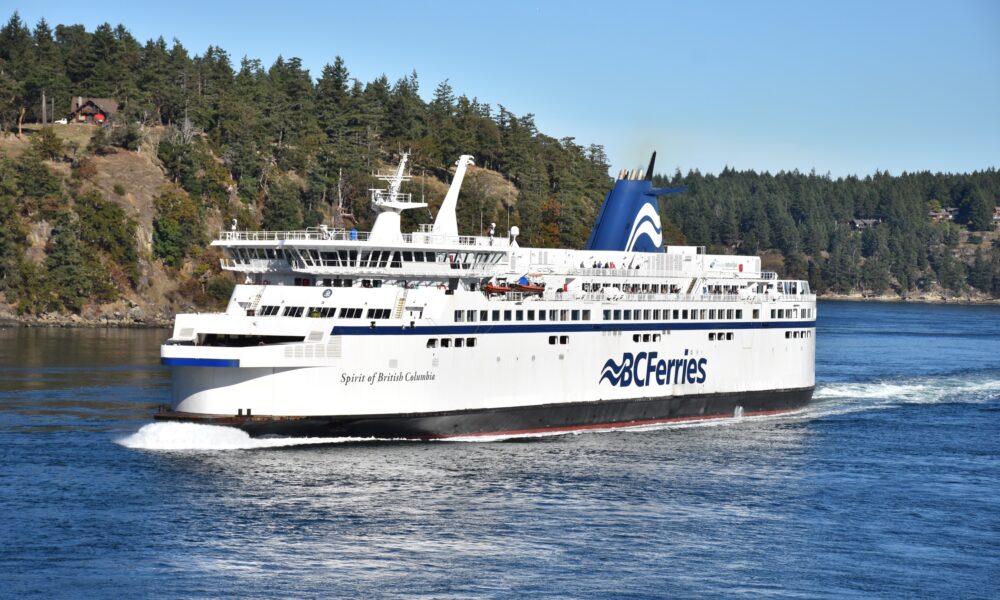
BC Ferries Sparks Outcry Over Contract with Chinese Shipyard
-
NATIONAL STORIES6 days ago
Remembering George Chuvalo: The Canadian Heavyweight Legend Who Never Got Knocked Down
-

 COMMUNITY6 days ago
Navigating Blended Family Wills and Estate Options
-

 NATIONAL STORIES6 days ago
AI’s Biggest Warning May Be Coming From the People Building It
-

 SPORTS6 days ago
How Video Adjustments Fuelled the Vancouver Canucks’ 5-2 Prospects Victory Over Seattle
-
POLITICS7 days ago
What Trump’s Remarks Linking Canada to Iran Signal About International Negotiations
-
WORLD7 days ago
What Trump’s Remarks Linking Canada to Iran Signal About International Negotiations
-
LOCAL7 days ago
Stephen Johnston Mayor by Acclamation
-

 BC STORIES6 days ago
Uncertain Eyewitness Testimony at Center of Final Arguments in 2021 Restaurant Shooting Trial