POLITICS

BCGEU Strike Escalates with New Sectors and Overtime Bans

Published

on

BCGEU Strike Escalates: Mining Joins, Overtime Bans

BCGEU Strike Escalates with New Sectors and Overtime Bans


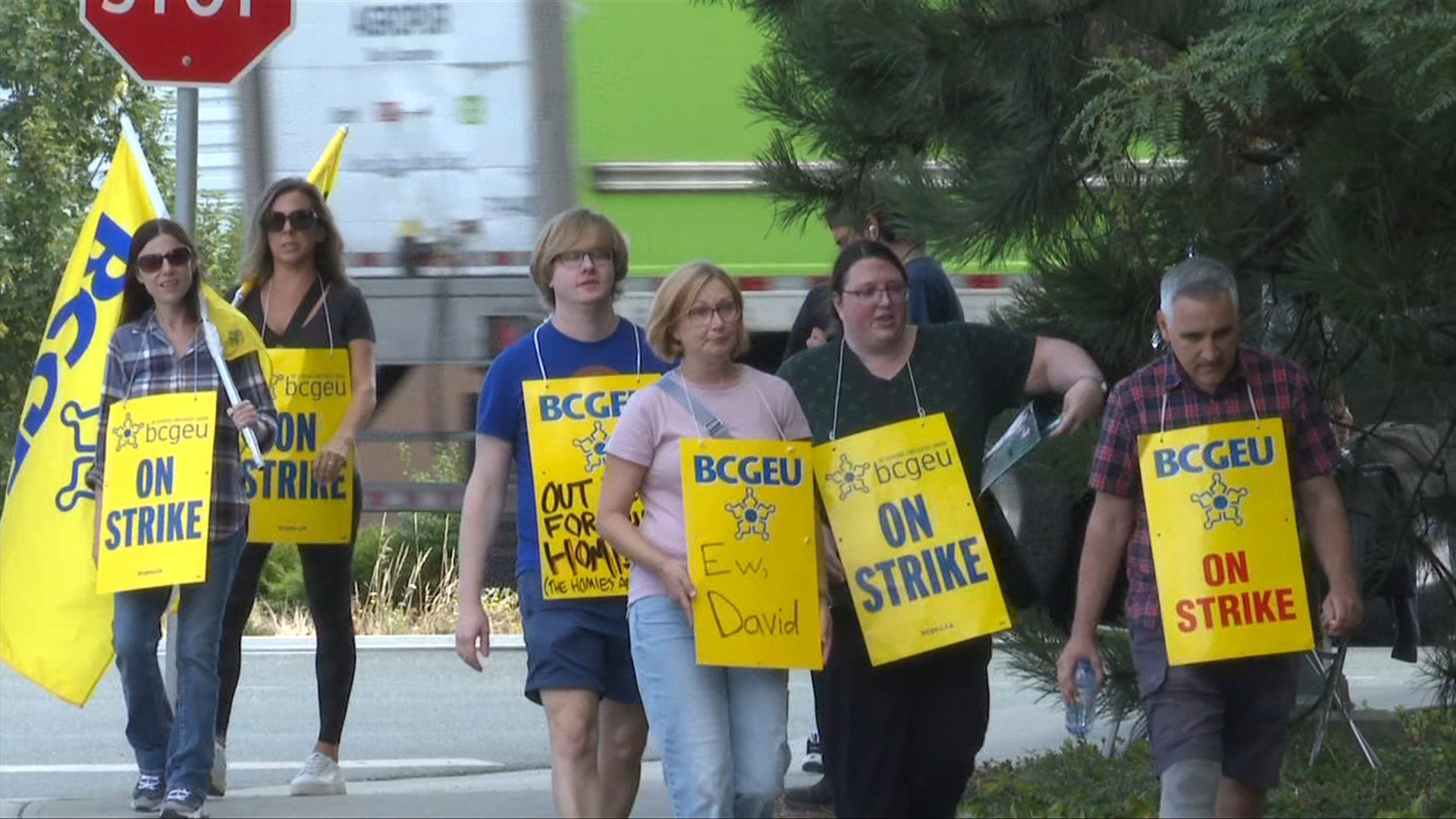
The BC General Employees’ Union (BCGEU) has broadened its ongoing job action, bringing mining-sector employees onto picket lines and imposing overtime bans for correctional officers and sheriffs. Workers at the Mineral Development Office and Mineral Titles Office in Vancouver, along with staff at the Southeast Mines Office in Cranbrook, joined strike activity on Tuesday, increasing the total number of public service workers participating to roughly 8,500 across the province.

What triggered the escalation

The core issue remains the union’s demand for an 8.25% wage increase over two years. Union members say that level of pay growth is needed to keep pace with inflation and rising living costs. The provincial government has offered about 4.5% over the same period, plus cost-of-living adjustments, and negotiations have stalled as both sides remain far apart.

Which sectors are now affected

New areas of impact include:

  • Mining administration — Mineral Development Office and Mineral Titles Office (Vancouver); Southeast Mines Office (Cranbrook).
  • Corrections and sheriff services — overtime bans implemented, affecting staffing availability and scheduling.
  • Other public service roles already on strike or rotating job action, contributing to provincial service disruption.

Operational and community impacts

The escalation is producing immediate ripple effects: delays in mining permit processing and regulatory work have been reported, while the overtime bans in corrections and sheriff services are placing extra pressure on public safety staffing and rostering. Local communities, industry stakeholders and service users are monitoring developments closely as disruptions grow.

Short-term risks

  • Processing delays for mining permits and related regulatory files.
  • Increased strain on corrections and sheriff staffing due to reduced overtime capacity.
  • Potential for further escalation if talks remain deadlocked.

Union stance and next steps

BCGEU leaders, including BCGEU president Paul Finch, have warned that additional escalation is possible while negotiations remain stalled. The union underscores that its wage demand is intended to protect workers’ purchasing power. The government has framed its offer as fiscally responsible while including cost-of-living adjustments.

What to watch

Key developments to follow:

  • Any new sectors or worksites joining the strike.
  • Changes to the provincial offer or return-to-work proposals.
  • Community and industry responses, especially from the mining sector and public safety bodies.

As the job action enters its third week, the outcome of negotiations will determine whether services return to normal or if broader disruption continues. Communities across British Columbia remain attentive to any changes that might affect daily services and economic activity.


NATIONAL STORIES

Questions Raised Over Resignations and High-Level Appointment in Ottawa

Aaron Gunn questions Prime Minister Mark Carney over the appointment of Dominic Barton and the sudden resignation of Invest in Canada’s chief executive.

Published

on

Questions Over Federal Investment Leadership

An opposition shadow minister is calling for explanations regarding a sudden departure at the country’s investment agency alongside a controversial board appointment.

In an official letter addressed to Prime Minister Mark Carney, Aaron Gunn, Conservative Shadow Minister for Ethics and Accountable Government, pressed the federal government about the resignation of the Invest in Canada Chief Executive Officer. The departure occurred unannounced more than a year before the end of the term, coming shortly ahead of a major investment summit.

Concerns Surrounding Board Chair Appointment

The correspondence follows the naming of Dominic Barton as the new Chair of the Board for Invest in Canada. Gunn pointed to Barton’s former leadership at consulting firm McKinsey, noting past controversies including a $650 million settlement concerning advice given to Purdue Pharma regarding OxyContin sales, as well as work with Chinese state-owned enterprises.

Gunn also criticized Barton’s previous role leading the Liberal Advisory Council on Economic Growth, highlighting that McKinsey received $200 million in federal contracts between 2015 and 2023, with the Auditor General determining that 90 per cent were granted outside proper guidelines.

Inquiries Into Unexplained Departures

In addition to the departure at Invest in Canada, Gunn noted expectations that the head of the newly-created Defence Investment Agency will also resign. Comparing the timing to a professional hockey coach stepping down ten days prior to the Stanley Cup Finals, the shadow minister questioned whether political motivations were behind the vacancies.

“Did you push out the head of Invest in Canada to fill the job with a fellow Liberal insider?” Gunn wrote in the letter. “Why are favoured insiders still getting cushy appointments despite their record of failure and waste? What’s the real reason the heads of Canada’s investment agencies are resigning so suddenly?”

Gunn stated that Conservatives will push for answers to ensure the federal government remains accountable to working families and businesses.

Continue Reading

BC STORIES

Why MLA Donegal Wilson Is Leaving the B.C. Conservative Party

Boundary-Similkameen MLA Donegal Wilson resigns from the B.C. Conservatives to sit as an Independent, citing lost confidence in leader Kerry-Lynne Findlay.

Published

on

Caucus shrinks to 29 members following latest resignation

Boundary-Similkameen MLA Donegal Wilson has decided to break away from the B.C. Conservative Party and sit in the legislature as an Independent, citing a total breakdown of trust in party leader Kerry-Lynne Findlay.

Wilson’s departure marks the eighth time an MLA has exited the party within a single month, bringing total caucus departures to 15 since the 2024 general election. The Conservative caucus now retains 29 of the 44 members originally elected under its banner.

Frustration over party leadership and missed meetings

The decision came after weeks of unanswered requests for caucus discussions. Wilson recounted her disappointment when an official caucus gathering was called off, followed by an uncomfortable interaction at a substitute meeting held by MLAs in Surrey on Monday.

When leadership figures instructed attendees to go door-knocking on behalf of Findlay, Wilson declined to participate. “I couldn’t do that,” Wilson said in an interview with Black Press Media. “I couldn’t look British Columbians in the eye and ask them to vote for her.”

In a formal statement announcing her exit, Wilson noted that she gave the new leader a quarter-year trial period following Findlay’s election in May. “When Ms. Findlay became Leader, I promised myself I would keep an open mind and give her three months to show us how she intended to lead,” Wilson wrote. “Three months later, I have my answer. I never imagined things could go this wrong, this quickly.”

Concerns regarding staff turnover and police inquiry

Beyond elected members, the internal structure of the party has experienced substantial turnover. Key figures including party president Aisha Estey and executive director Angelo Isidorou have stepped down or been replaced. Wilson publicly criticized the new administrative hires, stating that Findlay selected individuals who expressed sympathy toward Alberta separatism.

“Experienced staff have been fired,” Wilson stated. “In their place, Ms. Findlay has made senior appointments that raise serious questions about her judgment.”

Wilson also voiced deep concern over claims that Findlay’s team attempted to entice sitting MLAs to resign their seats with job offers so Findlay, who lacks a seat in the legislature, could contest a byelection. Under Canada’s Criminal Code, offering rewards or benefits to secure an elected official’s resignation is illegal. Findlay has denied any unlawful conduct, but Delta South MLA Ian Paton confirmed that the RCMP scheduled an interview with him regarding the allegations.

Looking ahead from the crossbenches

Responding to the departure, the B.C. Conservative caucus communications team issued a standard statement: “The B.C. Conservative caucus remains focused on the work British Columbians elected us to do as the Official Opposition, holding the NDP government accountable and restoring prosperity for the people of this province.”

While former Conservative MLAs Paton and Kamloops Centre representative Peter Milobar are collaborating to create a new political entity, Wilson confirmed she will not join the governing NDP. She plans to monitor developments before making any further party commitments.

“I believe we’re aligned, but I’m not ready to just jump out of the frying pan into the fire,” Wilson said. “I will sit back and figure out what’s best for the people of Boundary-Similkameen.”

Continue Reading

BC STORIES

Why Neither Incumbency Nor Fresh Faces Alone Guarantee Effective Municipal Leadership

Ashley Bilodeau outlines how voters can evaluate incumbents and new candidates based on judgment and preparation ahead of the October municipal election.

Published

on

Evaluating Beyond Experience and Change

As the municipal election approaches in October, voters face recurring choices between retaining experienced incumbents or selecting first-time candidates promising fresh perspectives. However, municipal planning consultant Ashley Bilodeau emphasizes that neither four years in office nor a lack of prior council experience automatically guarantees competence or readiness.

Assessing the Record of Incumbents

For candidates seeking re-election, voters have access to a tangible record of past behavior. Evaluation of incumbents should center on how effectively they participated at the council table—such as their preparation for meetings, engagement with reports, ability to explain difficult votes, and contribution to constructive council operations. Experience is most valuable when elected officials understand the system well enough to improve it, account for their decisions clearly, and mentor new members without dismissing novel ideas.

Examining Newcomers and Preparation

While municipal councils benefit from renewal and diverse backgrounds, fresh perspectives alone do not constitute a plan. Strong first-time candidates demonstrate preparation prior to running by reviewing agendas, examining budgets, attending meetings, and understanding the scope of municipal authority. Conversely, voters are advised to exercise caution regarding candidates whose platforms stem primarily from frustration or who view complex administrative and financial realities as simple issues.

A Focus on Demonstrated Judgment

Relevant candidate experience can stem from outside local government, including business management, board service, professional work, or community volunteering. The central criteria for evaluating any candidate—whether a familiar name or a challenger—remains whether they display sound judgment, discipline, preparation, and a willingness to learn while serving the public.

Continue Reading

Trending