POLITICS
Trump Eyes Belarus Potash Deal to Cut Fertilizer Costs for U.S. Farmers
Trump announced the U.S. is working on a potash deal with Belarus to lower fertilizer costs for farmers and reduce reliance on Canadian exports.

U.S. Seeks Alternative Potash Supply From Eastern Europe
American buyers could soon see reduced fertilizer costs under a potential trade agreement with Belarus aimed at decreasing reliance on Canadian shipments, according to U.S. President Donald Trump.
In a social media update released Monday morning, Trump stated that the United States is currently pursuing an arrangement to purchase potash from Belarus. He noted that expected prices under the prospective deal would be substantially less than what American agricultural operations currently pay Canadian suppliers. Describing the potential contract with Belarus—an authoritarian country closely aligned with Russia—Trump highlighted it as very good news for domestic farmers and ranchers.
Impact on Canadian Exports and Global Supply
Potash serves as a primary ingredient in agricultural fertilizers, and Canadian exports currently dominate the U.S. market. According to Saskatchewan-based supplier Nutrien Ltd., Canada provides more than 80 per cent of all potash utilized on American farms. Data from Natural Resources Canada shows that the U.S. purchased $4.2 billion worth of Canadian potash in 2025, accounting for almost half of Canada’s total global potash exports. The commodity remains exempt from U.S. import tariffs.
Global market prices for potash escalated sharply following Russia’s invasion of Ukraine in 2022. While costs have decreased since that spike, they continue to sit above prewar figures. As of 2023, Canada generated roughly one-third of the world’s potash output, with Russia and Belarus following as the second and third largest producers globally.


NATIONAL STORIES
Why Ottawa’s Proposed Economic Legislation Could Change the Rules for Strike Actions
The Liberal government is introducing the Building Canada Strong Act to modify the Canada Labour Code and streamline rules for national project reviews.
Federal Government Introduces Legislation to Reform Labour Code
As the fall parliamentary session opens today, Prime Minister Mark Carney’s Liberal government is set to introduce the Building Canada Strong Act. The proposed legislation aims to overhaul project review regulations nationwide while introducing amendments to the Canada Labour Code.
Concerns Raised Over Government Interventions in Strikes
The upcoming bill has sparked apprehension among union leaders, who express concern that the measure could erode worker protections. They worry the law will formalize federal authority to stop work stoppages when national economic interests are impacted, following the frequent application of Section 107 of the labour code to halt disputes at ports, railways, and other key industrial sectors in recent years.
Ottawa Asserts Aim Is to Reduce Federal Intervention
Jobs Minister Patty Hajdu pledged that the federal government will not infringe upon collective bargaining or the right to strike. According to Hajdu, the planned statutory updates are intended to limit the frequency of government interventions during collective bargaining disputes.
NATIONAL STORIES
Trump Pursues Belarus Potash Deal to Lower Prices for American Farmers
U.S. President Donald Trump says the U.S. is negotiating a deal to buy potash from Belarus to lower fertilizer costs and reduce reliance on Canadian supply.
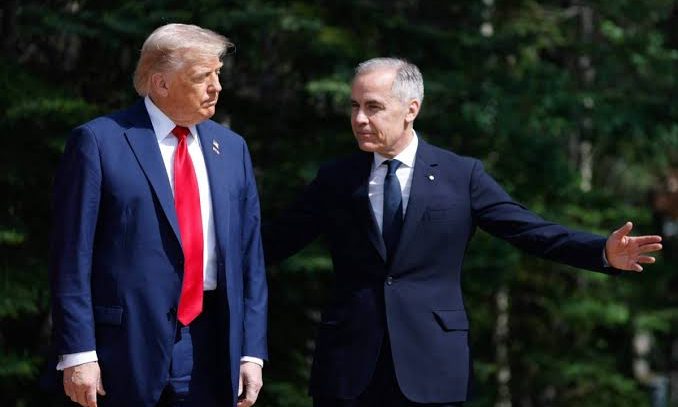
U.S. Seeks Alternative Potash Supply
American buyers could soon see “substantially less” expensive fertilizer costs as the United States negotiates an agreement to purchase potash from Belarus. U.S. President Donald Trump announced the initiative in a social media statement Monday morning, aiming to decrease reliance on Canadian exports.
Trump described the potential pact with Belarus—an authoritarian nation and close ally of Russia—as “very good news” for ranchers and farmers across the United States. Potash serves as an essential ingredient in agricultural fertilizers.
Impact on Canadian Agriculture Exports
The United States currently depends heavily on Canadian production to fulfill its agricultural needs. Saskatchewan-based producer Nutrien Ltd. notes that Canada provides over 80 per cent of the potash utilized on U.S. farms. In 2025, American imports of Canadian potash reached $4.2 billion, accounting for nearly half of Canada’s total exports of the mineral. Potash remains exempt from U.S. tariffs.
Global potash supply remains concentrated among a few nations. Canada generated approximately one-third of global output in 2023, followed by Russia and Belarus. Although potash prices spiked following Russia’s 2022 invasion of Ukraine, costs have since decreased, though they continue to trade above prewar levels.
HEALTH
Ottawa Faces Calls to Reconsider Temporary Resident Limits as Demonstrations Surge
Migrants and advocates rallied across Canada to protest federal plans limiting temporary resident numbers as Parliament prepares to resume.
Demonstrations Erupt Nationwide Over Federal Policy Changes
Demonstrators gathered in Vancouver and across Canada on Sunday to challenge federal measures aimed at curbing the nation’s temporary resident population. The rallies, organized by the Migrant Rights Network across 11 locations including British Columbia, Ontario, Quebec, and Prince Edward Island, occurred just ahead of Parliament’s resumption.
Federal policy changes introduced in 2024 have established tighter regulations for temporary foreign workers and set caps on study permits. The government aims to shrink non-permanent residents from a peak of 7.6 per cent of the population in October 2024 to below five per cent by late 2027, citing pressure on healthcare, housing, and public services. Parliamentary Budget Officer data shows net inflows of non-permanent residents reached nearly 800,000 in 2023.
Local Rallies Highlight Community Impacts
In Vancouver, advocates and residents assembled at Memorial South Park, symbolically bashing a piñata representing Bill C-12, recent federal legislation tightening asylum and immigration rules. Local rally participants expressed deep concern that shifting federal policies leave workers facing deportation, expiring permits, and difficult working conditions despite having followed official processes.
Organizers are urging Ottawa to provide permanent status to migrants currently in the country, auto-renew study and work permits, halt deportations, and eliminate employer-tied permits. Campaign materials from the Migrant Rights Network argued that blaming migrants fails to address rising rents, healthcare pressures, or wage issues, warning that policy shifts risk dividing workers.
Why Ottawa’s Proposed Economic Legislation Could Change the Rules for Strike Actions

Trump Pursues Belarus Potash Deal to Lower Prices for American Farmers
Major NHL Roster Moves and Coaching Returns Reshape the League Ahead of New Season
Ottawa Faces Calls to Reconsider Temporary Resident Limits as Demonstrations Surge
Trump Eyes Belarus Potash Deal to Cut Fertilizer Costs for U.S. Farmers
Your Current 3 Day Forecast — September 21, 2026
Opinion: John Rustad Has to Go

B.C. Supreme Court Grants Cowichan Tribes Title to Historic Richmond Lands and Fishing Rights

A Taste of Autumn: Fall Okanagan Wine Festival 2025

Vancouver Canucks Gear Up for a Make-or-Break 2025–26 Season

Kamloops Blazers Announce Off-Season Changes Ahead of 2025–26 Season

BC Ferries Sparks Outcry Over Contract with Chinese Shipyard
-

 POLITICS4 days ago
Why Conservative Slates Aren’t Materializing in Kamloops and Kelowna Elections
-
NATIONAL STORIES2 days ago
What to Know Ahead of Alberta’s Oct. 19 Vote on a Separation Referendum
-

 BC STORIES4 days ago
Frequent Highway 1 Crashes Leave Revelstoke Residents Fearing for Their Safety
-
NATIONAL STORIES6 days ago
What Ottawa’s Plan for Airport Private Investment Means for Passengers and Infrastructure
-
3 days ago
Your Current 3 Day Forecast — September 18, 2026
-
NATIONAL STORIES4 days ago
Public Safety Transparency Highlights Extortion Gang Investigations Across Canada
-

 LOCAL3 days ago
Why a Downtown Kelowna Assault Investigation Closed Without Charges
-
BC STORIES6 days ago
Why a Small B.C. Village Is Using Double the Canadian Average of Water