HEALTH
Strong Men Don’t Have to Struggle Alone


Too many men have learned to hide exhaustion, loneliness and emotional pain behind the words “I’m fine.” Real strength begins when we are willing to tell the truth.
By Richard Oostra | The Current
Ask a man how he is doing and there is a good chance you will receive one of three answers:
“Good.”
“Busy.”
“Can’t complain.”
Sometimes those answers are true. Sometimes they are simply the quickest way to end the conversation.
Many men have spent their entire lives learning how to provide, protect, compete and persevere. We are taught to solve problems, carry responsibility and keep moving forward. Those can be admirable qualities. Families, workplaces and communities depend on men who are dependable and resilient.
But resilience is not the same as silence.
A man can appear successful while privately feeling exhausted, disconnected or overwhelmed. He may continue going to work, paying the bills and fulfilling his responsibilities while gradually losing his motivation, relationships and sense of purpose.
The warning signs are not always obvious. Struggle does not necessarily look like sadness. In men, it can appear as anger, irritability, overworking, increased drinking, reckless behaviour, poor sleep or withdrawing from the people who care about them.
The Canadian Mental Health Association advises families and friends to pay attention when a man becomes unusually distant, tired, angry or uninterested in activities he normally enjoys. These changes can be signs that something deeper is happening.
This is not a small issue. According to the Public Health Agency of Canada, men account for nearly three-quarters of suicide deaths in this country, and the suicide rate among men is almost three times the rate among women.
Those numbers should force us to reconsider what we call strength.
The Pressure to Appear Fine
Many men were raised to believe that admitting pain creates a burden for others. They tell themselves that someone else has it worse, that they should be grateful or that they simply need to toughen up.
As a result, they wait.
They wait until stress becomes burnout. They wait until loneliness becomes isolation. They wait until frustration damages a marriage, a friendship or a relationship with their children. They wait until a manageable health concern becomes a crisis.
We would never tell a man with chest pain to hide it because other people have heart problems. We would tell him to get help. Mental and emotional pain deserve the same seriousness.
Asking for help is not surrender. It is taking responsibility before the damage spreads.
Busyness Can Hide Loneliness
Men can be surrounded by people and still feel profoundly alone.
Work meetings, social media contacts and casual conversations are not always genuine connections. A man may speak with dozens of people during the day without having one conversation in which he feels safe enough to be honest.
Statistics Canada has found that frequent loneliness is associated with poorer mental health and lower overall life satisfaction. Recent Canadian mental-health reporting also suggests that many men lack strong social-support networks and have never sought professional mental-health assistance.
Loneliness is not a personal failure. But ignoring it will not make it disappear.
Friendship requires effort, especially as we get older. Careers become demanding. Families require attention. People move away. Old friendships fade because neither person wants to be the first to admit that the relationship matters.
The solution does not have to begin with a dramatic emotional conversation. It can begin with a phone call, a coffee, a walk or an invitation to do something together.
Connection is built through repetition. We have to show up.
Start With What You Can Control
Mental health is complex, and practical habits are not replacements for professional care. However, our daily choices can strengthen the foundation on which better health is built.
Start with the basics.
Move your body every day. You do not need an expensive gym membership or a complicated program. Walk, lift weights, cycle, swim, work in the yard or play a sport. Exercise can provide structure, improve physical health and create opportunities for connection.
Protect your sleep. Constant exhaustion affects patience, judgment and emotional control. Staying up late scrolling through a phone is not recovery.
Pay attention to alcohol. A drink may temporarily dull stress, but it does not resolve what is causing it. If drinking is becoming the main way you relax, sleep, socialize or avoid difficult feelings, it is time for an honest assessment.
Create some quiet. Many of us fill every spare moment with news, entertainment, work or social media because silence gives uncomfortable thoughts room to surface. Those thoughts may be telling us something we need to address.
Most importantly, speak to someone. That person might be a spouse, trusted friend, doctor, counsellor, coach, faith leader or family member. You do not need a perfect explanation. You can simply say, “I haven’t been myself lately, and I think I need to talk.”
That sentence can change the direction of a life.
Check on the Men Around You
We also have a responsibility to notice one another.
If a friend has disappeared from the usual gatherings, call him. If a co-worker seems unusually angry or withdrawn, ask him privately if something is going on. If your father, brother, son or neighbour keeps insisting that everything is fine while his behaviour says otherwise, ask again.
Do not settle for “How are you?”
Try something more specific:
“You haven’t seemed like yourself lately. What’s happening?”
“I’ve noticed you’ve been pulling away. Are you doing okay?”
“You don’t have to handle this by yourself. How can I help?”
Then listen. Do not immediately lecture, diagnose or attempt to fix everything. Give the person room to speak without making him regret being honest.
A Better Definition of Strength
Real strength is not pretending that nothing hurts.
Strength is recognizing when something is wrong and taking action. It is having the courage to make the appointment, answer the phone, repair the relationship or admit that the weight has become too heavy to carry alone.
We need men who are strong enough to provide and protect. But we also need men who are emotionally present, connected to their families, involved in their communities and willing to care for their own health.
No man becomes weaker by asking for help.
He becomes more capable of showing up for the people and responsibilities that matter most.
If you are struggling, say something today. If you are worried about someone, reach out today. Do not wait for the perfect moment or the perfect words.
Start the conversation.
It may be the strongest thing either of you does.
Richard Oostra is a high-performance coach who writes about physical and mental health, discipline, resilience, relationships, purpose and building stronger communities. https://richardoostra.com/
If you or someone you know is thinking about suicide, call or text 9-8-8 anywhere in Canada. If there is immediate danger, call 9-1-1.
Richard Oostra examines men’s mental health, loneliness and the pressure to appear strong—and offers practical ways to reconnect and seek help.
Supporting health information: Public Health Agency of Canada suicide statistics, Health Canada on men’s health, and Canadian Mental Health Association guidance.

HEALTH
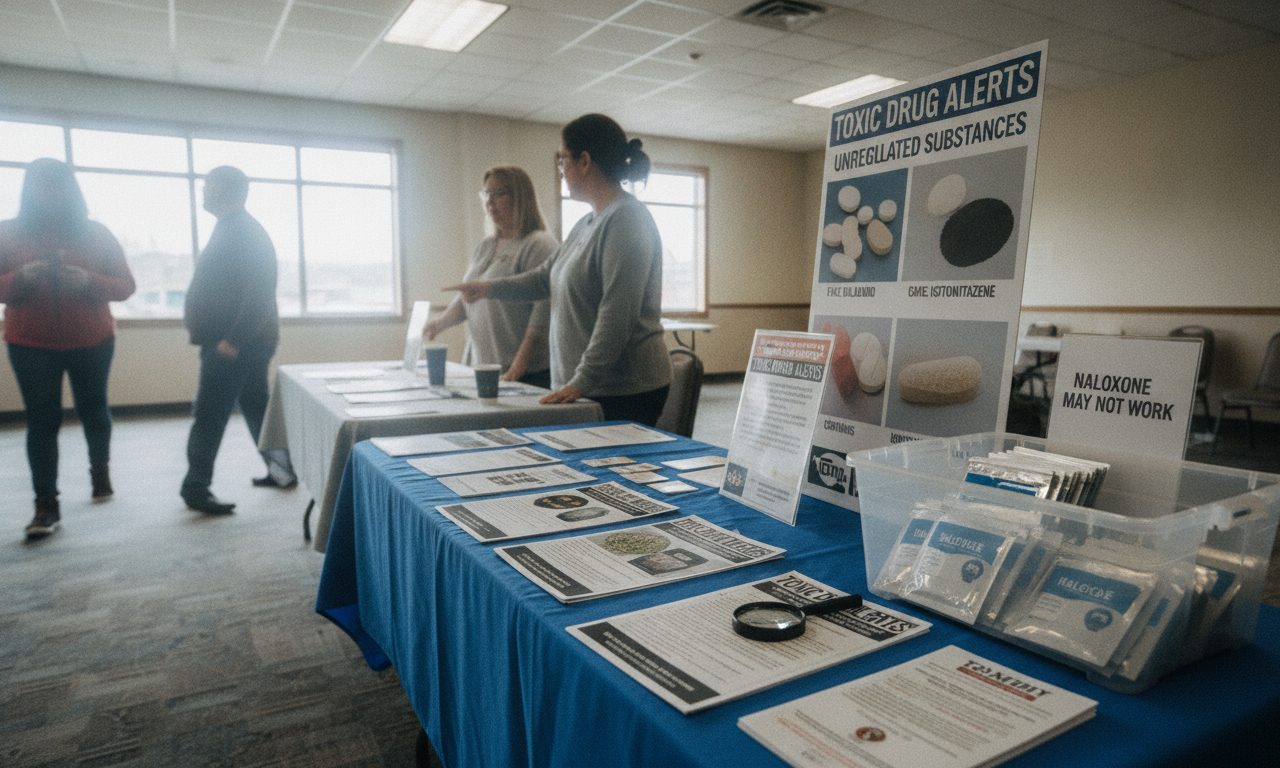
Why B.C. Interior Residents Are Being Warned About Dangerous Unregulated Drugs
Interior Health issues alerts in Cranbrook, Kamloops, and the Kootenays over toxic illicit substances and counterfeit pills containing potent opioids.
Widespread Alerts Issued Across the Region
Health officials and police in B.C.’s Interior have raised concerns following a series of toxic drug warnings throughout the area. Recent findings reveal that several illicit substances differ significantly from how they are being marketed.
An alert published on Monday in Cranbrook highlighted that illicit substances sold as down, dope, tranq, and fentanyl contain tranquilizers and benzodiazepines. Interior Health warned that these specific additives do not respond to naloxone. Furthermore, the regional health authority detected fentanyl analogues, which are potent synthetic opioids structurally similar to fentanyl. According to Interior Health, combining medetomidine, ethylflualprazolam, and fentanyl analogues can result in extreme sedation extending beyond the duration of naloxone.
Fake Medication and Local Responses
Less than a week prior to the Cranbrook alert, Interior Health alerted the Kamloops area regarding fake Dilaudid tablets. While intended to mimic hydromorphone, testing revealed they actually contained isotonitazene, a potent opioid. Antoine Marcheterre, head of drug checking at Interior Health, noted, “You can’t tell these tablets apart from real ones. We’re really dealing with something that can end up being 50 to 100 times more potent than the tablet that it’s trying to imitate.” Fake tablets containing isotonitazene are estimated to be up to 50 times stronger than fentanyl.
Police in Salmon Arm also took action on Monday after responding to two suspected overdoses within 24 hours. Although the RCMP detachment could not identify the specific substance involved, officers urged users to always carry naloxone and avoid using alone. Earlier in the month, an alert was issued in the Kootenays when testing identified elevated levels of fentanyl analogues, medetomidine, and numerous types of benzodiazepines.
Safety Resources and Regional Impact
To reduce harm, Interior Health recommends utilizing overdose prevention sites, ensuring someone else is present when using drugs, and keeping naloxone on hand. Information on local drug checking locations is accessible at drugchecking.ca.
The current warnings arrive a decade after British Columbia officially declared the toxic drug crisis a public health emergency. B.C. Coroners Service records show 177 deaths related to unregulated drugs in the Interior Health region this year through August. In 2025, unregulated substances were linked to 321 deaths across the region.
BC STORIES
What 5 Neurologist Resignations Mean for Regional Health Care at Interior Health
Five Interior Health neurologists have resigned following expanded regional on-call demands, adding to previous physician departures in the B.C. region.
Five Specialists Step Down Following Regional On-Call Mandate
Five neurologists have resigned from their positions with Interior Health after being required to expand their on-call coverage across the entire health authority region via internet and telephone services. According to Doctors of B.C. president Adam Thompson, the mandate served as a tipping point after physicians expressed that the arrangement was not viable, citing concerns over workload levels.
Pattern of Physician Departures Across Regional Facilities
The decision marks another instance of staff departures within the health authority. Previous incidents include the resignation of all obstetricians and gynecologists at Kamloops’ Royal Inland Hospital last October due to workload, alongside four psychiatrists leaving Vernon Jubilee Hospital that same month. Furthermore, seven pediatricians resigned from Kelowna General Hospital between 2023 and 2025, which led to an internal report highlighting a decline in trust between physicians and administration.
Calls for Collaboration and Health Authority Response
Thompson stressed that health authority administrators must listen to and collaborate with frontline physicians to address ongoing service issues across provincial specialties. In response, Dr. Kirstie McLelland, executive medical director of clinical operations for Interior Health South, stated that election-period communication rules limited detailed comment, but affirmed that the authority remains committed to working with neurologists to meet staff rules and bylaws while delivering required care. She added that members of the public should not hesitate to seek neurology services if needed.
BC STORIES
B.C. Faces an Early and Hard-Hitting Flu Season as Symptoms Intensify
B.C. flu season arrives early as Health Canada reports elevated activity. Learn about the dominant H1N1 strain, severe symptoms, and vaccine availability.

Early Arrival and Severe Symptoms
Influenza activity in British Columbia has surged earlier than usual this year, bringing illness that health professionals describe as particularly intense. According to Health Canada data, flu test positivity across the province is running above average for this time of year, departing from the typical pattern where cases climb slowly toward a holiday peak.
Pharmacists note that the current wave is taking a heavier toll on patients compared to last year. Pharmasave pharmacist Fairuz Siraj stated, “This year it’s hitting hard. We’re seeing a lot of cases of people coming down, feeling ill, and taking more time to recover. A lot more severe type of illness than what we saw last year.”
Dominant Strain and Vaccine Alignment
Data from the Public Health Agency of Canada and the BC Centre for Disease Control show that B.C. registered a “moderate” flu activity level during the first week and a half of October, with wastewater indicators rising at multiple monitoring locations. Meanwhile, other Canadian provinces continue to report “low” or “very low” activity.
The dominant virus strain in circulation is H1N1, a form of Influenza A. On Oct. 7, B.C. Provincial Health Officer Dr. Bonnie Henry announced the launch of the provincial vaccination campaign 10 days ahead of the usual schedule. Because scientists anticipated that H1N1 would lead cases this season, the current vaccine was formulated specifically to target it. Dr. Brian Ward, a scientist at the McGill University Health Centre, noted that “so far, so good,” though he cautioned that flu viruses can mutate as the season progresses. Ward added it remains too early to know if mid-season mutations will occur and stated he is unaware of any predicted mutations that would reduce vaccine efficacy.
Vaccine Access Details
Free influenza immunizations are currently accessible to B.C. seniors and individuals in high-risk categories. Siraj advised that members of the general public seeking early protection may check walk-in clinics for availability or wait for their individual booking notification links, which are expected in late October or early November.

Kelowna Centre may have a new MLA by Friday

Who Gets to Decide Where B.C. Builds? Conservatives Move to Return Housing Power to Municipalities

The Money Spoke Before the Voters Did: How B.C.’s Conservatives Turned Chaos Into Victory

AI Stocks Tumble as U.S. Midterm Elections Send Shockwaves Through Global Markets

Canada to Deny Visas to Russian Hockey Players for 2027 World Juniors

Quebec Suspect Arrested and Extradited in Fatal Highway 97 Hit-and-Run Investigation
Opinion: John Rustad Has to Go
B.C. Supreme Court Grants Cowichan Tribes Title to Historic Richmond Lands and Fishing Rights

A Taste of Autumn: Fall Okanagan Wine Festival 2025

Vancouver Canucks Gear Up for a Make-or-Break 2025–26 Season

Kamloops Blazers Announce Off-Season Changes Ahead of 2025–26 Season

BC Ferries Sparks Outcry Over Contract with Chinese Shipyard
-
5 days ago
Your Current 3 Day Forecast — October 31, 2026
-

 NATIONAL STORIES7 days ago
National School Food Program Faces Scrutiny After Testimony Shows Inflation Erodes Funding
-
6 days ago
Your Current 3 Day Forecast — October 30, 2026
-
3 days ago
Your Current 3 Day Forecast — November 2, 2026
-

 HEALTH6 days ago
Why B.C. Interior Residents Are Being Warned About Dangerous Unregulated Drugs
-

 LOCAL3 days ago
Why two Kamloops MLAs see value in a brief sitting before spring
-

 LOCAL7 days ago
UBC Okanagan Cancels CCS Classes and Exams Following Building Roof Fire
-

 NATIONAL STORIES7 days ago
No Danger to Nearby Residents as Base Firefighters Contain CFB Gagetown Blaze