NATIONAL STORIES
Don’t Mistake BC Conservatives Self-Destruction for an NDP Revival in BC

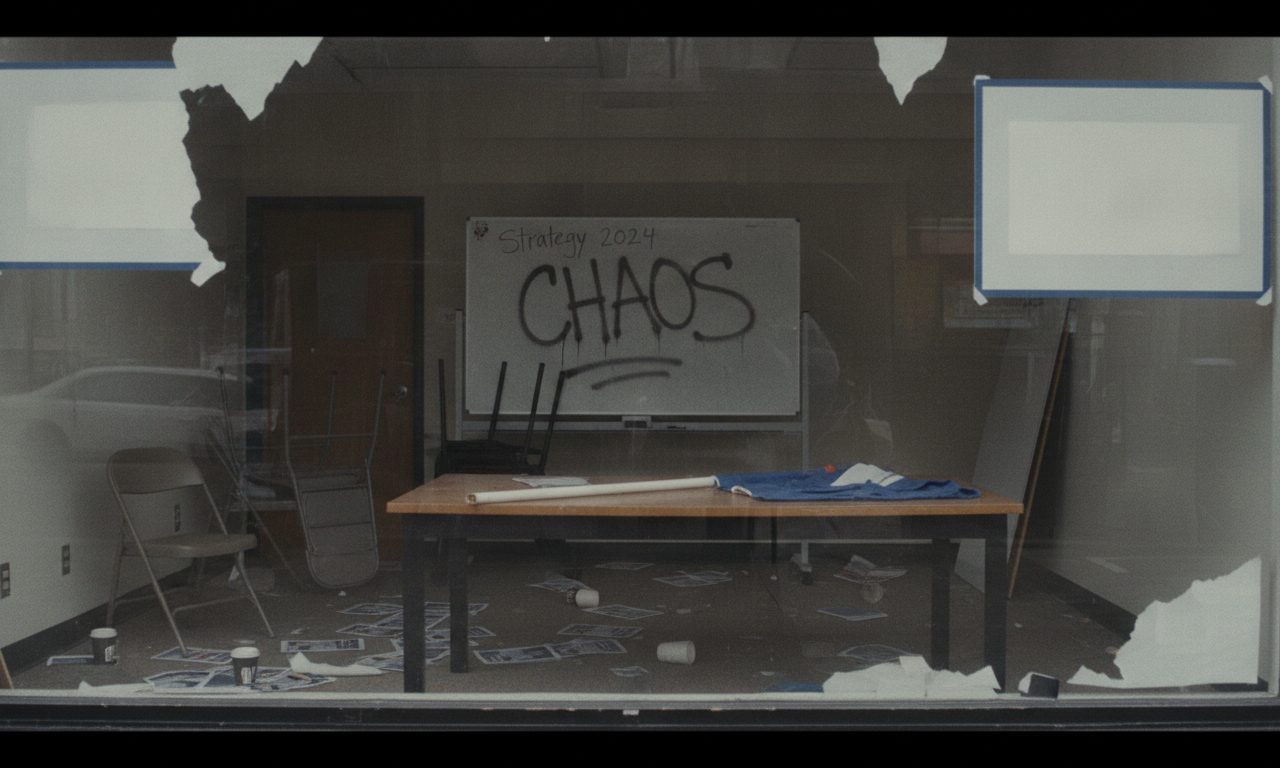
The BC Conservatives have a serious problem. But the Oremire of BC, David Eby shouldn’t start measuring the curtains for another majority just yet.
By David Chan | The Current
There is a basic lesson taught in business school that political parties occasionally forget: rapid growth can kill you almost as effectively as failure.
Growth creates complexity.
Complexity exposes weak management.
Weak management turns what looked like momentum into chaos.
Welcome to the Conservative Party of British Columbia in 2026.
When we last checked in, there were warning signs scattered around the organization. A few loose tires in the field, perhaps, but nothing you would necessarily describe as a full-blown fire.
That distinction is getting considerably harder to make.
Kerry-Lynne Findlay narrowly won the Conservative leadership on May 30 after a bruising contest against Caroline Elliott. What followed was supposed to be the relatively routine work of rebuilding a caucus, sharpening the party’s message and preparing an Official Opposition that came remarkably close to forming government in 2024.
Instead, British Columbians have been treated to one departure, controversy and internal dispute after another.
Nine MLAs have left the Conservative caucus in the recent exodus alone. The party elected 44 MLAs in 2024. It now has 28. Five former Conservatives have announced plans to operate together under a new provincial party, pitching themselves as a “stable, serious alternative” to both the NDP and the current Conservative leadership. (CityNews Vancouver)
Think about those numbers for a moment.
This wasn’t a fringe party winning a couple of accidental seats.
The BC Conservatives came within striking distance of government less than two years ago.
Today, the conversation is increasingly about whether the party can keep itself together.
That’s quite a turnaround.
And it would be a mistake to interpret all of it simply as another fight between moderates and conservatives.
Something bigger is happening.
This Looks More Like a Management Problem
Political observers naturally want to interpret everything through ideology.
Moderates versus populists.
Establishment conservatives versus grassroots conservatives.
Federal-style Conservatives versus the old BC Liberal coalition.
There is certainly some of that happening.
But ideology doesn’t adequately explain the scale of the dysfunction.
The more immediate problem facing Findlay is one familiar to anyone who has worked inside a fast-growing company: the organization expanded far faster than its internal systems.
The Conservatives scaled before they institutionalized.
In 2023, the party was effectively an insurgency.
By October 2024, it had become the Official Opposition and nearly formed government.
That’s extraordinary growth.
But gaining customers — or voters — is not the same thing as building an organization capable of serving them.
BC United’s collapse handed the Conservatives an enormous political opportunity. Voters who wanted the NDP gone consolidated behind John Rustad’s party because it suddenly became the only realistic vehicle available.
But those voters didn’t necessarily become ideological Conservatives overnight.
Neither did every candidate.
What the party assembled was an anti-NDP coalition.
That’s different from building a Conservative institution.
And now the difference matters.
A mature political organization needs candidate vetting, caucus discipline, leadership structures, professional communications, policy development, dispute-resolution mechanisms and experienced people capable of telling the leader something he or she does not want to hear.
Most importantly, it needs a culture capable of disagreement.
Because any organization large enough to govern British Columbia will contain people who disagree with each other.
That’s not a design flaw.
That’s democracy.
Nine Departures Aren’t Ideological Discipline
Findlay has a legitimate argument available to her.
Political parties should stand for something.
A caucus assembled at extraordinary speed was inevitably going to contain people with very different political backgrounds.
Some came from the BC Liberals.
Others were populists.
Some were traditional conservatives.
Others primarily wanted David Eby’s NDP defeated.
A leader is entitled to establish direction.
But there is a difference between creating ideological coherence and triggering organizational collapse.
Nine departures in a matter of weeks is a lot of coherence.
At some point, management has to enter the conversation.
The MLAs who left have offered different explanations. They have raised concerns about staffing decisions, caucus relations, ideological tests, leadership style and Findlay’s judgment.
Scott McInnis described the party as becoming an “exclusive private club” more concerned with ideological credentials than building the broad coalition required to govern.
Other departing MLAs raised concerns about reported connections involving senior appointees and Alberta separatist politics. Findlay herself has not advocated Alberta separatism, and it would be unfair to label her a separatist because of people around her.
But political leadership includes judgment about personnel.
Who gets hired matters.
Who gets fired matters.
Who gets invited into the room matters.
Who leaves the room matters even more.
When one employee quits, perhaps the employee is the problem.
When nine do, shareholders generally start asking questions about management.
Then Came the Abbotsford-Mission Mess
Findlay still doesn’t hold a seat in the legislature.
That problem appeared to be solved when Abbotsford-Mission MLA Reann Gasper resigned, clearing the way for Findlay to run in the September 26 by-election.
Gasper subsequently became Findlay’s deputy chief of staff. (Elections BC)
Legally, those facts alone establish nothing improper.
Politically, however, they are awkward.
The situation became considerably more serious when former Conservative MLA Ian Paton alleged he had been offered a paid adviser position if he resigned his Delta South seat so Findlay could run there.
Paton said the RCMP subsequently contacted him for an interview. The RCMP said it was aware of the allegations but, according to reporting, would not confirm or deny an investigation unless charges were laid.
Findlay has denied offering jobs in exchange for resignations and called the allegations baseless. No finding of wrongdoing has been made. (Conservative Party of British Columbia)
Those qualifications matter.
But politics isn’t a courtroom.
There is a difference between proving criminal wrongdoing and creating an impression of disorder.
Findlay desperately needs to move the conversation back to affordability, health care, housing, crime, taxes and the economy.
Instead, reporters keep asking about her caucus.
That’s a strategic disaster.
The Product Still Has a Market
Here is where the NDP should resist becoming too pleased with itself.
The collapse occurring across the aisle does not mean British Columbians have suddenly rediscovered their love for David Eby’s government.
Those are two entirely separate conclusions.
Recent polling has demonstrated just how volatile the province remains.
A Research Co. survey in June had the Conservatives and NDP tied at 42 per cent among decided voters. That same poll found 47 per cent of British Columbians believed the province needed a centre-right alternative to the two dominant parties. (Research Co.)
That should tell us something important.
There remains a very large market for change.
British Columbians still live with extraordinary housing costs.
Patients still struggle to access timely health care.
Families still worry about affordability.
Communities remain concerned about public safety, addiction and street disorder.
Businesses continue to complain about taxes, regulation and an economy that feels increasingly difficult to navigate.
Resource development, Indigenous reconciliation, land-use uncertainty and investment remain enormous questions.
None of that disappeared because Conservative MLAs began resigning.
David Eby’s fundamental political vulnerabilities haven’t vanished.
His opposition has simply become significantly less competent at exploiting them.
That’s not an NDP revival.
It’s an opposition failure.
There is a difference.
The New Party Could Lose Everywhere and Still Win
The creation of another centre-right party makes the mathematics even more dangerous for Findlay.
It doesn’t necessarily have to replace the Conservatives.
In fact, it could fail spectacularly by conventional measures and still transform British Columbia politics.
Under first-past-the-post, a new centre-right party polling seven or eight per cent province-wide could win very few seats.
But if those votes are concentrated among people who otherwise would have voted Conservative, it could change dozens of riding outcomes.
Imagine a riding where the NDP receives 40 per cent.
The Conservatives receive 38.
A new centre-right party takes 12.
Everyone else splits the remainder.
The new party loses badly.
The Conservatives lose narrowly.
The NDP wins comfortably.
Repeat that across enough suburban Lower Mainland, Fraser Valley, Interior and Island seats and David Eby could emerge with a significantly larger majority despite receiving little more support than before.
That is Findlay’s nightmare.
The biggest threat isn’t necessarily being replaced.
It’s being divided.
British Columbia’s political history is full of examples of what happens when the non-NDP coalition fractures.
Social Credit filled that role.
Then the BC Liberals did.
BC United attempted to continue it and collapsed.
The Conservatives inherited the market almost overnight.
Now they appear determined to reopen it.
It would be an extremely British Columbian outcome if the Conservative Party eventually succeeded in recreating the BC Liberals by driving enough former BC Liberals out of the Conservative Party.
Governing Requires People You Disagree With
This gets to the central question confronting the Conservatives.
Do they want to be a movement or a government?
Movements prize ideological consistency.
Governments build coalitions.
A movement asks: Are you one of us?
A successful political party asks: Can we work together?
Those sound similar until an organization becomes large.
Then they become dramatically different.
British Columbia isn’t Alabama.
It isn’t Alberta either.
It is a complicated province containing resource towns, union households, suburban commuters, affluent urban professionals, farmers, newcomers, First Nations communities, small-business owners and environmentally minded voters.
No centre-right party wins here by appealing exclusively to one faction.
The old BC Liberals understood that, sometimes awkwardly.
Their coalition contained federal Liberals, federal Conservatives, business conservatives, social moderates and people who simply wanted to keep the NDP out.
It wasn’t particularly elegant.
But it won elections.
Politics is ultimately a market-share business.
You can have the most loyal 28 per cent of customers imaginable and still lose to someone with 42.
Purity is considerably easier in opposition.
Government requires addition.
Abbotsford-Mission Is Now More Than a By-Election
Findlay’s September 26 contest in Abbotsford-Mission is therefore becoming a referendum on more than the local candidates.
It is the first significant market test of her leadership.
Elections BC has confirmed five candidates, including Findlay for the Conservatives and former agriculture minister Pam Alexis for the NDP. (Elections BC)
A strong Findlay victory changes the conversation.
She could reasonably argue that disgruntled MLAs and political insiders are mistaking their own unhappiness for public sentiment.
Winning decisively would put her inside the legislature, give the party a badly needed positive story and potentially stop the bleeding.
But if Abbotsford-Mission becomes unexpectedly close, things get uncomfortable.
If she loses, they become existential.
This is territory where a Conservative leader should be competitive.
The question is whether voters see the recent chaos as Victoria inside baseball or as evidence of something larger.
We’ll find out soon.
David Eby Shouldn’t Celebrate Yet
If I were advising the NDP, I wouldn’t campaign on the assumption that British Columbians have returned home.
They haven’t.
At least there is little evidence they have.
The Conservatives’ implosion provides Eby with something more valuable than renewed affection: time.
Time to repair weaknesses.
Time to improve delivery.
Time to remind British Columbians that whatever frustrations they have with his government, the alternative has to look capable of governing.
That final point may be the most important.
Opposition parties sometimes believe elections are referendums exclusively on governments.
They’re not.
Eventually voters walk into the booth and compare alternatives.
In 2024, enough British Columbians looked at the Conservatives and decided they were prepared to take the risk.
By 2026, some may be asking a different question:
Can these people manage themselves?
Because if you can’t manage 40 MLAs, voters are entitled to wonder how you’ll manage a $90-billion provincial government.
That’s the problem Findlay has to solve.
Not whether she is conservative enough.
Not whether the people leaving are moderates.
Not whether the media is being unfair.
Competence.
Stability.
Judgment.
Execution.
The boring things.
In business, those are often the things that determine whether a promising company becomes an institution or a cautionary tale.
Politics isn’t that different.
The 2024 election appeared to settle the biggest strategic question on British Columbia’s centre-right.
BC United was finished.
The Conservatives had inherited the coalition.
The NDP finally had one clear opponent.
Less than two years later, we’re back where we started.
The anti-NDP vote is still there.
The dissatisfaction is still there.
The opportunity is still there.
What isn’t clear anymore is who owns it.
And that may be the most remarkable part of the Conservative collapse.
They aren’t losing the market because British Columbians stopped wanting an alternative to the NDP.
They’re risking losing it because they have once again given those voters a reason to go shopping.
David Chan is our newest younger analytical reporter/commentator who looks at politics through management, economics, demographics and electoral strategy.

NATIONAL STORIES
How Canada’s Prime Minister Is Building Stronger Trans-Atlantic Ties Close to Home
PM Mark Carney meets French President Emmanuel Macron and Norwegian PM Jonas Gahr Store as Canada pursues closer ties with European partners.

Diplomatic Summits Near Newfoundland and Ottawa
Following a trip to Europe, Prime Minister Mark Carney is hosting bilateral discussions with key trans-Atlantic partners over a 48-hour span starting Sunday. Mr. Carney will travel to the French territory of Saint-Pierre and Miquelon, located off Newfoundland’s coast, to meet French President Emmanuel Macron on Sunday. Later that evening, Norwegian Prime Minister Jonas Gahr Store arrives in Ottawa for discussions.
Aligning Foreign Policy and Strategic Goals
The diplomatic visits follow Mr. Carney’s participation in European Commission President Ursula von der Leyen’s State of the Union address in Strasbourg, where Canada was invited to become the European Union’s first associate member. The following day, Mr. Carney presented a vision for a broader geopolitical alliance in an address to the European Parliament. Both France and Norway share a foreign policy focus on strategic autonomy. Mr. Store’s February address to the Oslo Security Conference echoed themes from Mr. Carney’s January speech in Davos regarding a rupture in the global order and the economic leverage exerted by major powers.
Broader Geopolitical Context and Challenges
While European leaders typically pass through Canada ahead of the annual United Nations General Assembly in New York, these talks highlight the central role Europe plays in Mr. Carney’s agenda. German Social Democrat MEP Tobias Cremer noted growing interest in partnering with Canada amid geopolitical pressures involving Russia, China, and the United States. However, domestic political shifts pose potential risks to the alliance strategy. Mr. Macron faces political pressure at home from far-right candidate Marine Le Pen ahead of the 2027 presidential election, reflecting broader gains by anti-EU forces across parts of Europe.
NATIONAL STORIES
What to Know Ahead of Alberta’s Oct. 19 Vote on a Separation Referendum
Albertans will vote Oct. 19 on whether to hold a future binding referendum on separating from Canada. Read the timeline of events leading to the ballot.
Upcoming Vote Targets Future Referendum
Voters across Alberta will cast ballots on Oct. 19 to determine if the province should conduct a future binding vote on leaving Canada. The scheduled ballot question follows decades of friction between federal authorities and the western province.
Decades of Tension with Ottawa
The history of western discontent includes the 1980 introduction of the federal National Energy Program, which capped domestic oil prices and faced strong opposition in Alberta. Political movements promoting separation saw brief momentum in 1982 when Western Canada Concept candidate Gordon Kesler captured a provincial byelection, though he lost his seat later that year. Unrest surfaced again in 2019 under Premier Jason Kenney, who campaigned against federal policies while opposing separation, and continued under Premier Danielle Smith, who won the provincial leadership in 2023 on a platform asserting Alberta’s independence while acknowledging separatist concerns.
Legal Battles and Recent Developments
Following Mark Carney’s federal Liberal election victory in April 2025, Premier Smith outlined plans to address citizen petitions regarding the province’s place in Confederation. Former deputy premier Thomas Lukaszuk gathered over 400,000 signatures on a pro-Canada petition in June 2025, which faced legislative delays, while a petition seeking independence organized by Mitch Sylvestre of the Alberta Prosperity Project garnered roughly 223,000 signatures by early 2026. In May 2026, an Alberta Court of King’s Bench judge struck down the separatist petition for failing to consult First Nations as constitutionally required. Citing that decision and the public interest shown in both petition campaigns, Premier Smith announced a 10th referendum question regarding a potential binding separation vote, adding to nine previously announced questions on immigration and constitutional matters.
Campaign Efforts and Fiscal Estimates
In September 2026, the provincial government initiated a $4-million ad campaign encouraging Albertans to vote to remain part of Canada, amid polling suggesting broad support for staying in Confederation. The ruling United Conservative Party subsequently lost a conservative stronghold byelection in Calgary-Shaw to the NDP, a defeat critics attributed to public dissatisfaction over the referendum issue, though Premier Smith’s office pointed to right-centre vote splitting. That same month, a government-commissioned report from the University of Calgary estimated the initial five-year cost of independence could range between $50 billion and $170 billion, depending on external economic conditions.
NATIONAL STORIES
Why Gun-Control Advocates Are Demanding Transparency Over the Tumbler Ridge Firearm Details
Gun-control groups call on the RCMP to release firearm details from the Tumbler Ridge shooting, as police and Premier Eby stress investigation integrity.
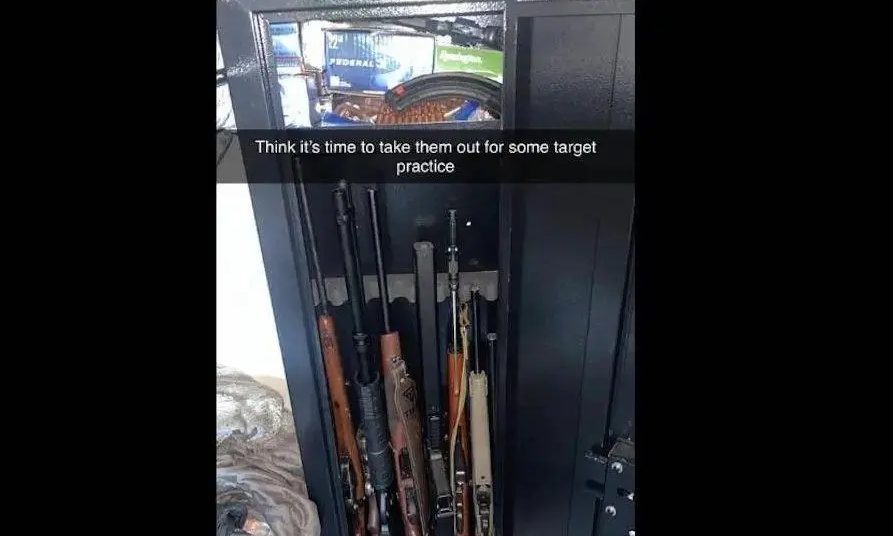
Advocates Push for Full Firearm Disclosure
Seven months after the fatal mass shooting in Tumbler Ridge, gun-control advocacy groups are urging police leadership to share specific details regarding the weapons involved. PolySeSouvient, an organization created after the 1989 massacre at École Polytechnique in Montreal, sent a co-signed letter on Sept. 14 to RCMP Commissioner Michael Duheme requesting maximum transparency around the Feb. 10 incident.
Co-signed by groups including Canadian Doctors for Protection Against Guns, Quebec Mosque, Angie’s Angels, and Danforth Families for Safe Communities, the letter requests details on the make, model, classification, legal status, and acquisition methods of all firearms linked to the killings. The coalition also asks if any weapons were previously reported stolen, seized by authorities, or modified, as well as the reasons and legal grounds behind any prior police seizures from suspect Jesse Van Rootselaar’s home.
Police and Premier Respond to Calls for Updates
According to B.C. RCMP Staff Sgt. Kris Clark, predicting exact timelines during active criminal investigations is virtually impossible due to multiple factors, though police remain dedicated to sharing verified details when feasible. B.C. Premier David Eby noted that while he initially anticipated a shorter probe since the shooter is dead, police must be permitted to complete a thorough investigation without political interference before releasing operational information.
Court documents unsealed following a media application revealed that Van Rootselaar suffered from mental health issues and possessed a fascination with firearms. Heidi Rathjen of PolySeSouvient stressed that releasing basic facts about the weapons allows Canadians to evaluate potential failures in firearms legislation without risking operational secrecy or compromising court proceedings.
Your Current 3 Day Forecast — September 20, 2026

Dylan Cease struggles as Toronto pitching strain worsens in loss to Rangers
How Canada’s Prime Minister Is Building Stronger Trans-Atlantic Ties Close to Home
Montreal’s High-Powered Offense Holds Off Late Hamilton Comeback in East Clash
What to Know Ahead of Alberta’s Oct. 19 Vote on a Separation Referendum
What to Know About the Alasko Frozen Raspberry Recall Following Illness Reports
Opinion: John Rustad Has to Go
B.C. Supreme Court Grants Cowichan Tribes Title to Historic Richmond Lands and Fishing Rights

A Taste of Autumn: Fall Okanagan Wine Festival 2025

Vancouver Canucks Gear Up for a Make-or-Break 2025–26 Season
Kamloops Blazers Announce Off-Season Changes Ahead of 2025–26 Season
BC Ferries Sparks Outcry Over Contract with Chinese Shipyard
-
NATIONAL STORIES6 days ago
Remembering George Chuvalo: The Canadian Heavyweight Legend Who Never Got Knocked Down
-

 NATIONAL STORIES6 days ago
AI’s Biggest Warning May Be Coming From the People Building It
-

 COMMUNITY6 days ago
Navigating Blended Family Wills and Estate Options
-
POLITICS7 days ago
What Trump’s Remarks Linking Canada to Iran Signal About International Negotiations
-

 SPORTS6 days ago
How Video Adjustments Fuelled the Vancouver Canucks’ 5-2 Prospects Victory Over Seattle
-

 BC STORIES6 days ago
Uncertain Eyewitness Testimony at Center of Final Arguments in 2021 Restaurant Shooting Trial
-
WORLD7 days ago
What Trump’s Remarks Linking Canada to Iran Signal About International Negotiations
-
LOCAL7 days ago
Stephen Johnston Mayor by Acclamation