POLITICS
They have proven they can win votes. Kerry-Lynne Findlay now has to prove they can govern.
Chad Dashly shares a conservative perspective on fiscal restraint, local enterprise, and why community-led solutions beat distant bureaucracy.

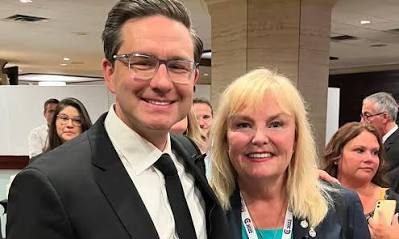
They have proven they can win votes. Kerry-Lynne Findlay now has to prove they can govern.
By Chad Dashly | The Current
There is an uncomfortable conversation conservatives in British Columbia need to have.
The BC Conservatives are not ready for primetime.
That doesn’t mean British Columbia doesn’t need a conservative government. Quite the opposite.
Conservatives believe in fiscal discipline, personal responsibility, free enterprise, public safety and governments that respect the taxpayers who ultimately pay the bills.
British Columbia desperately needs a credible alternative capable of advancing those principles.
But wanting a Conservative government and believing the current Conservative Party is ready to govern are two very different things.
And conservatives shouldn’t be afraid to say so.
Give Them Credit
Let’s start by acknowledging what the BC Conservatives have accomplished.
Their rise has been remarkable.
In an extraordinarily short period, they went from the political wilderness to the Official Opposition and came within striking distance of forming government in 2024.
They have also built a serious fundraising operation.
According to Elections BC, the Conservatives raised more than $1.08 million in the first quarter of 2026 and another $1.146 million in the second quarter.
Those aren’t insignificant numbers.
This is no longer a fringe political organization.
It is a major provincial political party with a large grassroots constituency and a legitimate opportunity to form the next government.
But that is exactly why the standard must now be higher.
The Findlay Era Begins
Kerry-Lynne Findlay inherited both an enormous opportunity and an enormous challenge when she won the Conservative leadership on May 30.
And it was hardly an overwhelming mandate.
Findlay defeated Caroline Elliott 51 per cent to 49 per cent on the fourth ballot.
That tells us something important.
The party remains a coalition of different conservative factions, personalities and political traditions.
Findlay’s first responsibility isn’t simply defeating David Eby.
It is demonstrating that she can turn that coalition into a disciplined political organization capable of governing British Columbia.
That means moving beyond the insurgent politics that helped build the party.
It means becoming professional.
Predictable.
Disciplined.
And boring when necessary.
Because governing is frequently boring.
The Revolving Door Has to Stop
The recent changes at the top of the party organization demonstrate just how much rebuilding remains.
In August, party president Aisha Estey and vice-president Sharon White were replaced, with Mauro Francis becoming president and Pavneet Singh taking over as vice-president.
Perhaps those changes will ultimately strengthen the organization.
But they also continue a pattern of transition that has surrounded the Conservatives since their explosive rise.
Leadership changes.
Caucus changes.
Organizational changes.
Internal disputes.
Personnel controversies.
At some point, the rebuilding has to end and the governing preparation has to begin.
British Columbians aren’t electing a political start-up.
They are choosing a potential government.
Candidate Vetting Must Improve
This is another area where conservatives should demand higher standards.
Candidate vetting isn’t glamorous.
But it may be one of the most important responsibilities of a political party.
When you nominate someone to run for the legislature, you aren’t simply finding somebody to put their name on a lawn sign.
You are potentially selecting a future MLA.
Perhaps a parliamentary secretary.
Perhaps a cabinet minister.
Perhaps someone responsible for billions of dollars in public spending.
The standard therefore has to be substantially higher than finding people who agree with the party.
A government-in-waiting needs candidates with judgment, experience, credibility and the ability to withstand serious public scrutiny.
The next BC Conservative candidate class should be vetted accordingly.
Where Is the Governing Blueprint?
This may be the biggest issue of all.
What exactly would a BC Conservative government do?
Not philosophically.
Specifically.
If spending is too high, what gets cut?
If taxes are too high, which ones are reduced first?
If regulations are preventing investment, which regulations change?
If health care is broken, what structural reforms happen in the first 100 days?
If crime and addiction policies aren’t working, what replaces them?
If British Columbia wants more mining, forestry, LNG and energy development, what approvals change and how quickly?
How does the province reconcile resource development with Indigenous rights and consultation?
How does a Conservative government accelerate housing construction?
How quickly can the budget realistically return to balance?
These questions require more than slogans.
They require numbers.
Timelines.
Legislation.
Implementation plans.
And people capable of executing them.
That work should already be underway.
Opposition Is Easy
There is another political reality conservatives should understand.
Opposition is easy compared with government.
It is relatively easy to stand in Question Period and identify something that isn’t working.
It is much harder to fix it.
“Cut waste” sounds great.
What waste?
Which department?
Which program?
How much?
How quickly?
What happens to the people currently receiving the service?
“Reduce red tape.”
Excellent.
Which regulations?
“Fix health care.”
How?
“Build more housing.”
Where?
“Develop our natural resources.”
On what timeline?
That is where political rhetoric collides with governing reality.
A serious government-in-waiting has answers to those questions before the election begins.
Build the Cabinet Before You Need One
Findlay should also be thinking about something political parties often leave far too late:
Who actually governs?
The Conservatives should already be identifying potential cabinet talent — both inside and outside their existing caucus.
Finance.
Health.
Attorney General.
Energy and Mines.
Forests.
Housing.
Transportation.
Education.
Indigenous Relations.
Economic Development.
These aren’t communications positions.
They are enormous management responsibilities.
The party should be actively recruiting accomplished British Columbians from business, law, health care, academia, local government, First Nations and the resource sector.
The objective shouldn’t simply be winning 47 seats.
It should be assembling 47 people capable of governing.
There is a difference.
Conservatives Should Demand More From Conservatives
Some Conservatives will inevitably consider this criticism disloyal.
It isn’t.
Quite the opposite.
If conservatives believe in accountability, then accountability has to begin at home.
If we expect businesses to operate professionally, our political organizations should operate professionally.
If we demand fiscal discipline from government, we should demand organizational discipline from the party seeking to replace it.
And if conservatives criticize governments for incompetence, we cannot excuse incompetence simply because the people involved happen to wear our team’s jersey.
Conservatives should expect more from Conservatives.
Findlay Has an Opportunity
There is good news in all of this.
These problems are fixable.
Findlay has political and government experience.
The Conservatives have money.
They have MLAs.
They have members.
They have volunteers.
They have an energized political base.
And most importantly, they have time.
Their fundraising numbers suggest there is substantial appetite for what they are selling.
The question is whether the organization can mature quickly enough to deliver it.
Findlay now has an opportunity to professionalize the party, strengthen candidate vetting, recruit serious talent, develop detailed policy and turn an insurgent movement into a government-in-waiting.
That should be the mission between now and the next provincial election.
The Primetime Test
The BC Conservatives have already proven they can win votes.
They have proven they can raise money.
They have proven they can build a movement.
Now comes the difficult part.
They have to prove they can govern.
British Columbians aren’t simply choosing someone to fight David Eby.
They are choosing the people who could soon be responsible for hospitals, schools, highways, courts, policing, housing, natural resources and tens of billions of dollars of public money.
That requires something more than opposition.
It requires competence.
Discipline.
Professionalism.
And a credible plan.
British Columbia needs a strong conservative alternative.
Kerry-Lynne Findlay now has an opportunity to build one.
But until the BC Conservatives demonstrate that transformation, conservatives shouldn’t be afraid to acknowledge the uncomfortable truth:
They are not ready for primetime.
Atleast. Not yet.



BC STORIES
Why Ottawa Is Guaranteeing $3-Billion for the Fraser River Crossing No Matter What BC Builds
Ottawa maintains its $3B commitment for the George Massey Tunnel replacement, supporting Premier-designate Lorne Doerkson whether BC builds a tunnel or bridge.

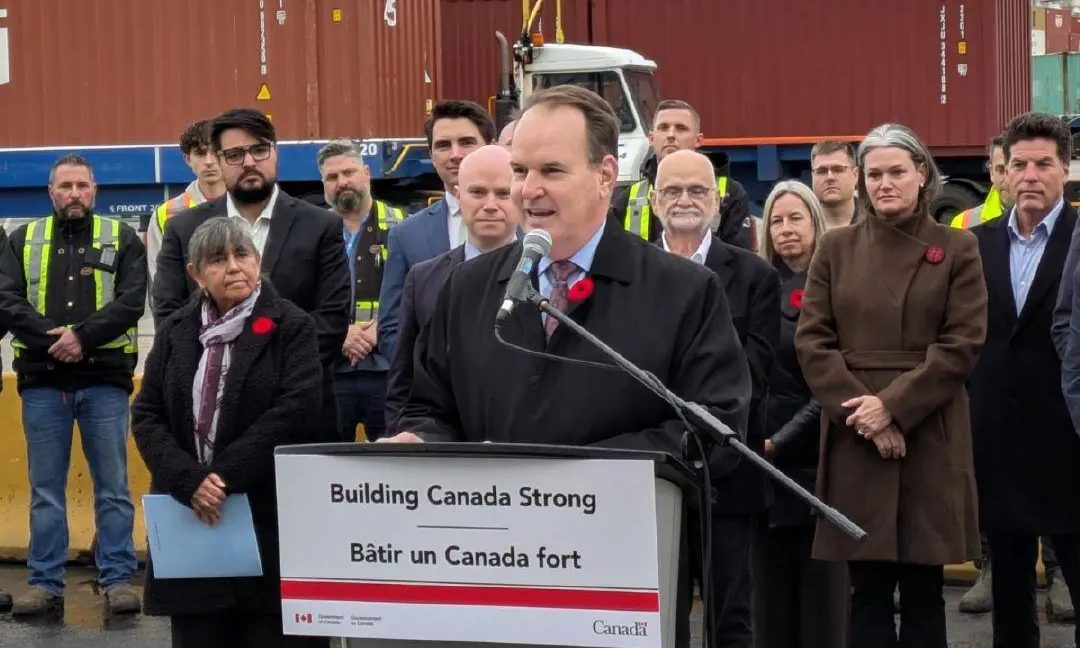
Federal Government Backs Fraser River Infrastructure
The federal government is maintaining its $3-billion financial commitment to replace the 65-year-old George Massey Tunnel, regardless of whether British Columbia constructs a bridge or a new tunnel.
Federal Transport Minister Steven MacKinnon affirmed the funding stance in Delta on Friday, Oct. 30. Speaking at an event designating the Roberts Bank Terminal 2 port expansion as a project of national interest, MacKinnon stated that Ottawa supports the river crossing method chosen by the province. He noted the federal investment aims to support regional trade infrastructure, traffic circulation across the Lower Mainland, and local quality of life.
Provincial Debates over Bridge and Tunnel Options
The federal backing follows a $20-billion joint agreement signed in July, which originally slotted the $3-billion federal contribution toward an eight-lane immersed-tube tunnel. That provincial project, initially announced by the BC NDP government in August 2021 with a $4.15-billion estimate and 2030 completion date, saw its design-build contract canceled in June due to unresolved commercial terms. By July, updated provincial disclosures indicated the tunnel project cost had escalated to $8.5 billion, with completion pushed to September 2031.
During the recent provincial election campaign, Conservative Leader and Premier-designate Lorne Doerkson pledged to cancel the tunnel initiative in favor of a 10-lane bridge. Doerkson estimated the bridge option would cost $6 billion and take five years to construct, claiming the resulting $2.5-billion savings compared to the revised tunnel cost could fund a new women and children’s hospital in Surrey. Doerkson stated at Friday’s event that residents simply want the crossing completed and noted he has discussed the project with Prime Minister Mark Carney.
BC NDP Leader David Eby previously criticized the proposal to switch to a bridge, describing the abandonment of the active tunnel project as unreasonable. Eby warned that scrapping the tunnel plans would discard $581 million already spent and prolong the overall project timeline.
LOCAL
Why Kelowna’s New City Council Faces Questions Over Transparency and Pre-Vote Media Access
Re-elected Kelowna Mayor Tom Dyas pledges better communication, but critics and new councillors debate pre-decision transparency and public media access.
Kelowna Mayor Pledges Communication Enhancements
Re-elected Kelowna Mayor Tom Dyas marked the start of the new municipal term at Monday’s swearing-in ceremony by promising to expand ways for the city to listen and communicate. Acknowledging that room for improvement exists, Dyas noted that public feedback over recent months highlighted a need for better engagement, prompting the city to examine potential updates to its process.
However, questions remain regarding whether these adjustments will offer the public and press greater access to individual councillors prior to official votes. Dyas maintains that elected officials should refrain from publicly sharing their positions before council meetings take place, explaining that deliberations and incoming information could shift a councillor’s perspective.
Media Restrictions and Academic Criticism
Past practice during Dyas’ first term frequently saw journalists informed that the municipal code of conduct restricted councillors from commenting on agenda items before table debates. Although the code does not explicitly forbid officials from voicing personal opinions on municipal issues either before or after council consideration, Dyas argued that speaking prior to a decision is inappropriate and risks outside discussion improperly influencing deliberations.
This stance faces criticism from University of Victoria journalism professor Sean Holman, the Wayne Crooks Professor in Environmental and Climate Journalism. Holman warned that withholding public discussion until after decisions are finalized undermines transparency and accountability. Stating that Canadians seek authenticity and truth from elected officials, Holman noted that scripted communications and limited access erode public trust and the right to know why decisions are made.
New Councillors Seek Open Public Engagement
The newly sworn-in nine-member council includes five new faces, several of whom advocate for a more accessible approach. Newly-elected councillor Les Bellamy stated he does not intend to be silenced and plans to speak respectfully, arguing that the code of conduct does not restrict comments on general municipal matters. Bellamy expressed a desire to ensure all relevant facts are gathered while simultaneously creating broader opportunities for resident input, announcing plans for a motion directing staff to explore enhanced communication channels such as townhalls or dedicated public input time during meetings.
Fellow newcomer Kevin Kraft similarly confirmed his comfort with speaking to journalists prior to meetings. With five new members joining the table, whether the updated lineup leads to lasting shifts in council communication will become clear over time.
BC STORIES
What to Expect as B.C. Prepares for Its First New Government in Nine Years
B.C. Conservatives prepare to form government as premier-designate Lorne Doerkson plans his cabinet ahead of November swearing-in ceremonies.
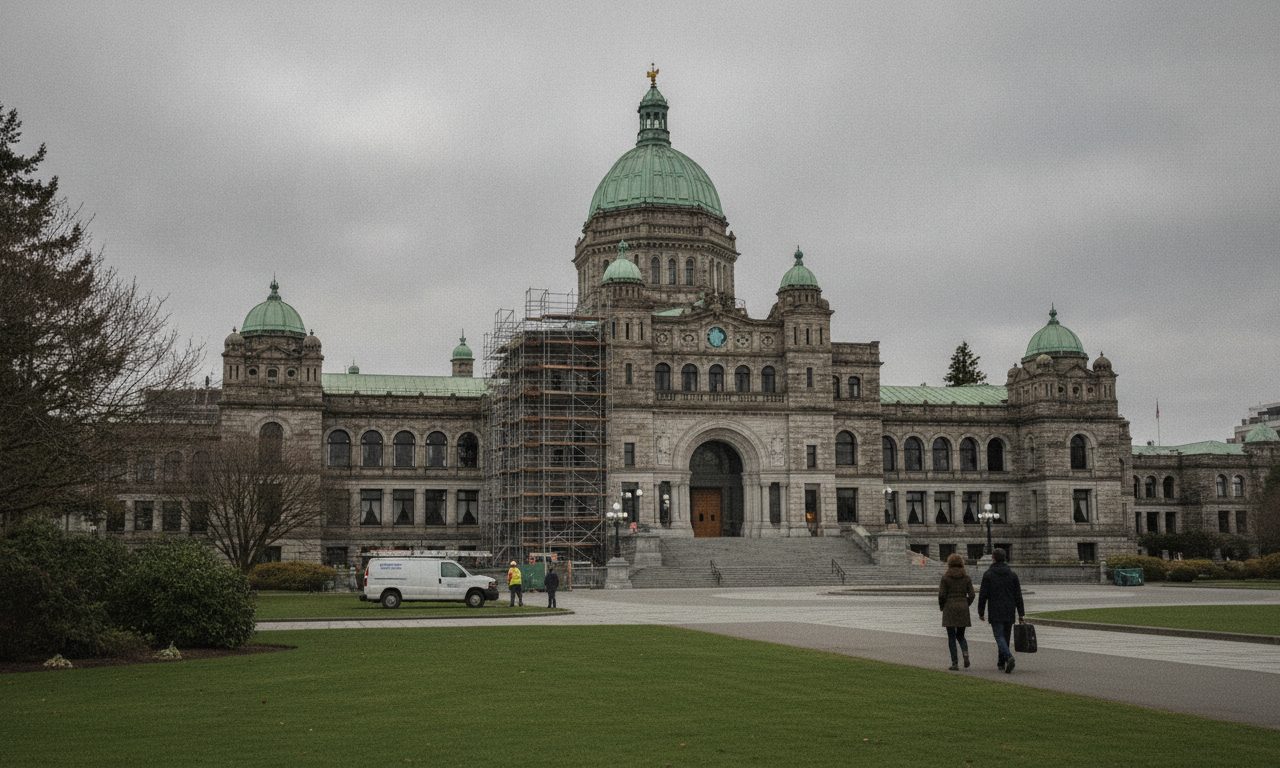
A Major Shift in Victoria
British Columbia is undergoing its first change of government in nine years as the B.C. Conservatives prepare to take power. Preliminary election figures place the B.C. Conservatives ahead with 63 seats, while the B.C. NDP holds 28 and the B.C. Greens hold two.
ElectionsBC plans to start the final vote count on Nov. 6 across all 93 ridings, checking mail-in, absentee, and assisted telephone ballots through integrity checks to confirm voter eligibility and single-voting. Final results and official election declarations will be completed no later than Nov. 10. Tight contests remain in several ridings, including Ladysmith-Oceanside, Cowichan Valley, and Kelowna Centre.
Transitioning Opposition into Executive Power
Premier-designate Lorne Doerkson will officially swear in his cabinet on Nov. 20 at Government House in Victoria. Ahead of the ceremony, Doerkson met individually with incoming MLAs to help determine executive roles, holding his initial post-election caucus gathering on Monday at a nearby hotel ballroom to stress unity moving forward.
Former B.C. Liberal premier Christy Clark anticipates regional representation will be a priority for the incoming cabinet. “I think people should watch for the folks who were most active in question period, the most active in doing public speaking, the ones that have really gained a subject matter expertise,” Clark noted, adding, “None of these people have been in government for nine years. They’ve all been opposition… He’s going to have a chance to get a group of really fresh people with fresh ideas.”
New Leadership and Legislative Operations
The transition team is being directed by Kim Henderson, a former deputy to Clark. Strategist and pollster Dimitri Pantazopoulos has been named chief of staff in the premier’s office. Pantazopoulos previously served as deputy campaign director for the party and worked as Clark’s principal secretary. “I think it’s the first of what I think will be many really good decisions from this premier,” Clark remarked regarding the appointment.
Incoming lawmakers start orientation at “MLA school” on Wednesday to review legislative operations and constituency office management. Swearing-in for B.C. Conservative MLAs is scheduled for Nov. 19 at the legislature, though dates for NDP and Green members have yet to be set. The incoming assembly features 30 new Conservative MLAs, three new NDP MLAs, and new B.C. Green Party Leader Emily Lowan.
Potential Early Legislative Session
Doerkson has left open the option of calling a brief fall legislative session to advance campaign commitments. Former NDP chief of staff Geoff Meggs described the overall transition as complex: “It’s like launching three different ships and trying to make them all rendezvous at the same point in about two weeks.”
Aileen Machell, who served as deputy chief of staff to outgoing Premier David Eby, suggested an early session could assist the incoming administration strategically, “If they have a couple of bumpy or unpopular pieces that they might want to deal with right away rather than dealing with them at the same time as the throne speech and the budget, which we will expect to see in the spring.” However, former top officials note that staffing transitions may lead to job turnover among NDP-connected ministerial staff, high-level bureaucrats, and Order-in-Council appointees as the Conservative administration moves in.

Kelowna Centre may have a new MLA by Friday

Who Gets to Decide Where B.C. Builds? Conservatives Move to Return Housing Power to Municipalities

The Money Spoke Before the Voters Did: How B.C.’s Conservatives Turned Chaos Into Victory

AI Stocks Tumble as U.S. Midterm Elections Send Shockwaves Through Global Markets

Canada to Deny Visas to Russian Hockey Players for 2027 World Juniors

Quebec Suspect Arrested and Extradited in Fatal Highway 97 Hit-and-Run Investigation
Opinion: John Rustad Has to Go
B.C. Supreme Court Grants Cowichan Tribes Title to Historic Richmond Lands and Fishing Rights

A Taste of Autumn: Fall Okanagan Wine Festival 2025

Vancouver Canucks Gear Up for a Make-or-Break 2025–26 Season

Kamloops Blazers Announce Off-Season Changes Ahead of 2025–26 Season
BC Ferries Sparks Outcry Over Contract with Chinese Shipyard
-
5 days ago
Your Current 3 Day Forecast — October 31, 2026
-

 NATIONAL STORIES7 days ago
National School Food Program Faces Scrutiny After Testimony Shows Inflation Erodes Funding
-
6 days ago
Your Current 3 Day Forecast — October 30, 2026
-
3 days ago
Your Current 3 Day Forecast — November 2, 2026
-

 HEALTH6 days ago
Why B.C. Interior Residents Are Being Warned About Dangerous Unregulated Drugs
-
 LOCAL3 days ago
Why two Kamloops MLAs see value in a brief sitting before spring
-
 LOCAL7 days ago
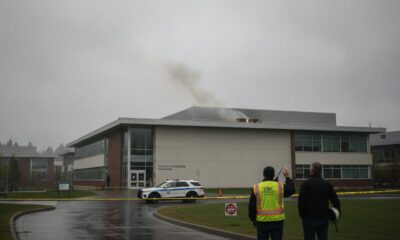
UBC Okanagan Cancels CCS Classes and Exams Following Building Roof Fire
-

 NATIONAL STORIES7 days ago
No Danger to Nearby Residents as Base Firefighters Contain CFB Gagetown Blaze