Middle East
Trump Asserts Iran ‘Begging’ for Negotiations Amid Middle East Maritime Tensions
President Trump claims Iran is ‘begging’ for a deal while allowing tankers through the Strait of Hormuz as a gesture, amid new criticisms of NATO and the UK.

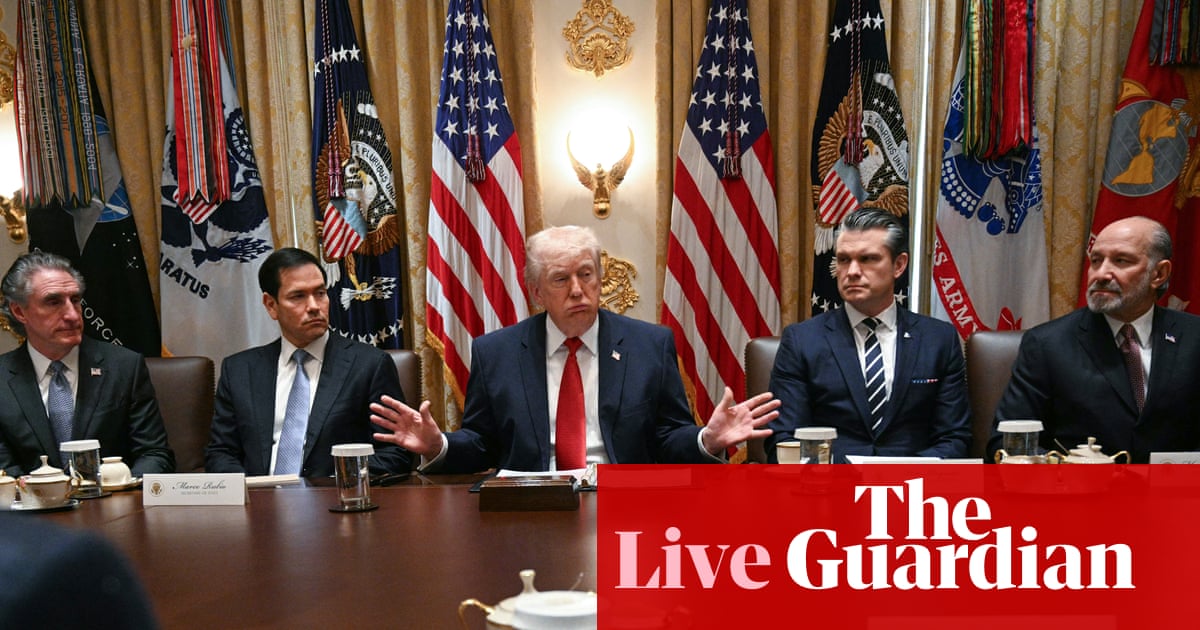
Rising Tensions and Surprising Claims
In a high-profile cabinet meeting, President Donald Trump has made bold assertions regarding the ongoing crisis in the Middle East, claiming that Tehran is effectively ‘begging’ to return to the negotiating table. The President suggested that the Iranian regime’s recent actions—including the release of certain tankers through the strategic Strait of Hormuz—were intended as a ‘present’ to the United States and its allies, signalling a potential shift in the regional standoff.
Diplomatic Barbs and International Relations
The President’s comments were not limited to the Iranian leadership. During the session, he also leveled fresh criticisms against traditional allies, specifically targeting NATO and the United Kingdom. Trump reiterated his long-standing grievances regarding defense spending among NATO members, accusing them of relying too heavily on American resources. The sharp rhetoric toward the UK comes at a sensitive time for the ‘Special Relationship,’ adding another layer of complexity to the coordinated maritime security efforts in the Persian Gulf.
The Strait of Hormuz Standoff
The situation in the Strait of Hormuz remains the focal point of global economic and security concerns. Following several seizures of international vessels by the Islamic Revolutionary Guard Corps (IRGC), the U.S. has been pushing for a coalition-led maritime mission. Trump’s claim that Iran is now allowing some tankers to pass as a gesture of goodwill contrasts with the official reports from Tehran, which continue to emphasize their sovereignty over the waters and their resistance to U.S.-led economic sanctions.
Impact on Global Oil Markets
While the President paints a picture of a de-escalating conflict, analysts warn that the underlying issues remain unresolved. The ‘maximum pressure’ campaign led by the White House continues to squeeze the Iranian economy, and the lack of a formal diplomatic channel means the risk of accidental military escalation remains high. The international community is closely watching to see if these ‘presents’ will lead to a substantive dialogue or if they are merely temporary tactical adjustments in a broader geopolitical chess match.

Geopolitics
Middle East Peace at a Crossroads: U.S.-Iran Nuclear Talks Collapsing Over Lebanon Escalation
U.S.-Iran nuclear talks in Switzerland are cancelled following intense fighting in Lebanon. Discover how the Israel-Hezbollah conflict threatens the interim deal.

Fragile Truce Shattered as Conflict Intensifies
Hopes for a diplomatic resolution to the conflict between the United States and Iran have been thrown into jeopardy as scheduled talks in Switzerland were abruptly called off on Friday. The cancellation follows a surge in violence between Israel and the Iran-backed militant group Hezbollah in southern and eastern Lebanon, highlighting the volatility of the current interim peace framework. Iranian officials reportedly refused to travel for the negotiations, demanding a total cessation of hostilities in Lebanon before discussions on their nuclear program can resume.
Military Escalation Threatens Diplomatic Progress
The ground situation in Lebanon has deteriorated rapidly, with the Lebanese Health Ministry reporting at least 21 fatalities. The Israeli military confirmed the deaths of four soldiers, including a lieutenant colonel, following an attack on a tank near the strategic city of Nabatiyeh. In response, Israel launched a series of retaliatory strikes against what it termed “Hezbollah infrastructure sites,” including targets in the Beqaa Valley. Israeli Prime Minister Benjamin Netanyahu has maintained a firm stance, declaring that Israel will continue to enforce a security zone in southern Lebanon as long as necessary, a position that stands in direct conflict with Iran’s demands for a full withdrawal.
Nuclear Security and Global Energy Markets at Stake
The collapse of these talks is particularly significant as they were intended to address Iran’s nuclear program, the core issue that led to the outbreak of war on February 28. While an interim deal has successfully reopened the Strait of Hormuz to international shipping—allowing for the movement of over 12.5 million barrels of oil in a single night—this progress is now under threat. A new Iranian maritime authority has already begun requiring ships to register, signaling a move toward Tehran exerting greater control over this vital global energy artery.
A Growing Rift Between Allies
The escalating violence is also creating diplomatic friction between Israel and the United States. While the White House officially cited logistical issues for Vice President JD Vance’s cancelled trip, reports suggest growing criticism from the Trump administration regarding Netanyahu’s military strategy. With 60 days allotted to reach a permanent nuclear agreement, mediators are now scrambling to reschedule the meetings, knowing that the lucrative incentives offered to Iran—including a $300 billion reconstruction fund—may not be enough to overcome the deepening cycle of violence in Lebanon.
Middle East
Fragile Calm Returns as Iran and Israel Halt Direct Strikes Following Trump Intervention
Iran and Israel halt direct missile strikes following an appeal from President Trump, though tensions remain high over ongoing operations in Lebanon.

Direct Confrontation Paused After Presidential Appeal
Iran and Israel have agreed to a tentative halt in direct military strikes following a period of intense escalation that threatened to ignite a broader regional conflict. The cessation of hostilities comes in the wake of a direct appeal from U.S. President Donald Trump, who urged both nations to immediately stop ‘shooting’ while peace negotiations continue in the background. Despite the pause, Tehran has issued a stern warning that it will resume offensive operations if Israel persists with its military campaign against Hezbollah in Lebanon.
A Cycle of Retaliation and Strategic Strikes
The latest flare-up, described as the most direct confrontation between the two powers since April, involved a series of sophisticated missile exchanges. Israel targeted the Mahshahr petrochemical complex in southwestern Iran, an installation allegedly used for ballistic missile production. In a reciprocal move, Iran’s Islamic Revolutionary Guard Corps (IRGC) targeted an industrial site in Haifa. While the Israeli military confirmed the interception of nearly 30 ballistic missiles, Iranian officials reported that damage was sustained at their petrochemical facilities, with at least 15 injuries recorded across the country.
Geopolitical Stakes and Market Reactions
The volatility in the Middle East has sent ripples through global markets. Oil prices initially surged by 5 percent during the height of the exchanges before paring gains once the Iranian military declared its first wave of strikes complete. Concurrently, the U.S. dollar retreated from a two-month high as investors monitored the diplomatic efforts spearheaded by the White House. President Trump emphasized that while a ceasefire is the immediate goal, a U.S. naval blockade of Iranian ports will remain in place until a final peace agreement is ratified.
The Lebanon Complication
A significant hurdle to lasting peace remains the ongoing conflict in Lebanon. Israel maintains that its operations against Hezbollah are distinct from its direct dealings with Iran, whereas Tehran views the two as inextricably linked. With Lebanese-Israeli negotiations set to resume in Washington, the international community remains on high alert. The involvement of Yemen’s Houthi rebels, who recently pledged to disrupt maritime navigation in the Red Sea in solidarity with Iran, further complicates the path toward regional stabilization.
Middle East
Crossroads of Conflict: Middle East Navigates Fragile Ceasefires and Economic Shifts
The Middle East faces a pivotal moment with the UAE leaving OPEC, fragile ceasefires in Lebanon and Iran, and the return of the Palestine Marathon.

A Region on the Brink
The Middle East remains in a state of profound volatility as multiple geopolitical shifts converge, ranging from tentative ceasefires to historic departures from global oil cartels. While signs of normal life have begun to emerge in some sectors, such as the return of the Palestine Marathon in Bethlehem after a two-year hiatus, the overarching atmosphere remains one of uncertainty and ‘life on pause’ as citizens and leaders alike navigate a landscape scarred by conflict.
The Fragility of the Lebanon-Israel Ceasefire
In southern Lebanon, the ceasefire between Israel and Hezbollah has entered its second day, allowing residents of border towns like Khiam to cautiously attempt a return to their homes. However, the cost of the conflict remains starkly visible. With more than one million people displaced across Lebanon and entire cities like Nabatieh described as abandoned, the humanitarian crisis continues to loom large. Funerals for journalists killed in recent strikes serve as a somber reminder of the risks faced by those documenting the war’s expansion, even as families return to find their homes reduced to rubble.
Iran and the Strategic Chokepoints
The relationship between Tehran and Washington remains the pivot point for regional stability. Following the announcement of a conditional two-week ceasefire, pro-government demonstrators gathered in the Iranian capital. Despite the temporary pause, Iranian leadership signals a refusal to concede to Washington’s terms, maintaining that they have not lost the strategic war. This tension is most evident near the Strait of Hormuz, where the BBC reports a ‘stranglehold’ on the critical waterway. President Trump has recently suspended ‘Project Freedom,’ an operation intended to guide ships through the strait, further complicating the global energy outlook.
Economic Realignment and the UAE’s OPEC Exit
Adding to the regional complexity is the United Arab Emirates’ decision to quit OPEC after nearly 60 years of membership. This move signals a significant shift in the UAE’s independent economic strategy and raises questions about the future of global oil pricing. While consumers watch for a drop in fuel prices following the US-Iran ceasefire, the exit of a major producer from the oil cartel suggests a long-term restructuring of Middle Eastern influence on the global stage. As violence persists in the West Bank and displacement continues in Lebanon, the region stands at a critical juncture between total escalation and a hard-won, precarious peace.
Your Current 3 Day Forecast — September 20, 2026

Dylan Cease struggles as Toronto pitching strain worsens in loss to Rangers
How Canada’s Prime Minister Is Building Stronger Trans-Atlantic Ties Close to Home
Montreal’s High-Powered Offense Holds Off Late Hamilton Comeback in East Clash
What to Know Ahead of Alberta’s Oct. 19 Vote on a Separation Referendum
What to Know About the Alasko Frozen Raspberry Recall Following Illness Reports
Opinion: John Rustad Has to Go

B.C. Supreme Court Grants Cowichan Tribes Title to Historic Richmond Lands and Fishing Rights

A Taste of Autumn: Fall Okanagan Wine Festival 2025

Vancouver Canucks Gear Up for a Make-or-Break 2025–26 Season

Kamloops Blazers Announce Off-Season Changes Ahead of 2025–26 Season

BC Ferries Sparks Outcry Over Contract with Chinese Shipyard
-
NATIONAL STORIES6 days ago
Remembering George Chuvalo: The Canadian Heavyweight Legend Who Never Got Knocked Down
-

 COMMUNITY6 days ago
Navigating Blended Family Wills and Estate Options
-

 SPORTS6 days ago
How Video Adjustments Fuelled the Vancouver Canucks’ 5-2 Prospects Victory Over Seattle
-

 NATIONAL STORIES6 days ago
AI’s Biggest Warning May Be Coming From the People Building It
-
POLITICS7 days ago
What Trump’s Remarks Linking Canada to Iran Signal About International Negotiations
-

 BC STORIES6 days ago
Uncertain Eyewitness Testimony at Center of Final Arguments in 2021 Restaurant Shooting Trial
-
WORLD7 days ago
What Trump’s Remarks Linking Canada to Iran Signal About International Negotiations
-
LOCAL7 days ago
Stephen Johnston Mayor by Acclamation