WORLD
China Secures Major Lunar Milestone with Successful Crew Capsule Abort and Rocket Recovery
China’s CMSA successfully tests the Mengzhou ‘Dream Vessel’ abort system and recovers a Long March 10 reusable booster, marking a major step toward 2030 Moon goals.

A Dual Milestone in the Heavens
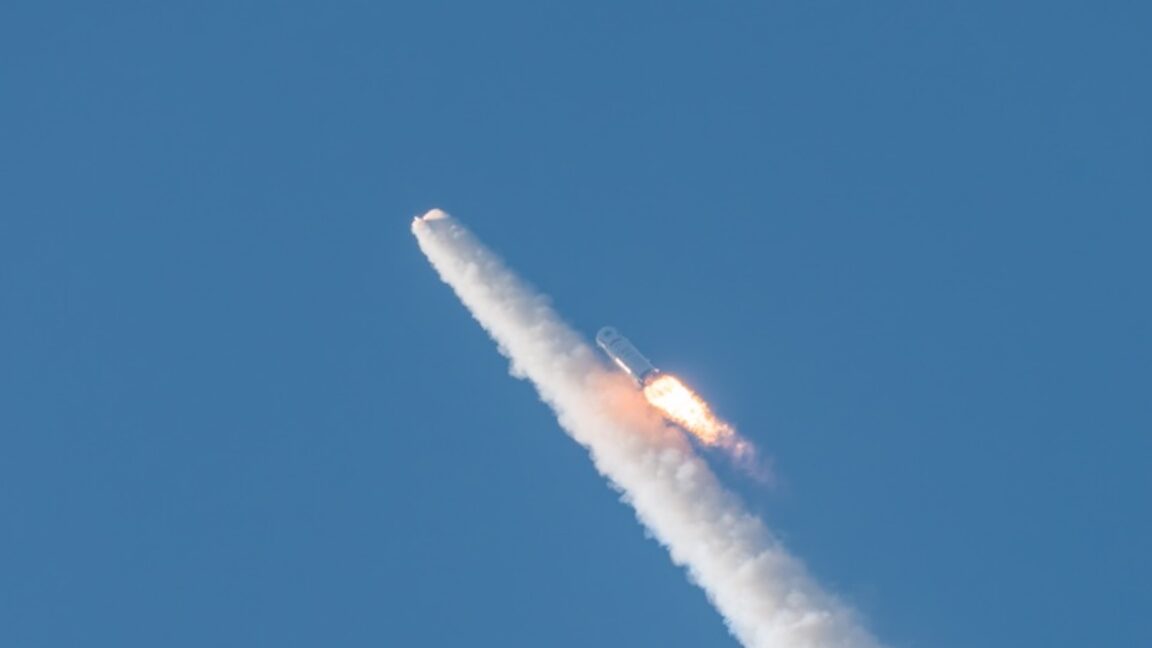
In a display of technical prowess that underscores Beijing’s rapid ascent in the global space race, the China Manned Space Agency (CMSA) conducted a landmark test flight late Tuesday, achieving two critical objectives in a single mission. The spectacular demonstration involved the successful in-flight abort of the new Mengzhou crew capsule and the propulsive landing of a subscale Long March 10 reusable booster. This double-success marks a pivotal moment for China’s lunar exploration program, which aims to put boots on the moon by 2030.
Testing the ‘Dream Vessel’ Under Pressure
The mission began at the Wenchang Space Launch Site on Hainan Island, where a test version of the Mengzhou spacecraft—which translates to ‘Dream Vessel’—was launched atop a modified Long March 10 booster. The primary goal was to verify the spacecraft’s launch abort system (LAS), a critical safety feature designed to whisk astronauts away from a failing rocket during the most volatile stages of ascent.
Approximately one minute into the flight, as the vehicle reached ‘Max-Q’—the point of maximum aerodynamic pressure—the capsule’s abort motors ignited. In a sequence mirroring tests previously conducted by NASA for the Orion capsule and SpaceX for the Crew Dragon, the Mengzhou was pulled clear of its booster. After reaching the stratosphere, the capsule deployed its parachutes and performed a controlled splashdown in the South China Sea. This test follows a successful ground-level abort test conducted last year, further human-rating the vessel for future lunar treks.
The Leap Toward Reusability
While the abort test was expected, the second phase of the mission provided an even more significant breakthrough for China’s domestic aerospace industry. Unlike the test boosters used by Western agencies, which are typically expended during abort trials, the Long March 10 first stage continued its mission. After the capsule separated, the booster soared higher into the atmosphere before performing a controlled reentry.
Powered by its kerosene-fueled YF-100 engines, the booster executed a precise propulsive landing on a recovery barge stationed offshore. This achievement represents China’s most advanced demonstration of reusable rocket technology to date, a field currently dominated by the American company SpaceX. The China Aerospace and Science Technology Corporation (CASC) noted that the recovery lays the foundation for full-profile flight tests, proving that China is mastering the high-precision navigation and engine reignition required for rapid rocket refurbishment.
Building a Lunar Infrastructure
The Mengzhou spacecraft is destined to become the workhorse of China’s manned spaceflight. Beyond its role in lunar missions, where it will ferry crews to a specialized lunar lander in orbit around the Moon, it is also designed to service the Tiangong space station in low-Earth orbit. Replacing the aging Shenzhou capsule, the Mengzhou can carry up to seven astronauts and is built for multiple reuses, significantly lowering the cost of access to space.
The rocket involved, the Long March 10, is equally vital. The full-scale version of this heavy-lift vehicle will feature 21 engines across three boosters, providing the 70 metric tons of thrust necessary to send the 26-metric-ton Mengzhou toward the lunar surface. An orbital test of the Long March 10A—the single-booster variant—is scheduled for later this year, including a docking mission with the Tiangong station.
A New Chapter in the Space Race
The success of Tuesday’s test is a clear signal to the international community that China’s timeline for a 2030 lunar landing is well on track. As NASA prepares its own Artemis missions to return humans to the lunar south pole, the competition for lunar resources and national prestige is intensifying. With no fewer than ten Chinese private and state-owned companies now developing reusable launch vehicles, the era of expendable rocketry is drawing to a close in the East, just as it has in the West. For China, the ‘Dream Vessel’ is no longer just a concept; it is a flight-proven reality heading for the lunar frontier.

WORLD
What to Know About Macklemore’s $1 Million Aid Donation and Tour Exit
Macklemore donates $1 million in tour earnings to six Palestinian aid groups after being dropped from Ed Sheeran’s tour following a MetLife Stadium speech.


$1 Million Directed to Relief Efforts
Rapper Macklemore has pledged his entire $1 million in net earnings from Ed Sheeran’s Loop Tour to Palestinian aid organizations. The funds will benefit six groups, including the Palestine Children’s Relief Fund, Gaza Soup Kitchen, and UNRWA USA. Addressing the decision, Macklemore stated, “Palestinian lives are worth protecting,” adding that “A Palestinian life is no less valuable than any other life on this earth.”
Stadium Speech and Tour Departure
The donation follows Macklemore’s removal from the Loop Tour after he gave a pro-Palestinian speech at MetLife Stadium in New Jersey. New England Patriots owner Robert Kraft acknowledged pressuring stadium operators to ban the artist from performing. While Macklemore publicly invited Kraft to match his $1 million contribution, representatives for Kraft declined to comment on the request.
Broader Tour Repercussions
The controversy prompted further changes to the concert series. In solidarity, all other supporting acts on the Loop Tour—including Finneas, Aaron Rowe, Lukas Graham, and Beoga—subsequently withdrew from performing.
WORLD
A Look at How Tensions in Western Saudi Arabia Led to Recent Casualties and Damage
One person was killed and two injured in Saudi Arabia’s Taif province when debris fell from an intercepted Houthi drone, amid rising regional tensions.
Casualties and Property Damage Reported in Taif
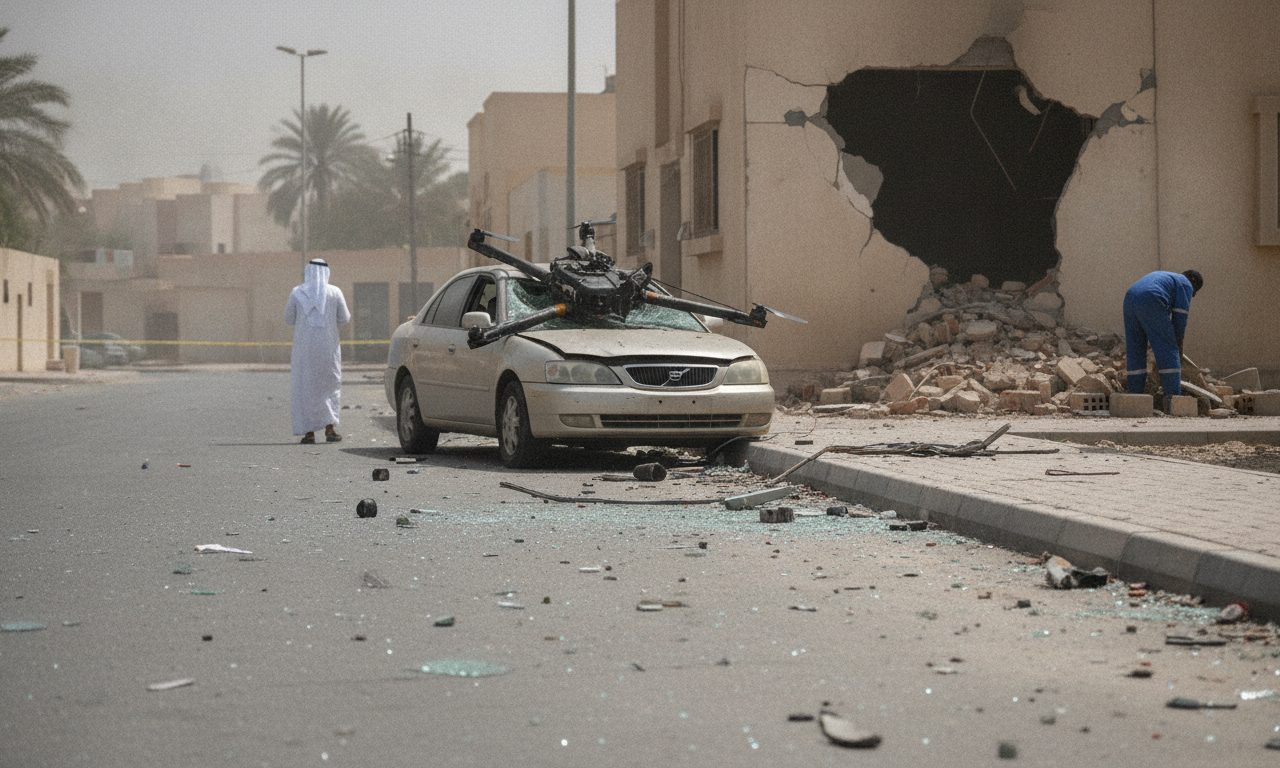
One person has died and two others were hurt in western Saudi Arabia after debris fell from a Houthi drone that was shot down, according to the Saudi civil defense. The fallen fragments killed a Yemeni citizen and injured a Saudi citizen alongside a Pakistani national in Taif province, while also damaging nearby structures and vehicles. Officials did not state the precise time of the event.
Escalating Hostilities along the Red Sea
This incident occurred during an increase in fighting between Iran-aligned Houthi insurgents and Yemeni government forces backed by Saudi Arabia. As government units launched offensives along the Red Sea, Houthi fighters launched strikes across the border into Saudi territory. Saudi officials stated Wednesday that Houthis attempted a drone attack targeting the holy city of Mecca. The Houthis denied the claim, and Iranian Foreign Ministry spokesperson Esmail Baghaei posted on social media Thursday that drone interception claims should not serve to accuse specific groups or heighten conflict, while also speaking against attacks on Islamic holy sites.
Broader Regional Impacts
The friction comes as Houthi forces took control of the port city of Mokha as well as an island in the Bab el-Mandeb Strait, an important maritime route alternative to the Strait of Hormuz. These developments continue to influence the wider Iran war environment.
NATIONAL STORIES
Soaring Fuel Prices Hit Home as Trump Urges End to Strikes on Russian Energy
Trump urges Ukraine to halt strikes on Russian diesel as U.S. prices top $6 a gallon, amidst heavy drone exchanges and potential autumn peace talks.

Rising Fuel Costs Prompt Call for Halt to Russian Oil Strikes
With American drivers facing unprecedented costs at the pump, U.S. President Donald Trump has requested that Ukrainian President Volodymyr Zelenskyy stop military strikes against Russian diesel facilities. The request follows a historic spike in domestic energy costs, with U.S. diesel averages surging beyond $6 per gallon on Friday.
Speaking from his Doonbeg golf club on the sidelines of the Irish Open, Trump noted that he discussed the matter with Zelenskyy after conversing with Russian President Vladimir Putin. While acknowledging that Ukraine has numerous alternative targets, Trump stated that targeting Russian fuel infrastructure is harming global energy availability.
Global Energy Strain and Midterm Pressure
The global diesel supply has tightened considerably over recent months. Kyiv’s ongoing long-range campaign against Moscow’s energy sector forced Russia to enact a diesel export ban in July while implementing internal fuel rationing. Supply pressures were further compounded by disruptions to shipments through the Strait of Hormuz during the war on Iran. These escalating energy expenses arrive as a primary concern for American voters heading into the November midterm elections.
Kyiv maintains that hitting Russian refineries is essential to cutting off the financial and fuel resources driving Moscow’s ongoing invasion, which has lasted more than four years.
Escalating Military Exchanges Across the Region
The call for a ceasefire on energy infrastructure comes during an intense escalation in aerial warfare between both nations. Overnight into Sunday, Russia launched 453 drones across Ukraine, including faster, jet-powered models. Ukrainian air defense forces reported intercepting or suppressing 409 of the incoming aircraft.
Russian strikes inflicted casualties and damage across several Ukrainian hubs. A drone attack on Odesa injured at least nine people in the major Black Sea port, coming just a day after a residential high-rise strike in the city killed two people and injured 26 others. Further west, a Russian drone caused a fire at a gas station near the Yahodyn-Dorohusk crossing on the Polish border. Ukrainian Foreign Minister Andrii Sybiha characterized the strike near the NATO and EU border as an act of terror, though local customs officials confirmed the crossing point itself remained undamaged.
Concurrently, Ukraine conducted extensive drone operations over Russian territory. Russian defense officials claimed to have downed 389 Ukrainian drones overnight. Strikes hit an oil processing facility and tank farm in Slavyansk-on-Kuban in the Krasnodar region, injuring three people and damaging a pipeline. In Nizhnekamsk, a key refining hub in Tatarstan, a drone impact near a parked car resulted in two civilian deaths and 14 injuries, alongside a fire at a local enterprise.
Diplomatic Initiatives Remain Unresolved
Amid the ongoing combat, potential avenues for negotiation are emerging. Kremlin spokesman Dmitry Peskov indicated on Sunday that Moscow remains open to resuming three-way peace talks involving Russia, Ukraine, and the U.S., suggesting October as a possible timeline.
The announcement follows recent visits to Moscow and Kyiv by U.S. envoys Jared Kushner and Steve Witkoff. Despite these initial diplomatic contacts, both warring nations maintain fundamentally opposing demands, particularly regarding territorial concessions.
Your Current 3 Day Forecast — September 20, 2026

Dylan Cease struggles as Toronto pitching strain worsens in loss to Rangers
How Canada’s Prime Minister Is Building Stronger Trans-Atlantic Ties Close to Home
Montreal’s High-Powered Offense Holds Off Late Hamilton Comeback in East Clash
What to Know Ahead of Alberta’s Oct. 19 Vote on a Separation Referendum
What to Know About the Alasko Frozen Raspberry Recall Following Illness Reports

Opinion: John Rustad Has to Go

B.C. Supreme Court Grants Cowichan Tribes Title to Historic Richmond Lands and Fishing Rights

A Taste of Autumn: Fall Okanagan Wine Festival 2025

Vancouver Canucks Gear Up for a Make-or-Break 2025–26 Season

Kamloops Blazers Announce Off-Season Changes Ahead of 2025–26 Season

BC Ferries Sparks Outcry Over Contract with Chinese Shipyard
-
NATIONAL STORIES6 days ago
Remembering George Chuvalo: The Canadian Heavyweight Legend Who Never Got Knocked Down
-

 NATIONAL STORIES6 days ago
AI’s Biggest Warning May Be Coming From the People Building It
-

 COMMUNITY6 days ago
Navigating Blended Family Wills and Estate Options
-
POLITICS7 days ago
What Trump’s Remarks Linking Canada to Iran Signal About International Negotiations
-

 SPORTS6 days ago
How Video Adjustments Fuelled the Vancouver Canucks’ 5-2 Prospects Victory Over Seattle
-

 BC STORIES6 days ago
Uncertain Eyewitness Testimony at Center of Final Arguments in 2021 Restaurant Shooting Trial
-
WORLD7 days ago
What Trump’s Remarks Linking Canada to Iran Signal About International Negotiations
-
LOCAL7 days ago
Stephen Johnston Mayor by Acclamation