WORLD
Trade War Casualties: Why Kentucky’s Bourbon Industry is Going Dark Amid Canadian Retaliatory Tariffs
Explore the impact of the US-Canada trade war on Kentucky’s bourbon industry as retaliatory tariffs force distilleries to go dark, featuring insights from expert Fred Minnick.


The Silent Stills of the Bluegrass State
In the rolling hills of Kentucky, the heart of American whiskey production, a disturbing silence has begun to settle over once-bustling facilities. For centuries, the rhythmic hum of copper stills and the sweet, heavy aroma of fermenting mash have been the pulse of the Commonwealth’s economy. However, as international trade tensions boil over, the industry is facing a crisis that transcends simple market fluctuations. A prominent Kentucky distillery has officially ‘gone dark,’ ceasing its operations in a move that industry insiders describe as a direct consequence of the escalating trade war between the United States and its northern neighbor, Canada. This shutdown is not merely a corporate restructuring but a symbolic and literal blow to a heritage industry that has defined Kentucky for generations.
The Catalyst: A Geopolitical Chess Match
The origins of this industrial blackout can be traced back to a series of aggressive trade maneuvers. When the United States government implemented heavy tariffs on imported steel and aluminum from key allies, citing national security concerns, the global response was swift and surgical. Canada, long considered one of America’s most stable and significant trading partners, was forced to respond with its own list of retaliatory measures. In a calculated effort to exert maximum political pressure, Canadian officials targeted high-profile, culturally significant American products. Bourbon, being the crown jewel of Kentucky and a major export to the Canadian market, was placed squarely in the crosshairs. The resulting tariffs on American whiskey have made it prohibitively expensive for Canadian consumers, leading to a precipitous drop in demand and a mounting surplus of aging liquid that has nowhere to go.
Expert Warning: ‘A Sad Day for Bourbon’
The gravity of the situation was perhaps best captured by Fred Minnick, a world-renowned whiskey expert and the leading voice in spirits journalism. Minnick, who has spent his career documenting the rise and resilience of the bourbon industry, did not mince words when discussing the distillery’s closure. ‘It’s a sad day for bourbon, to be honest with you,’ Minnick stated in a recent address. His assessment reflects a deeper concern that these trade disputes are eroding decades of brand-building and market expansion. According to Minnick, the impact of these tariffs is felt most acutely by the craft producers and independent distillers who lack the massive capital reserves of global conglomerates. For these smaller players, the loss of a major export market like Canada is not just a setback, it is an existential threat. Minnick warned that the longer these tariffs remain in place, the more permanent the damage to Kentucky’s global reputation will become.
The Economic Ripple Effect Through Kentucky
The Kentucky bourbon industry is far more than just a collection of distilleries; it is a complex ecosystem that supports thousands of families. It is an $8.6 billion industry that generates more than 20,000 jobs in the Commonwealth alone. When a distillery goes dark, the economic ripple effect is felt immediately and painfully. Farmers who grow the corn and rye used in the mash bills are seeing their contracts canceled. Coopers who craft the charred white oak barrels are experiencing a sharp decline in orders. Even the local tourism sector, which relies heavily on the ‘Bourbon Trail’ to draw visitors from around the world, is bracing for a downturn. The closure of a distillery represents a loss of tax revenue for local schools, infrastructure, and public services, turning a global trade dispute into a local catastrophe for small-town Kentucky.
The Long Road to Market Recovery
Industry analysts point out that the damage caused by these tariffs is not easily undone. Once a brand is priced out of a foreign market, competitors from other regions, such as Scotch, Irish whiskey, or even Canadian rye, are quick to fill the void on retail shelves. Reclaiming that shelf space and winning back consumer loyalty is an expensive and time-consuming process that can take years, if not decades. For Kentucky distillers, the current climate is one of deep uncertainty. Many had invested billions in expanding their warehouses and production capacity based on the projected growth of international exports. Now, those investments are sitting idle as the industry waits for a diplomatic breakthrough that seems increasingly elusive. The ‘dark’ distillery stands as a stark warning: the tools of trade policy, while designed to protect domestic interests, can often end up wounding the very industries they were meant to support.
A Call for De-escalation
As the sun sets over the silent warehouses of Kentucky, the message from the distillers, the experts, and the workers is unified: a plea for a return to stable, predictable trade relations. The bourbon industry has survived Prohibition, two World Wars, and numerous economic depressions, but the current era of protectionism presents a unique and modern challenge. Until the retaliatory tariffs are lifted, the amber liquid will remain locked in its barrels, and the stills will remain cold. The hope remains that policymakers will recognize the human and cultural cost of these economic battles before more of Kentucky’s historic distilleries are forced to turn off the lights for good. For now, the industry watches and waits, mourning a ‘sad day’ while hoping for a brighter, more open future for America’s native spirit.

WORLD
Why Canada’s Bid for a Turkish Nuclear Deal Is Gaining Ground
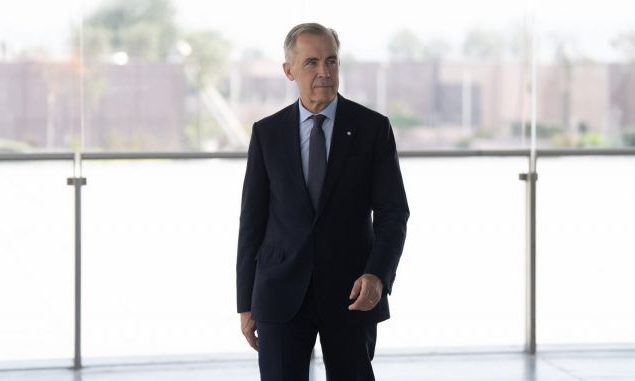
Prime Minister Mark Carney says AtkinsRealis has good chances of winning a nuclear reactor tender in Turkey following a new strategic partnership.

Strategic Energy Co-operation
A Canadian proposal to provide Candu nuclear reactors for two planned energy facilities in Turkey now has “good chances” of succeeding, according to Prime Minister Mark Carney. Speaking to Turkish business executives in Istanbul, Carney noted that he would not have made the same assessment a year ago.
Expanding Business Ties
The announcement follows a newly established strategic partnership between Canada and Turkey designed to enhance collaboration across multiple sectors, with energy serving as a primary focus. The bid, put forward by AtkinsRealis, involves potential partnerships with Turkish construction firms alongside Canadian nuclear technology.
While final procurement choices remain business-to-business decisions, Carney explained that his objective in Istanbul is to demonstrate how the Canadian market has shifted to become more welcoming to foreign investors and companies.
WORLD
Why Residents and Tourists on Mexico’s Pacific Coast Face Severe Threats From Hurricane Simon
Hurricane Simon batters Mexico’s Pacific coast as a Category 4 storm, threatening Puerto Vallarta and Cabo Corrientes with winds, rain, and storm surge.
Category 4 Storm Moves Parallel to the Coastline
Hurricane Simon battered Mexico’s western shoreline as a powerful Category 4 system on Sunday, delivering maximum sustained winds of 150 mph (240 kph) and intense rainfall to areas located between the ocean and the Sierra Madre mountains. The U.S. National Hurricane Center reported that the eye of the system was traveling north-northwest at approximately 6 mph (9 kph) roughly 110 miles (175 kilometers) south-southeast of Cabo Corrientes. Because the eye remains offshore and is moving nearly parallel to the land, forecasters noted it is difficult to determine whether an official landfall will occur, allowing the storm to retain its intense strength.
Severe Weather Threats to Coastal Communities and Resorts
Phillipe Pappin, a senior specialist at the hurricane center, stated that the westernmost tip of mainland Mexico presents the highest likelihood for landfall, identifying Cabo Corrientes as the area most probable to take a direct hit on Sunday. Officials warned that severe hazards including catastrophic winds, life-threatening storm surge, destructive ocean waves, and torrential rain are expected along the west-central coastline. Rainfall totals could range from 10 to 20 inches (25 to 50 centimeters) across broad areas, with isolated spots in Jalisco, Colima, and Michoacan states potentially receiving up to 30 inches (76 centimeters), triggering critical flooding and mudslides in elevated terrain.
Local Preparations and Impact on Visitors
The impending weather prompted proactive measures across vulnerable regions and popular resort areas such as Puerto Vallarta. In Jalisco state, authorities suspended school classes on Friday and Monday across 22 coastal municipalities, initiated evacuations in high-risk zones, and requested that the tourism industry place visitors and staff in secure locations or shelters. Businesses, hotels, and convenience stores in Puerto Vallarta boarded up windows ahead of the severe conditions. Canadian tourist Ed Currie, who was staying in Puerto Vallarta with his wife for five more days, remarked that the storm had not yet disrupted his itinerary, noting they intended to stay inside their hotel while hoping for the best.
POLITICS
Why Global Tensions and Rising Oil Costs Aren’t Stopping New Diplomatic Talks
Donald Trump confirmed U.S. and Iranian officials met at the U.N. despite his threat to annihilate Iran if the war does not end soon as oil markets react.
U.S. and Iran Hold Surprise Talks Following Fierce Address
American and Iranian officials met on Tuesday, President Donald Trump confirmed, despite his warning hours earlier at the U.N. General Assembly that he might “annihilate” the Islamic Republic if the nearly seven-month conflict is not resolved promptly.
Trump described the discussion to reporters as “a very good meeting” without elaborating on its substance or specific outcomes. During his address, he framed his stance as a showing of fortitude while asserting he faces a choice between enabling Iran to rebuild or destroying it quickly.
Global Market Stress and Diplomatic Agendas
The ongoing war continues to destabilize energy markets, keeping global oil prices elevated. Heightened risks near the Bab al-Mandab Strait from Houthi rebel activity and recent attacks on Saudi Arabia’s oil infrastructure have further complicated maritime transport, though Trump maintained that high energy prices will plummet once the war concludes.
Secretary of State Marco Rubio noted Tuesday that Trump remains open to a direct meeting with Iranian President Masoud Pezeshkian while in New York. Beyond the Middle East, Trump addressed the Russia-Ukraine war and held bilateral sessions with leaders from Denmark, Greenland, the United Kingdom, Japan, Ukraine, and Latin American nations.

Kelowna Centre may have a new MLA by Friday

Who Gets to Decide Where B.C. Builds? Conservatives Move to Return Housing Power to Municipalities

The Money Spoke Before the Voters Did: How B.C.’s Conservatives Turned Chaos Into Victory

AI Stocks Tumble as U.S. Midterm Elections Send Shockwaves Through Global Markets

Canada to Deny Visas to Russian Hockey Players for 2027 World Juniors

Quebec Suspect Arrested and Extradited in Fatal Highway 97 Hit-and-Run Investigation
Opinion: John Rustad Has to Go
B.C. Supreme Court Grants Cowichan Tribes Title to Historic Richmond Lands and Fishing Rights

A Taste of Autumn: Fall Okanagan Wine Festival 2025

Vancouver Canucks Gear Up for a Make-or-Break 2025–26 Season

Kamloops Blazers Announce Off-Season Changes Ahead of 2025–26 Season
BC Ferries Sparks Outcry Over Contract with Chinese Shipyard
-
5 days ago
Your Current 3 Day Forecast — October 31, 2026
-

 NATIONAL STORIES7 days ago
National School Food Program Faces Scrutiny After Testimony Shows Inflation Erodes Funding
-
6 days ago
Your Current 3 Day Forecast — October 30, 2026
-
3 days ago
Your Current 3 Day Forecast — November 2, 2026
-

 LOCAL3 days ago
Why two Kamloops MLAs see value in a brief sitting before spring
-

 HEALTH6 days ago
Why B.C. Interior Residents Are Being Warned About Dangerous Unregulated Drugs
-
 LOCAL7 days ago
UBC Okanagan Cancels CCS Classes and Exams Following Building Roof Fire
-
 NATIONAL STORIES7 days ago
No Danger to Nearby Residents as Base Firefighters Contain CFB Gagetown Blaze