BC Unveils Sweeping Strategy to Protect Vital Old-Growth Forests

Protecting British Columbia’s Ancient Ecosystems
The provincial government of British Columbia has officially announced a new, comprehensive strategy dedicated to the protection of the province’s vital old-growth forests. The unveiling marks a significant step in the ongoing efforts to conserve these irreplaceable natural resources across the region.
Details of the strategy, while not fully elaborated, suggest a long-term commitment to balancing ecological preservation with sustainable resource management. Government officials emphasized that the policy aims to safeguard biodiversity, maintain critical wildlife habitats, and ensure the ecological integrity of these ancient woodlands for future generations.
Why Old-Growth Forests Matter
Old-growth forests are recognized globally for their profound ecological significance and their crucial role in natural ecosystems. These complex and mature ecosystems are:
- Crucial carbon sinks, playing a key role in climate regulation.
- Home to unique and often endangered species of flora and fauna.
- Essential for maintaining water quality and regulating hydrological cycles.
- Valued for their cultural, spiritual, and recreational importance.
The new strategy is anticipated to involve collaborative efforts with Indigenous communities, environmental organizations, and industry stakeholders to ensure a holistic approach to conservation. Further announcements detailing implementation phases and targeted regions are expected as the government moves to operationalize the comprehensive plan.

LOCAL
How West Kelowna Residents Can Explore Heartfulness Meditation and Community Peace
West Kelowna hosts the 4th Peace Ambassador Celebration on Sept. 20 at the DoubleTree by Hilton. Join local leaders for discussions and meditation.


Community Leaders Gather for Annual Peace Celebration
West Kelowna will play host to an afternoon focused on personal and collective harmony as the fourth annual Peace Ambassador Community Celebration convenes on Sunday, Sept. 20. The event, which runs from 1 p.m. to 3 p.m., takes place in the Orchard Conference Centre at the DoubleTree by Hilton, located at 2569 Dobbin Road.
Presided over by West Kelowna Mayor Gord Milsom, the gathering features a panel discussion designed to highlight how peace functions within the local region. Featured speakers include Chaplain Don Richmond of West Kelowna Fire Rescue and the West Kelowna Warriors Hockey Club, Professor Manik Dhir of Okanagan College, shadow finance MLA Gavin Dew of Kelowna-Mission, Dr. Arvind Ravindran, who serves as Country Coordinator for Heartfulness Institute Canada, and Jen Zielinski, Bureau Chief for Black Press Media’s B.C. Interior Division and Yukon.
Invest in Peace Focuses on Individual Experience
Organizers stated in a press release that the central theme, “Invest in Peace,” emphasizes that peace can be cultivated individually and shared across the community. The initiative provides an inclusive space for participants from diverse backgrounds to connect and foster harmony across the Central Okanagan.
Beyond general discussions, attendees will participate in reflection and meditation techniques. The press release noted: “The program will move beyond conversation to personal experience, introducing participants to the heartfulness approach to inner peace, reflection and meditation, based on the belief that lasting community peace begins with the individual.”
Admission to the celebration is free, and attendees can reserve their seats in advance through Eventbrite.
COMMUNITY
Unveiling event offers residents a first look at Kelowna’s future waterfront swim venue
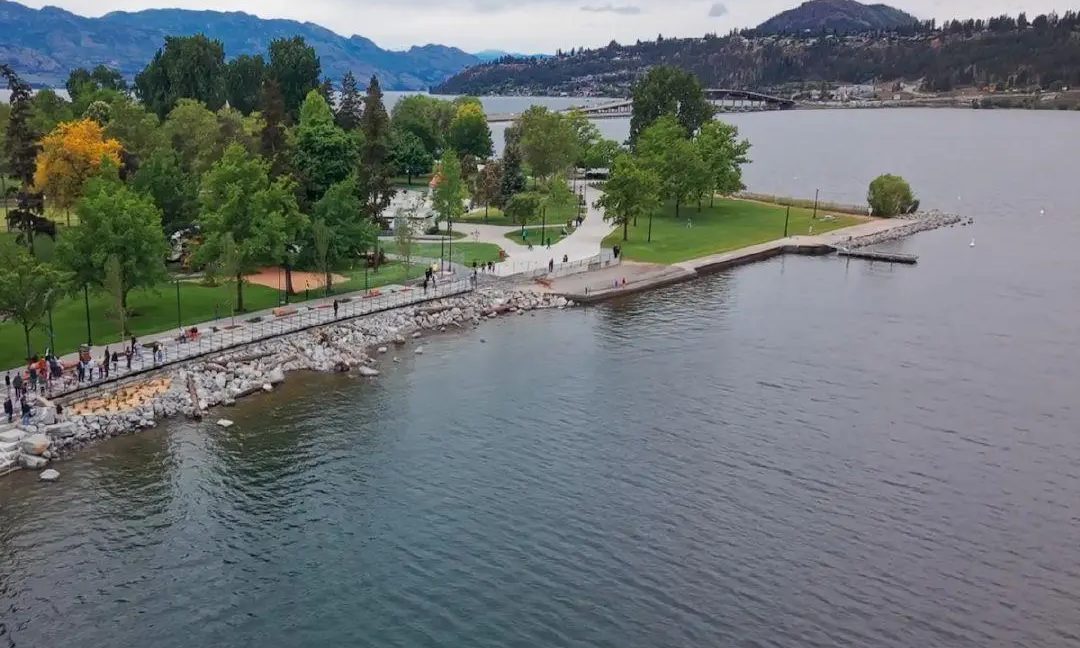
Kelowna residents are invited to City Park on Sunday, Sept. 20, at 2 p.m. to view the unveiled design for the city’s future waterfront swim venue.
Waterfront design reveal scheduled for Sept. 20
Residents are invited to gather at the northwest corner of City Park on Sunday, Sept. 20, at 2 p.m. for the unveiling of the design for Kelowna’s future swim venue.
According to a press release, the special gathering will mark a key milestone for the long-planned project, bringing together supporters, community partners, and local residents to view the initial design and learn about upcoming steps for the new waterfront destination.
Part of broader City Park upgrades
The planned swim venue is one component of the broader City Park Improvement Plan. The overall initiative encompasses several enhancements to the area, including upgraded lighting, enhanced water access, a new boardwalk, and a relocated dog beach.
Your Current 3 Day Forecast — September 20, 2026
Your Current 3 Day Environment Canada forecast for Kelowna, Vernon, Penticton, Summerland, Osoyoos, Princeton.
THE OKANAGAN CURRENT · WEATHER
Your Current 3 Day Forecast
September 20, 2026
Across our communities
Kelowna
Now
9.6°
Sunny
Sunrise 6:41 a.m. · Sunset 7:01 p.m.
Moon: First quarter · 65% lit
Observed 8:00 a.m.
Next 12 hours
Today
Sunny. Wind becoming south 20 km/h this afternoon. High 26. Humidex 27. UV index 5 or moderate.
Rain 0%Wind 15 km/h
Monday
Sunny. Becoming a mix of sun and cloud in the morning. Wind becoming south 20 km/h in the afternoon. High 26. Humidex 27. UV index 5 or moderate.
Rain 0%Wind 5 km/h
Tuesday
Sunny. High 23.
Rain 0%Wind 0 km/h
Vernon
Now
12.6°
Current condition unavailable
Sunrise 6:40 a.m. · Sunset 7:00 p.m.
Moon: First quarter · 65% lit
Observed 8:00 a.m.
Next 12 hours
Today
Sunny. Wind becoming south 20 km/h this afternoon. High 26. Humidex 27. UV index 5 or moderate.
Rain 0%Wind 15 km/h
Monday
Sunny. Becoming a mix of sun and cloud in the morning. Wind becoming south 20 km/h in the afternoon. High 26. Humidex 27. UV index 5 or moderate.
Rain 0%Wind 5 km/h
Tuesday
Sunny. High 23.
Rain 0%Wind 0 km/h
Penticton
Now
9.7°
Mainly Sunny
Sunrise 6:42 a.m. · Sunset 7:01 p.m.
Moon: First quarter · 65% lit
Observed 8:00 a.m.
Next 12 hours
Today
Sunny. Wind becoming south 20 km/h this afternoon. High 26. Humidex 27. UV index 5 or moderate.
Rain 0%Wind 15 km/h
Monday
Sunny. Becoming a mix of sun and cloud in the morning. Wind becoming south 20 km/h in the afternoon. High 26. Humidex 27. UV index 5 or moderate.
Rain 0%Wind 5 km/h
Tuesday
Sunny. High 23.
Rain 0%Wind 0 km/h
Summerland
Now
14.1°
Current condition unavailable
Sunrise 6:42 a.m. · Sunset 7:01 p.m.
Moon: First quarter · 65% lit
Observed 8:00 a.m.
Next 12 hours
Today
Sunny. Wind becoming south 20 km/h this afternoon. High 26. Humidex 27. UV index 5 or moderate.
Rain 0%Wind 15 km/h
Monday
Sunny. Becoming a mix of sun and cloud in the morning. Wind becoming south 20 km/h in the afternoon. High 26. Humidex 27. UV index 5 or moderate.
Rain 0%Wind 5 km/h
Tuesday
Sunny. High 23.
Rain 0%Wind 0 km/h
Osoyoos
Now
10.9°
Current condition unavailable
Sunrise 6:41 a.m. · Sunset 7:00 p.m.
Moon: First quarter · 65% lit
Observed 8:00 a.m.
Next 12 hours
Today
Sunny. Wind becoming south 20 km/h this afternoon. High 26. Humidex 27. UV index 5 or moderate.
Rain 0%Wind 15 km/h
Monday
Sunny. Becoming a mix of sun and cloud in the morning. Wind becoming south 20 km/h in the afternoon. High 26. Humidex 27. UV index 5 or moderate.
Rain 0%Wind 5 km/h
Tuesday
Sunny. High 23.
Rain 0%Wind 0 km/h
Princeton
Now
4.5°
Mainly Sunny
Sunrise 6:45 a.m. · Sunset 7:05 p.m.
Moon: First quarter · 65% lit
Observed 8:00 a.m.
Next 12 hours
Today
Sunny. Hazy. Wind becoming northwest 20 km/h this afternoon. High 28. UV index 5 or moderate.
Rain 0%Wind 5 km/h
Monday
A mix of sun and cloud. Wind becoming northwest 20 km/h in the afternoon. High 26. UV index 5 or moderate.
Rain 0%Wind 0 km/h
Tuesday
Sunny. High 21.
Rain 0%Wind 0 km/h
Track the weather
Last checked 2026-09-20T15:15:39.000Z · Changed: Kelowna, Vernon, Penticton, Summerland, Osoyoos, Princeton · hourly · Next check 2026-09-20T16:15:00.000Z

How West Kelowna Residents Can Explore Heartfulness Meditation and Community Peace

Unveiling event offers residents a first look at Kelowna’s future waterfront swim venue
Your Current 3 Day Forecast — September 20, 2026

Dylan Cease struggles as Toronto pitching strain worsens in loss to Rangers
How Canada’s Prime Minister Is Building Stronger Trans-Atlantic Ties Close to Home
Montreal’s High-Powered Offense Holds Off Late Hamilton Comeback in East Clash
Opinion: John Rustad Has to Go
B.C. Supreme Court Grants Cowichan Tribes Title to Historic Richmond Lands and Fishing Rights

A Taste of Autumn: Fall Okanagan Wine Festival 2025

Vancouver Canucks Gear Up for a Make-or-Break 2025–26 Season

Kamloops Blazers Announce Off-Season Changes Ahead of 2025–26 Season
BC Ferries Sparks Outcry Over Contract with Chinese Shipyard
-
NATIONAL STORIES6 days ago
Remembering George Chuvalo: The Canadian Heavyweight Legend Who Never Got Knocked Down
-

 NATIONAL STORIES6 days ago
AI’s Biggest Warning May Be Coming From the People Building It
-

 COMMUNITY6 days ago
Navigating Blended Family Wills and Estate Options
-

 SPORTS6 days ago
How Video Adjustments Fuelled the Vancouver Canucks’ 5-2 Prospects Victory Over Seattle
-
POLITICS7 days ago
What Trump’s Remarks Linking Canada to Iran Signal About International Negotiations
-

 BC STORIES6 days ago
Uncertain Eyewitness Testimony at Center of Final Arguments in 2021 Restaurant Shooting Trial
-
WORLD7 days ago
What Trump’s Remarks Linking Canada to Iran Signal About International Negotiations
-
LOCAL7 days ago
Stephen Johnston Mayor by Acclamation