LOCAL
Why Canadians Are Willing to Pay More and Give Up US Travel in Growing Consumer Boycott
Canadians are boycotting US goods, tech, and travel in response to tariffs and trade tensions, shifting to local alternatives despite rising costs.


Citizens Absorb Higher Costs to Support Domestic Alternatives
Everyday spending habits across Canada are undergoing a significant shift as citizens actively avoid American products, tech platforms, and travel. A recent callout by the Guardian drew over 3,500 responses detailing how individuals are altering their daily routines in response to political and economic tensions with the US.
For some, the decision comes with direct financial trade-offs. William McDonald, a 38-year-old diesel mechanic in Thunder Bay, Ontario, noted that choosing domestic options over US goods has pushed his weekly expenses higher. “As soon as Trump started putting those tariffs on in February [last year], I started boycotting US goods,” he said. “Avoiding American products has driven my costs up, and I’m still happy to do it.” McDonald estimated spending an extra C$1,000 (£531/US$720) annually by switching to Canadian beer, alongside roughly C$50 more per week on groceries. Describing Donald Trump’s posture toward Canada, McDonald likened it to “a lot like the schoolyard bully yelling and stomping their feet when they don’t get the cowering reaction they expect.”
Escalating Trade Standoff and Cultural Terms
The consumer shifts follow a sharp breakdown in bilateral relations. After trade negotiations collapsed last weekend, the US enacted 50% tariffs on US$20bn (£15bn) worth of Canadian goods. In response, Prime Minister Mark Carney pledged to match the measures “dollar for dollar.” Donald Trump subsequently directed the US federal government on Thursday to rename Lake Ontario to Lake America.
In response to these developments, movements using the acronyms ABUS (Anything but US) and ABUSA (Anywhere but USA) have spread alongside the hockey-derived slogan “Elbows Up!”. Winnipeg resident Denise highlighted the depth of public feeling: “‘Elbows up’ is a real thing. We don’t fly US airlines, we stay in locally owned hotels, we won’t even connect in a US airport … we’ve moved investments to Canadian companies, and we actively avoid USA products, produce and groceries.” She acknowledged that while checking labels and divesting can be inconvenient and costly, “BDS [boycott, divestment, sanction] is the only tool ordinary people have to stand up for our values.”
Changes to Groceries, Technology, and Travel
Boycotters are targeting a wide array of everyday items. Consumers are replacing US produce with options from nations such as Mexico, Chile, Peru, Guatemala, and South Africa. Elizabeth Lorenz, 68, a retired teacher in Nanaimo, British Columbia, explained that she reads packaged food labels carefully to avoid American items like Annie’s Pasta, even planting sweet potatoes in her garden because available store inventory originates in the US. “Although this means the transportation of this produce has contributed to more environmental degradation than if I were to buy American produce, my outrage at America’s greed and corruption trumps (apologies for the pun) my environmental concerns,” Lorenz said.
Others have completely altered their household technology and travel habits. James Buchan, 36, an IT worker in Halifax, Nova Scotia, replaced his Apple hardware, abandoned major social media platforms, and switched to European email and calendar services. Buchan also swapped out household brands from Procter & Gamble and Colgate for Quebec manufacturers Attitude and Lavo. “Tech was the easiest – I do not miss my iPhone or Mac at all,” Buchan noted.
Travel pattern alterations are similarly widespread. Jane, a 54-year-old teacher from Camlachie, Ontario, stopped taking short trips across the border to Detroit for concerts, gas, and groceries, choosing instead to drive four hours to Toronto or vacation in Europe, Mexico, and the Dominican Republic. Using apps like CanMade, Buy Beaver, and O SCANada to identify alternatives to brands like Heinz and Charmin, she remarked, “The relationship, in my eyes, has been permanently tarnished.”
Long-Term Economic and Social Implications
The boycott extends into luxury and recreational goods as well. Kurt, a 61-year-old retired engineer in Calgary, Alberta, reported that his whiskey-tasting group cut its annual US$10,000 spend on American whiskies to “US$0.00” since “Liberation Day” and the initial tariff announcements, discovering high-quality local alternatives instead.
While many participants express sadness over strained ties with neighboring communities, many view the situation as an irreversible turning point. Toronto finance worker Vikram, 51, who has ceased US travel and Amazon purchases, stated, “We cannot go back to looking at our relationship with the US as it was before, because things have changed.” Reflecting on the national sentiment, McDonald added: “After years of internal division in our country, it’s nice to finally see something bind us together again. I guess sometimes it just takes a mutual enemy to find one’s resolve.”


LOCAL
Why a Downtown Kelowna Assault Investigation Closed Without Charges
Kelowna RCMP have closed an investigation into an Aug. 9 downtown Water Street fight after the victim, who suffered serious injuries, decided not to press charges.

RCMP Conclude Downtown Incident
An investigation into an August incident in downtown Kelowna has been closed after the injured party chose not to press charges. Kelowna RCMP officers have now concluded their file on the matter.
Late-Night Altercation on Water Street
The incident occurred around 2:05 a.m. on Sunday, Aug. 9, in the 1600-block of Water Street. Patrolling officers observed a group engaged in a heated argument. Before police could step in, the dispute turned physical when one man struck another, causing him to fall to the ground and sustain serious injuries.
Suspect Arrested and Police Investigation Completed
Paramedics treated the injured man at the scene before transferring him to the hospital for further medical care. Police arrested the suspect on site, subsequently releasing them with conditions and a scheduled court date. Although RCMP gathered video surveillance, witness statements, and documentation to prepare a report for Crown Counsel, the victim ultimately decided against pursuing charges. What caused the initial argument and physical fight remains unknown.
COMMUNITY
Middle-Income Renters to Benefit From 129 New Apartments in Rutland
Troika breaks ground on a 129-unit apartment building in Kelowna’s Rutland, featuring 51 middle-income units, an on-site daycare, and transit perks.

New Multi-Family Development Underway on Dougall Road
Construction has officially commenced on a six-storey rental development in Kelowna’s Rutland neighborhood. Developer Troika held a small ceremony alongside partners and staff on Sept. 17, using gold shovels to mark the start of work at 155 Dougall Rd. North.
Affordable Rents and Family Amenities
The project is being constructed in partnership with the City of Kelowna via its Middle Income Housing Partnership. According to Troika CEO Renee Merrifield, 51 of the planned 129 units are “reserved for income qualified middle income households.” The complex will offer studio apartments as well as one, two, and three-bedroom floor plans.
Families living in the complex will have access to an internal 3,902-square-foot daycare featuring an outdoor play area. Additional facilities include a fitness centre and a rooftop amenity space.
Transit Integration and Eco-Friendly Features
Located adjacent to the Rutland Transit Exchange, the location was selected with local transportation in mind, explained Troika Vice President of Construction Kerry McDowell. To encourage sustainable travel, 17 parking stalls will be EV ready. Every household will also be provided with a complimentary Modo car share membership along with a $100 usage credit for first-time members.
Furthermore, residents will have access to a prepaid eco pass transit fund totaling nearly $200,000 to cover transit fares. Addressing the long-term vision for the property, Merrifield stated, “We will be here carefully managing the building, caring for it and supporting the people and community that grows within it.”
BC STORIES
How a provincial manufacturing boost is adding 35 jobs and expanding wood products in Chemainus
Chemainus wood products manufacturer Ron Anderson & Sons expands operations with up to $2M from B.C., creating up to 35 jobs for prefabricated housing.
Local Hiring Underway for Facility Upgrade
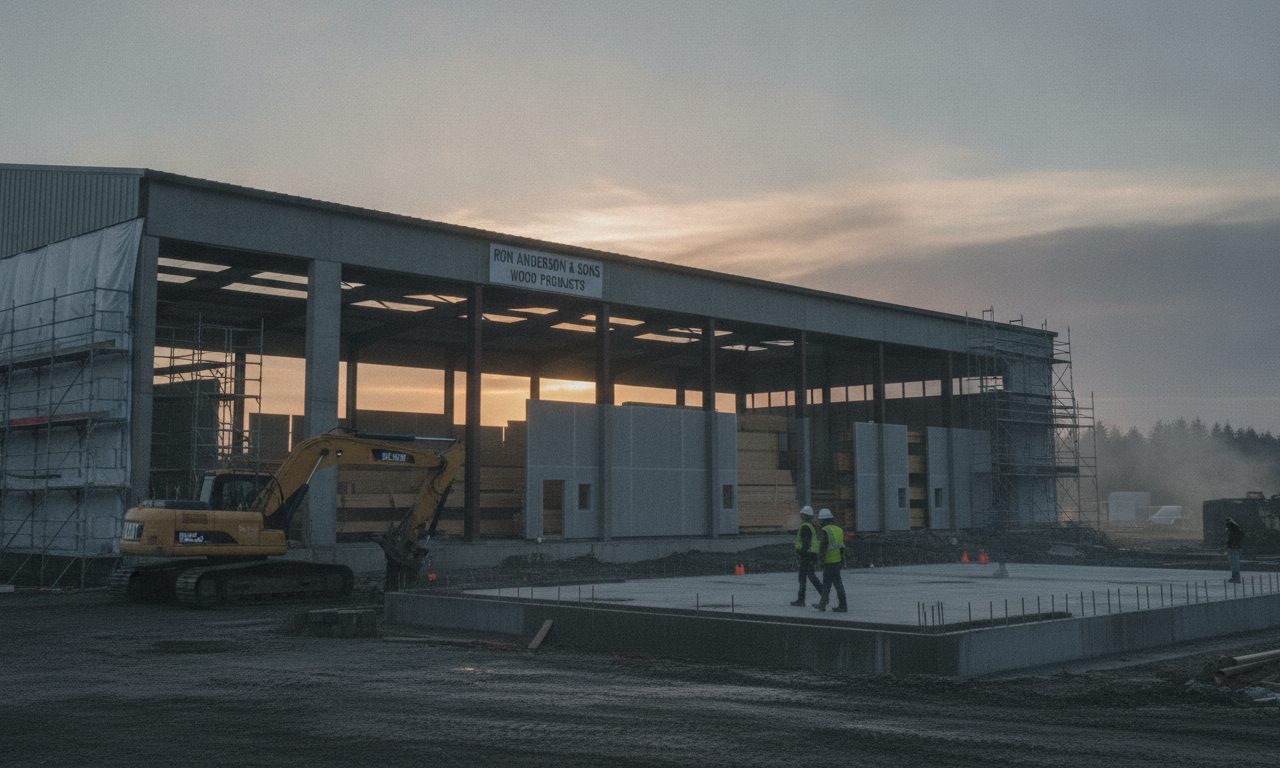
Up to 35 new jobs are coming to Vancouver Island as Chemainus-based Ron Anderson & Sons breaks ground on an expansion of its manufacturing facility. Supported by up to $2 million from the provincial government’s BC Manufacturing Jobs Fund, the project has already resulted in 20 new hires following investments in advanced manufacturing technology.
Construction on the final phase of the expansion is scheduled for completion in February 2027. The project aims to improve overall construction efficiency and product quality by moving a greater portion of building processes off-site.
Expanding Product Lines and Off-Site Construction
While the business currently produces prefabricated wall systems, the facility expansion will allow it to broaden its offerings to include prefabricated roof panels, floors, and stairs. Off-site wood frame construction reduces the total duration required for on-site building projects.
“The BC Manufacturing Jobs Fund is helping Rob Anderson & Sons accelerate our growth in Chemainus by expanding our manufacturing capacity, investing in advanced automation and creating new skilled jobs on Vancouver Island,” said Jack Downing, president and CEO of Ron Anderson & Sons. “This funding supports our vision of delivering high-quality prefabricated construction solutions more efficiently, while strengthening the local economy and helping address British Columbia’s housing needs.”
Provincial Support and Regional Context
The Chemainus expansion represents one of more than 150 capital initiatives backed by the BC Manufacturing Jobs Fund. To date, the province has committed up to $153 million through the program, targeting the creation of over 2,100 jobs and the preservation of more than 2,700 existing positions across British Columbia.
“Forestry has always been the foundation of Chemainus since its founding, and it is exciting to see Ron Anderson & Sons build on that history with new innovation that translates to more local jobs and a stronger manufacturing sector in our region,” said Cowichan Valley MLA Debra Toporowski.
Adrian Dix, acting minister of Jobs and Economic Growth, emphasized the importance of supporting local industry, stating, “With the U.S. administration targeting our manufacturing industries, businesses and jobs, it has never been more important to help local businesses like Rob Anderson & Sons sell more of what they make here at home.”
Your Current 3 Day Forecast — September 20, 2026

Dylan Cease struggles as Toronto pitching strain worsens in loss to Rangers
How Canada’s Prime Minister Is Building Stronger Trans-Atlantic Ties Close to Home
Montreal’s High-Powered Offense Holds Off Late Hamilton Comeback in East Clash
What to Know Ahead of Alberta’s Oct. 19 Vote on a Separation Referendum
What to Know About the Alasko Frozen Raspberry Recall Following Illness Reports
Opinion: John Rustad Has to Go
B.C. Supreme Court Grants Cowichan Tribes Title to Historic Richmond Lands and Fishing Rights

A Taste of Autumn: Fall Okanagan Wine Festival 2025

Vancouver Canucks Gear Up for a Make-or-Break 2025–26 Season

Kamloops Blazers Announce Off-Season Changes Ahead of 2025–26 Season

BC Ferries Sparks Outcry Over Contract with Chinese Shipyard
-
NATIONAL STORIES6 days ago
Remembering George Chuvalo: The Canadian Heavyweight Legend Who Never Got Knocked Down
-

 NATIONAL STORIES6 days ago
AI’s Biggest Warning May Be Coming From the People Building It
-

 COMMUNITY6 days ago
Navigating Blended Family Wills and Estate Options
-
POLITICS7 days ago
What Trump’s Remarks Linking Canada to Iran Signal About International Negotiations
-

 SPORTS6 days ago
How Video Adjustments Fuelled the Vancouver Canucks’ 5-2 Prospects Victory Over Seattle
-

 BC STORIES6 days ago
Uncertain Eyewitness Testimony at Center of Final Arguments in 2021 Restaurant Shooting Trial
-
WORLD7 days ago
What Trump’s Remarks Linking Canada to Iran Signal About International Negotiations
-
LOCAL7 days ago
Stephen Johnston Mayor by Acclamation