Environment
The Orbital Trash Crisis: Solving the 13,000-Tonne Space Junk Dilemma
With 13,000 tonnes of space junk threatening critical infrastructure, experts are racing to develop harpoons, nets, and new policies to clean up Earth orbit.


The Growing Gridlock Above Earth
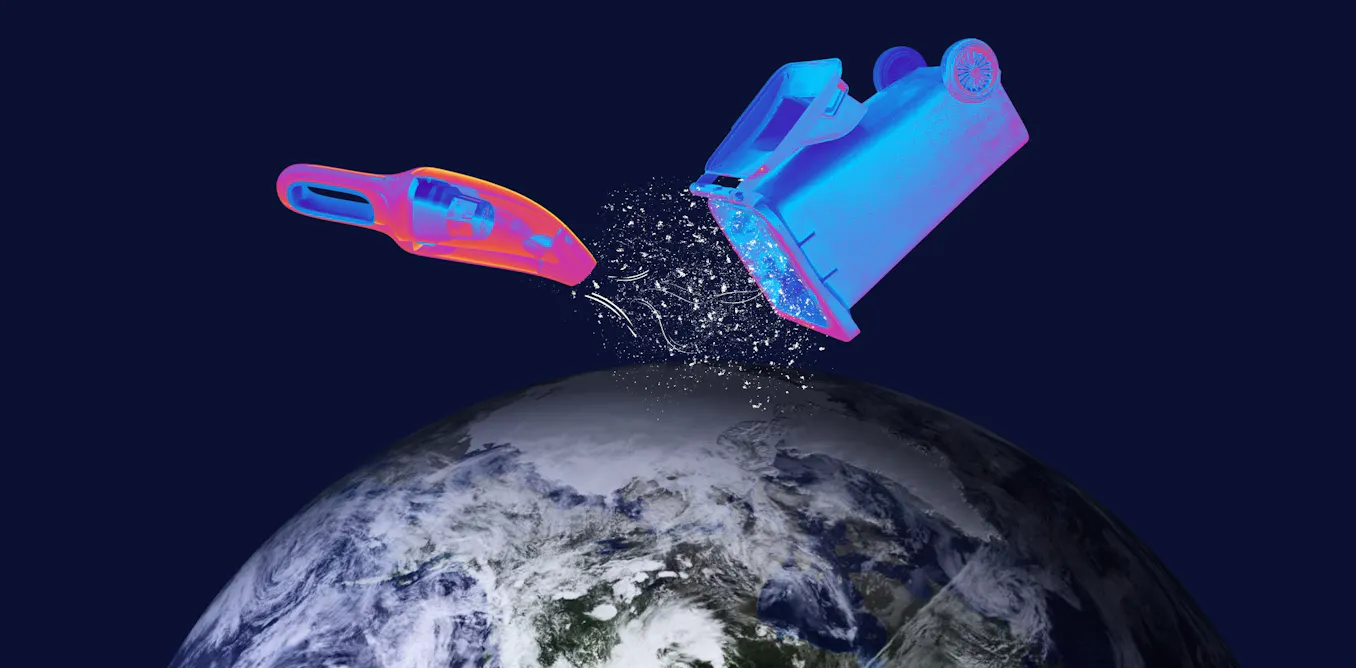
Seventy years ago, the Moon was Earth’s only companion in the night sky. Today, our orbit is crowded with over 15,000 satellites, a number dominated by Elon Musk’s SpaceX. As tech giants plan to launch megaconstellations numbering in the millions, a critical byproduct is reaching a breaking point: space junk. Currently, there are roughly 13,486 tonnes of debris—equivalent to 13 million cane toads—cluttering the orbital environment.
The Threat of Kessler Syndrome
Space junk isn’t just floating; it orbits at speeds of seven kilometres per second. At these velocities, even a fragment the size of a marble can strike with the force of a grenade. Experts warn of the ‘Kessler syndrome,’ a catastrophic chain reaction where collisions create more debris, leading to more collisions. This could eventually render low Earth orbit (LEO) unusable, threatening GPS, weather tracking, and global communications, or even cutting humanity off from space exploration entirely.
Innovations in Orbital Cleanup
Addressing the debris crisis requires a multi-pronged technological approach. Engineers are testing ‘active debris removal’ systems involving harpoons, nets, magnets, and even slingshots to drag defunct satellites into the atmosphere or push them into ‘graveyard orbits.’ Furthermore, satellite design is evolving; researchers in Japan are even testing wooden spacecraft to ensure cleaner atmospheric reentry, while others focus on refueling missions to extend the lifespan of existing hardware.
Policy and the ‘Techbro’ Mentality
Technological fixes alone are insufficient without global policy reform. Current standards are shifting, requiring satellites to de-orbit within five years of mission completion rather than twenty-five. However, critics argue that the ‘techbro’ culture driving the space race often views orbit as a resource to be exploited rather than an environment to be protected. For a sustainable future, experts suggest we must stop viewing space and Earth as separate domains, instead managing our orbit as a fragile, interconnected ecosystem that requires international ‘rules of the road’ to prevent an avoidable environmental collapse.