WORLD
The End of the Dollar Era? Why Paul Wong Sees ‘Bretton Woods III’ and a Golden Future
Sprott’s Paul Wong explains why the shift to Bretton Woods III is inevitable and how gold will serve as the ultimate reserve asset in a fragmented global economy.


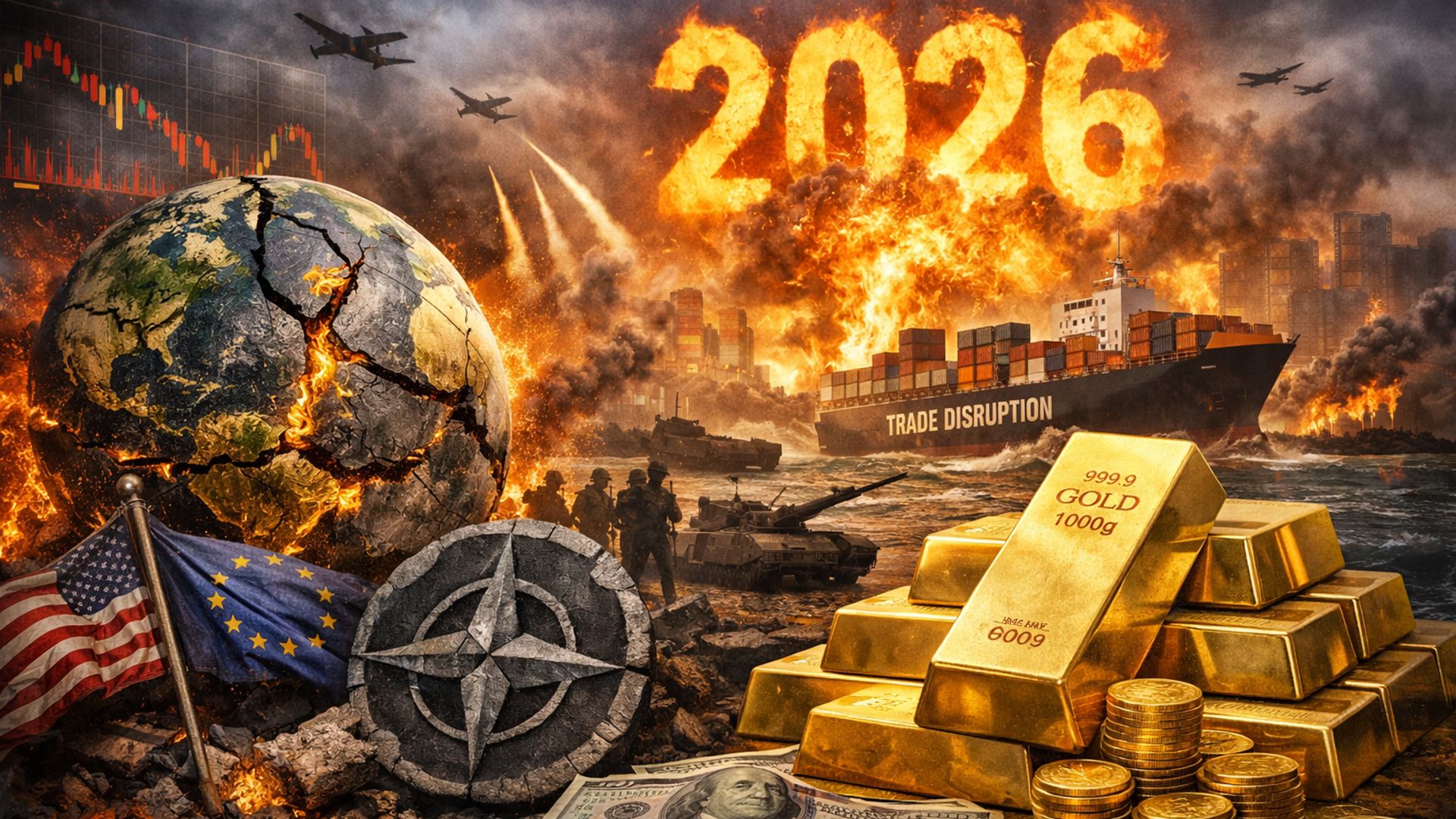
The Fragile State of Global Finance
In an era defined by increasing geopolitical friction and the fraying of long-standing trade alliances, the global financial landscape is approaching a critical turning point. Paul Wong, Market Strategist at Sprott Asset Management, argues that the current monetary order is no longer sustainable. As the world transitions from a unipolar system dominated by the U.S. dollar to a multipolar reality, the necessity for a robust, non-correlated monetary reserve system has never been more apparent. Wong suggests that we are witnessing the inevitable birth of what experts call ‘Bretton Woods III.’
Understanding Bretton Woods III
The concept of Bretton Woods III, originally popularized by strategist Zoltan Pozsar, describes a fundamental shift in the nature of money. If Bretton Woods I was defined by the gold-backed dollar and Bretton Woods II was characterized by ‘inside money’—or debt-based assets like U.S. Treasuries—then Bretton Woods III is defined by ‘outside money.’ This new phase prioritizes tangible, hard assets over promises to pay. According to Wong, as the global economy ‘breaks up’ into competing blocs, nations are increasingly wary of holding the debt of other countries as their primary reserve, fearing both inflationary debasement and geopolitical weaponization of the financial system.
Why Gold Stands Alone
In this shifting landscape, gold emerges as the preeminent candidate for a neutral reserve asset. Unlike fiat currencies or government bonds, gold carries no counterparty risk and cannot be printed at the whim of a central bank. Wong emphasizes that gold is the only asset that ‘stands alone’ because it is not someone else’s liability. In a world where trust between nations is at a multi-decade low, the objective value of gold provides a stabilizing force that paper assets simply cannot match. This intrinsic value makes it the perfect anchor for a fragmented global economy that requires a universal medium of exchange that transcends political boundaries.
Central Banks Lead the Charge
The movement toward this new monetary order is already visible in the behavior of global central banks. Over the past two years, central bank gold buying has reached record highs, particularly among emerging market nations seeking to diversify away from the U.S. dollar. This trend is not merely a hedge against inflation but a strategic move toward sovereignty. By accumulating gold, these nations are building a foundation for a future where their economic security is not entirely dependent on Western financial infrastructure. Wong notes that this systemic pivot is a clear signal that the world is preparing for a monetary system where physical commodities play a central role.
The Implications for Investors
For investors, the transition to Bretton Woods III represents a significant departure from the investment strategies of the last forty years. The traditional 60/40 portfolio, which relies heavily on the inverse correlation between stocks and bonds, may struggle in an environment where inflation is persistent and debt levels are soaring. Wong suggests that a monetary reserve system based on gold will likely lead to higher floor prices for the precious metal. As institutional and retail investors follow the lead of central banks, the demand for gold as a ‘portfolio insurance’ policy is expected to intensify, potentially leading to a long-term bull market for the asset.
A Necessary Evolution
While the transition to a new global monetary system is likely to be volatile, Paul Wong views it as a necessary evolution. The imbalances inherent in the current dollar-centric system—ranging from massive debt loads to trade deficits—have reached a breaking point. Bretton Woods III represents a return to fiscal and monetary reality, where value is measured in something tangible. As the ‘world breaks up’ into localized power centers, gold remains the only asset capable of providing the liquidity, safety, and independence required to navigate the coming economic storm.