
Local
Volunteer Dive Team Uses Farming GPS Technology to Bring Closure to Grieving Okanagan Family
By Current Editor
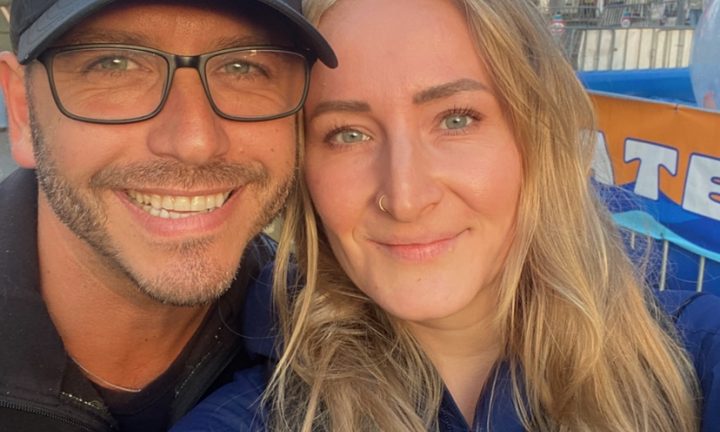
Volunteer Hutterite Searchers Locate Missing Paddleboarder
A 23-day search on Okanagan Lake ended after a Manitoba-based volunteer Hutterite dive team located the body of missing paddleboarder Kyle Yrjola. The search began following a Sept. 22 incident off Fintry Provincial Park, where Yrjola and his girlfriend, Jaycee Martin, were caught in sudden rough weather while returning across the lake around sunset.
“The wind kind of started picking up. We thought, okay, we can get through this,” said Martin, describing how conditions deteriorated rapidly. “I said, ‘okay, hold on, babe. Like there’s some big waves coming.’ And sure enough, they just came and they just took him from me so fast.”
Innovative Technology Guided Lakebed Search
Paddles were swept away during the sudden swell, leaving Yrjola in the water and the board floating beyond reach. Emergency dispatchers directed Martin to remain on her board, but she drifted toward the opposite side of the lake alone. Police eventually rescued her on the east shore, where she urged responders to look for Yrjola. “I didn’t even want them to pick me up at first, because I was so close to the shore. I kept telling them, ‘no, go find my boyfriend, like he’s out there,’” Martin recalled.
The search shifted when a Manitoba volunteer dive team, led by Manuel Maendel, drove two days to the region with specialized sonar equipment. The team adapted GPS technology normally utilized on farm machinery to drive precise, straight-line search patterns across Okanagan Lake. “As Hutterites, when someone is in trouble and we see them struggling, we want to reach out and help,” Maendel explained. “It doesn’t matter where or how.”
Specialized Sonar and Remote Cameras Used in Deep Water
Arriving near sundown on Sept. 14, the team consulted with Martin, whose detailed recall of the pair’s route helped formulate the search grid. Facing lake depths reaching 600 feet, where sonar discoveries remain uncertain, the team launched early the next morning. Upon detecting an anomaly on the lakebed, the volunteers deployed a remotely operated camera to confirm the finding, providing resolution after weeks of uncertainty.
Over the past decade, the volunteer operation has assisted more than 30 families free of charge, funding equipment through third-party support and donations. Reflecting on her boyfriend, Martin shared, “He was very kind and always so cool and patient. Yeah, most of all patient. A really good boyfriend and a really good best friend. A good friend to everybody.” Explaining what drives his crew’s efforts, Maendel noted, “To be able to put my arms around a family that I’ve been able to help fuels me for the next one.”
To send a tip or ask about advertising, write to [email protected] or call 250-300-0569.