Your Current 3 Day Forecast — September 8, 2026
Your Current 3 Day Environment Canada forecast for Kelowna, Vernon, Penticton, Summerland, Osoyoos, Princeton.

THE OKANAGAN CURRENT · WEATHER
Your Current 3 Day Forecast
September 8, 2026
Across our communities
Kelowna
Now
13.7°
Clear
Sunrise 6:25 a.m. · Sunset 7:25 p.m.
Moon: Waning crescent · 7% lit
Observed 11:00 p.m.
Next 12 hours
Tonight
Partly cloudy with 30 percent chance of showers early this evening then clear. Wind northwest 20 km/h becoming light this evening. Low 10.
Rain 30%Wind 20 km/h
Wednesday
Sunny. Becoming a mix of sun and cloud late in the morning. Wind becoming southwest 20 km/h gusting to 40 late in the morning. High 27. UV index 5 or moderate.
Rain 0%Wind 5 km/h
Thursday
A mix of sun and cloud with 60 percent chance of showers. High 22.
Rain 60%Wind 0 km/h
Vernon
Now
16.6°
Current condition unavailable
Sunrise 6:24 a.m. · Sunset 7:24 p.m.
Moon: Waning crescent · 7% lit
Observed 11:00 p.m.
Next 12 hours
Tonight
Partly cloudy with 30 percent chance of showers early this evening then clear. Wind northwest 20 km/h becoming light this evening. Low 10.
Rain 30%Wind 20 km/h
Wednesday
Sunny. Becoming a mix of sun and cloud late in the morning. Wind becoming southwest 20 km/h gusting to 40 late in the morning. High 27. UV index 5 or moderate.
Rain 0%Wind 5 km/h
Thursday
A mix of sun and cloud with 60 percent chance of showers. High 22.
Rain 60%Wind 0 km/h
Penticton
Now
14.7°
Mainly Clear
Sunrise 6:26 a.m. · Sunset 7:25 p.m.
Moon: Waning crescent · 7% lit
Observed 11:00 p.m.
Next 12 hours
Tonight
Partly cloudy with 40 percent chance of showers early this evening then clear. Wind south 20 km/h becoming light this evening. Low 11.
Rain 40%Wind 20 km/h
Wednesday
Sunny. Becoming a mix of sun and cloud near noon. Wind becoming southwest 30 km/h gusting to 50 near noon. High 27. UV index 5 or moderate.
Rain 0%Wind 5 km/h
Thursday
A mix of sun and cloud with 60 percent chance of showers. High 22.
Rain 60%Wind 0 km/h
Summerland
Now
17.1°
Current condition unavailable
Sunrise 6:26 a.m. · Sunset 7:25 p.m.
Moon: Waning crescent · 7% lit
Observed 11:00 p.m.
Next 12 hours
Tonight
Partly cloudy with 40 percent chance of showers early this evening then clear. Wind south 20 km/h becoming light this evening. Low 11.
Rain 40%Wind 20 km/h
Wednesday
Sunny. Becoming a mix of sun and cloud near noon. Wind becoming southwest 30 km/h gusting to 50 near noon. High 27. UV index 5 or moderate.
Rain 0%Wind 5 km/h
Thursday
A mix of sun and cloud with 60 percent chance of showers. High 22.
Rain 60%Wind 0 km/h
Osoyoos
Now
17.4°
Current condition unavailable
Sunrise 6:26 a.m. · Sunset 7:24 p.m.
Moon: Waning crescent · 7% lit
Observed 11:00 p.m.
Next 12 hours
Tonight
Partly cloudy with 40 percent chance of showers early this evening then clear. Wind south 20 km/h becoming light this evening. Low 11.
Rain 40%Wind 20 km/h
Wednesday
Sunny. Becoming a mix of sun and cloud near noon. Wind becoming southwest 30 km/h gusting to 50 near noon. High 27. UV index 5 or moderate.
Rain 0%Wind 5 km/h
Thursday
A mix of sun and cloud with 60 percent chance of showers. High 22.
Rain 60%Wind 0 km/h
Princeton
Now
14.2°
Current condition unavailable
Sunrise 6:29 a.m. · Sunset 7:28 p.m.
Moon: Waning crescent · 7% lit
Observed 11:00 p.m.
Next 12 hours
Tonight
Partly cloudy. Becoming clear this evening. Low plus 5.
Rain 0%Wind 15 km/h
Wednesday
Sunny. Becoming a mix of sun and cloud late in the morning. Wind becoming west 20 km/h gusting to 40 in the afternoon. High 27. UV index 5 or moderate.
Rain 0%Wind 0 km/h
Thursday
A mix of sun and cloud with 30 percent chance of showers. High 22.
Rain 30%Wind 0 km/h
Track the weather
Last checked 2026-09-09T06:15:47.000Z · Changed: Kelowna, Vernon, Penticton, Summerland, Osoyoos, Princeton · hourly · Next check 2026-09-09T07:15:00.000Z

The Money Spoke Before the Voters Did: How B.C.’s Conservatives Turned Chaos Into Victory
By Chad Dashly | The Current | November 5, 2026
There is an old saying in politics: follow the money.
In British Columbia, the money was telling a story long before voters went to the polls on October 24. And if anyone in the NDP headquarters was paying attention, they should have been worried.
New fundraising figures released by Elections BC reveal something remarkable. During the third quarter of 2026, the Conservative Party of British Columbia raised approximately $2.73 million. The governing New Democrats managed just $986,093.
Nearly three dollars for the Conservatives for every dollar raised by the NDP.
But the real story isn’t simply how much money came in. It’s when it arrived — and what that says about the extraordinary political transformation British Columbia has just experienced.
From Political Chaos to Political Capital
Only weeks before the election, the BC Conservatives appeared to be doing everything possible to destroy themselves.
Leadership disputes. Caucus defections. Public disagreements. A party seemingly more interested in fighting itself than fighting the government.
Then came September 20.
Kerry-Lynne Findlay resigned as Conservative leader, and Cariboo-Chilcotin MLA Lorne Doerkson stepped into the leadership.
What happened next should become a case study for political strategists across Canada.
Between September 20 and September 30, Conservative contributions totalled approximately $2.45 million — nearly 90 per cent of the party’s entire third-quarter fundraising.
Think about that.
A party struggling to hold itself together suddenly attracted millions of dollars in political contributions in just eleven days.
That doesn’t happen by accident.
It suggests donors who had been sitting on the sidelines were suddenly prepared to invest in a political organization they believed could win.
The change in leadership mattered. So did the prospect of an election. And the Conservatives had something they hadn’t possessed in months: a credible opportunity to unite their competing factions around a common objective.
Winning.
David Eby’s Political Miscalculation
Premier David Eby called a snap election on September 22, two years ahead of the scheduled provincial vote.
The calculation appeared straightforward.
The Conservatives were divided. Their leadership had collapsed. Their caucus had fractured. Surely this was the moment to strike.
Except something had changed.
The Conservative Party that Eby expected to face was rapidly becoming a different political organization.
Doerkson’s arrival created an opportunity for reconciliation among Conservatives who had spent months arguing about personalities, policies and direction.
And the fundraising figures suggest that opportunity resonated.
Meanwhile, the NDP struggled to generate comparable financial enthusiasm.
That is not necessarily proof that donors predicted the election result. Political contributions are influenced by many factors, including campaign timing, organizational strength and individual donor networks.
But the disparity was an unmistakable warning.
Eby may have correctly identified Conservative instability. What he appears to have underestimated was how quickly that instability could turn into unity when the prospect of forming government became real.
The Interior Has Become the Centre of Political Power
There is another dimension to this election that deserves attention.
British Columbia’s political centre of gravity has shifted.
For decades, provincial politics has been dominated by Vancouver, Victoria and the Lower Mainland.
Now a politician from the Cariboo-Chilcotin is preparing to lead the province.
That matters.
For communities throughout the Thompson, Okanagan, Cariboo and northern British Columbia, the election represents an opportunity to bring regional economic concerns directly into the premier’s office.
Forestry. Mining. Natural gas. Agriculture. Transportation infrastructure. Permitting delays.
These are not abstract policy debates for people who live and work outside the Lower Mainland.
They determine whether businesses invest, whether young families can remain in their communities and whether the next generation has meaningful economic opportunities.
Doerkson has promised to make economic development a priority.
The question now is whether his government can turn those promises into measurable results.
Money Can Win Elections. It Cannot Govern.
Conservatives should be careful about celebrating too early.
Preliminary election results give the party 63 of the legislature’s 93 seats, although the final count is still pending.
That is a commanding position.
But a large majority does not automatically produce a successful government.
The same party that recently struggled with internal divisions must now demonstrate cabinet discipline, sound fiscal management and the ability to make difficult decisions.
British Columbians will expect progress on affordability, health care, housing and economic opportunity.
They will also expect accountability.
The Conservatives have promised no new taxes, faster approvals for major projects and stronger support for resource development.
Delivering those commitments while maintaining essential public services will require more than campaign slogans.
It will require serious governing.
The Lesson for Every Political Party
The fundraising numbers reveal something larger than a financial advantage.
They suggest a dramatic change in political confidence.
Donors were willing to back the Conservatives despite the party’s recent turmoil. Voters subsequently handed them a decisive preliminary victory.
For the NDP, the implications are equally significant.
A party that controlled the government machinery and chose the election date was unable to match its opponent’s fundraising momentum.
That demands more than a routine campaign review.
It demands an examination of leadership, organization, voter relationships and the party’s understanding of the province’s changing political priorities.
For the Conservatives, the challenge is different.
They have won the opportunity to govern. Now they must prove they deserve to keep it.
The money may have spoken before the voters did. But from this point forward, British Columbians will judge their new government not by what it raised, but by what it delivers.
Chad Dashly writes political commentary for The Current, examining British Columbia politics, public policy and the decisions shaping communities across the province.
BC STORIES
What to expect as atmospheric rivers bring high winds to the Southern Interior
Environment Canada issues weather warnings as atmospheric rivers bring strong wind gusts to the Southern Interior and heavy rain to coastal B.C.
Environment Canada Issues Weather Alerts
Environment Canada has issued weather warnings and special weather statements as a series of atmospheric rivers approaches B.C. beginning Nov. 5. The storm system hits the B.C. coast tonight and is expected to deliver strong, gusty conditions across parts of the Southern Interior.
Interior Communities Facing High Wind Gusts
Strong, gusty southeast winds are forecasted to start this evening in regions including the Cariboo, Prince George, 100 Mile House, and the South Thompson, including Kamloops. According to Environment Canada, winds may ease slightly on Friday afternoon before an incoming cold front brings strong southwest winds, with potential gusts reaching up to 90 km/h between Quesnel and Prince George. Peak winds for the South Thompson region are expected Friday afternoon, particularly near Cache Creek.
Coastal Regions Prepare for Rain and Gales
Along the coast, parts of Vancouver Island could receive up to 120 millimetres of rain, with the heaviest downpours predicted northwest of Tofino. Heavy rain is also expected along the central coast, while wind gusts up to 110 km/h are forecasted for the northern and central coasts. The initial atmospheric river will persist into Friday, with additional systems anticipated and an even stronger storm likely following on Saturday evening.
NATIONAL STORIES
A 10-Year Plan to End Homelessness: What Canada’s New Budget Allocates for Housing and Services
Canada’s 2026 federal budget commits billions over 10 years to end homelessness through housing investments, mental health supports, and local partnerships.
Federal Government Outlines $11.2 Billion Strategy
The Canadian government plans to eliminate homelessness within a decade, according to details unveiled in the 2026 federal budget by Finance Minister François-Philippe Champagne on Thursday. The multi-year strategy commits $11.2 billion over four years alongside $17.8 billion in subsequent years. The funds will target stable housing, mental health infrastructure, addiction centers, and prevention initiatives across the country.
Data from Housing, Infrastructure and Communities Canada reveals that homelessness rose by 59 per cent from 2020 to 2025. This surge followed a 2017 national commitment to reduce chronic homelessness by half by the 2027-28 fiscal year. An Abacus survey conducted in October indicated that ten per cent of Canadians have experienced homelessness themselves, while one-third know someone who has been affected. In pre-budget remarks, Champagne noted that 65,000 Canadians currently suffer from homelessness, stating that taking action is the right step.
Targeted Funding, Partnerships, and Local Initiatives
To execute the plan, federal officials intend to partner with provincial governments, municipalities, and charitable organizations to connect individuals with employment, skill training, and income assistance. Through Build Canada Homes, the government is introducing an integrated supports fund designed to combine residential space with healthcare, social, and addiction support services. Under this model, the federal government will cover capital construction costs for supportive and transitional units, while provinces and territories will handle operational funding.
A specific $1 billion partnership with Manitoba through Build Canada Homes will fund 2,000 new permanent supportive and transitional housing units alongside personalized wraparound supports in Winnipeg. Manitoba must maintain its current funding levels for the initiative to succeed, taking inspiration from Toronto’s Dunn House project. Nationally, the budget also designates $2 billion over two years toward the Health Infrastructure Fund, guarantees $6.5 billion over ten years for existing Reaching Home and Veterans Homelessness initiatives, and extends the Canada Housing Benefit for another decade.
Political Reactions and Municipal Support
political leaders and stakeholders offered varied responses to the measure. Tim Tierney, president of the Federation of Canadian Municipalities, praised the federal initiative, noting that municipal leaders have long requested decisive action, while emphasizing that turning commitments into lasting support remains the primary test. Meanwhile, NDP Leader Avi Lewis expressed support for the funding aimed at ending homelessness, but stated his party will closely monitor the funds to ensure they remain within the public sector for non-market housing and public services. Bloc Québécois finance critic Jean-Denis Garon argued that Quebec demonstrates strong leadership on the issue and suggested the majority of federal funds allocated for the province should be funneled directly through Quebec’s administration.

The Money Spoke Before the Voters Did: How B.C.’s Conservatives Turned Chaos Into Victory

What to expect as atmospheric rivers bring high winds to the Southern Interior

A 10-Year Plan to End Homelessness: What Canada’s New Budget Allocates for Housing and Services

Escorts and Curfew Imposed in Bella Coola Following Fatal Bear Attack

Highway Cell Blind Spots Spark Concerns After Rural B.C. Bus Crash

Kelowna Centre may have a new MLA by Friday
Opinion: John Rustad Has to Go
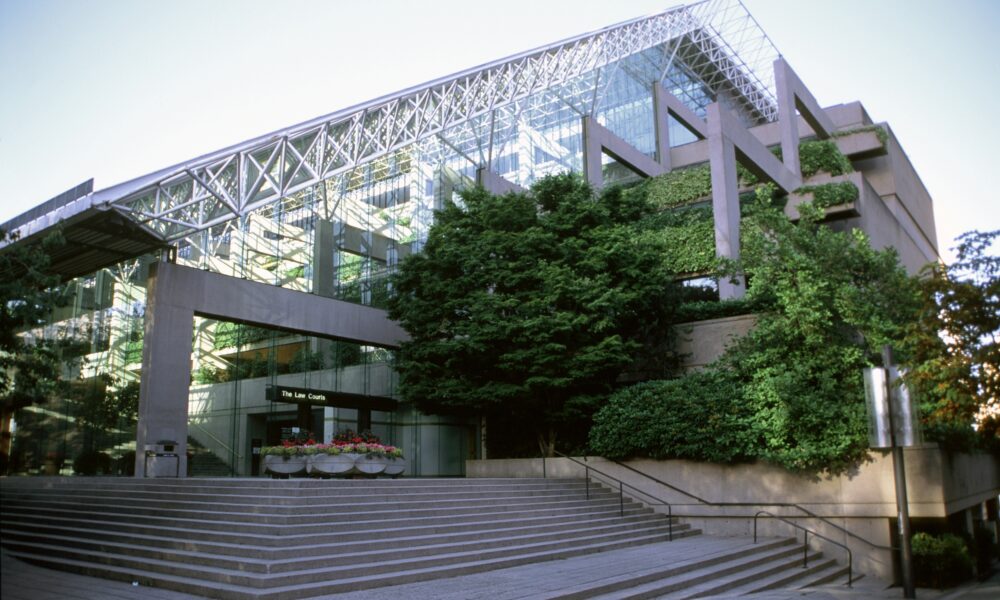
B.C. Supreme Court Grants Cowichan Tribes Title to Historic Richmond Lands and Fishing Rights

A Taste of Autumn: Fall Okanagan Wine Festival 2025

Vancouver Canucks Gear Up for a Make-or-Break 2025–26 Season

Kamloops Blazers Announce Off-Season Changes Ahead of 2025–26 Season
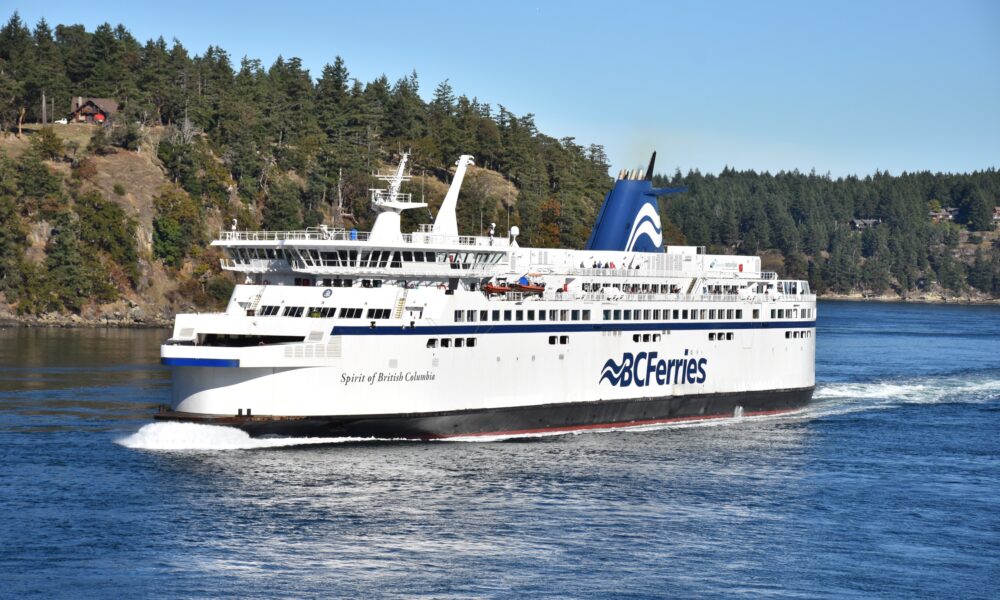
BC Ferries Sparks Outcry Over Contract with Chinese Shipyard
-
6 days ago
Your Current 3 Day Forecast — October 31, 2026
-
7 days ago
Your Current 3 Day Forecast — October 30, 2026
-
4 days ago
Your Current 3 Day Forecast — November 2, 2026
-

 LOCAL4 days ago
Why two Kamloops MLAs see value in a brief sitting before spring
-

 HEALTH7 days ago
Why B.C. Interior Residents Are Being Warned About Dangerous Unregulated Drugs
-

 COMMUNITY2 days ago
The week ahead in Okanagan: Mon 2 — Sun 8 November
-

 BC STORIES2 days ago
Community Rallies to Secure Federal Protection for Historic O’Keefe Ranch
-

 COMMUNITY4 days ago
Welcome Your New Municipal Leaders as Central Okanagan Councils Prepare to Take Office